
Understanding the USCIS Request for Evidence (RFE)
Last Updated on March 27, 2026 by Amelia
The U.S. immigration system is not always an easy process and there are several steps that one has to take and meet certain conditions to complete the process. Another challenge that the applicants face is a Request for Evidence (RFE) from the United States Citizenship and Immigration Services (USCIS) in the course of their applications. It is important to note that receiving an RFE is not a rejection of a petition
It is a formal request for more information to be provided to help clarify an issue about the application. Answering it correctly can turn the scale between accepting it or rejecting it. This article addresses the causes of RFEs, how to respond to them and why they are a necessary part of immigration procedures.
What is an Request for Evidence (RFE) and why would USCIS make such a demand?
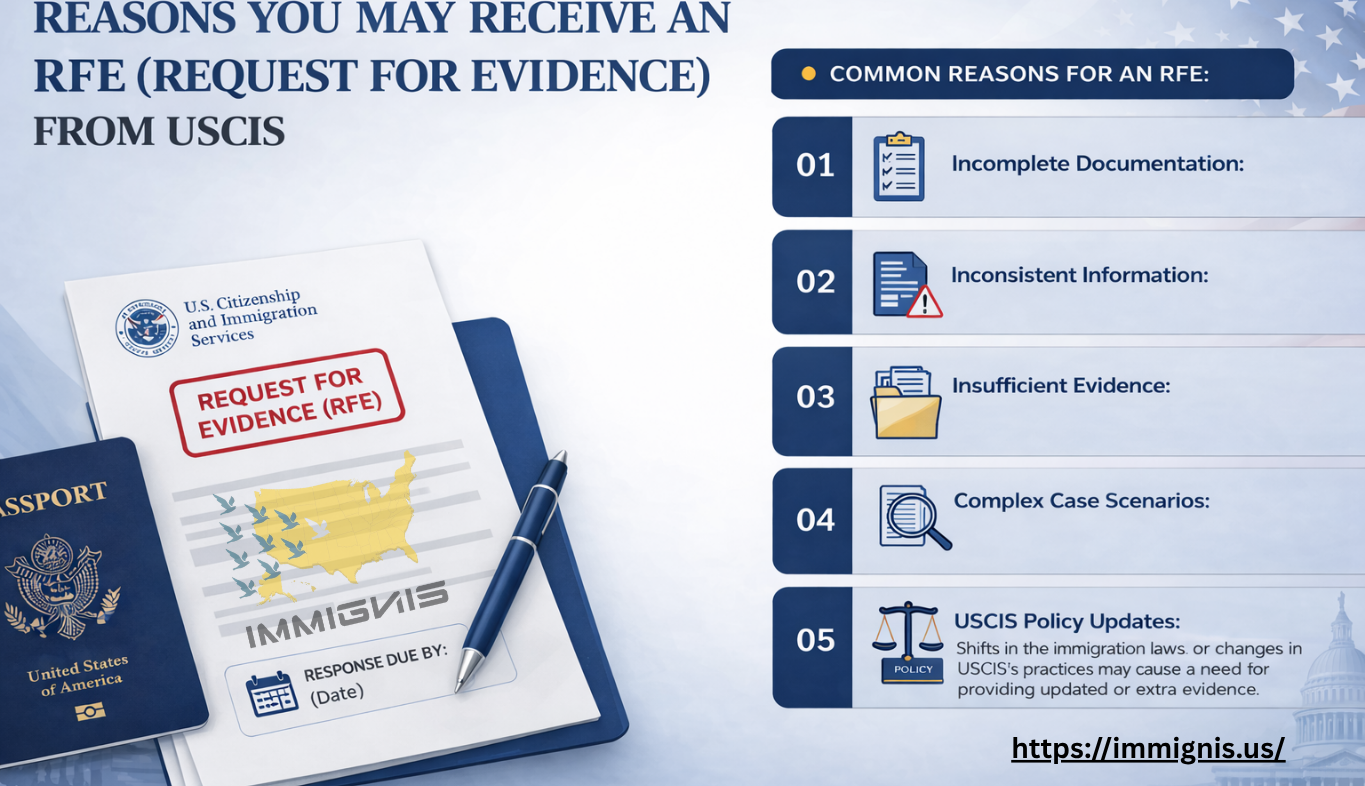
Request for Evidence (RFE) is a written notice that USCIS gives to you when some of the evidence you presented in support of your application is not enough for a decision to be made. This means that the adjudicator needs more information to determine the client’s eligibility for the immigration benefit that he or she is applying for. Following are some of the reasons which may lead to RFEs:
- Incomplete Documentation: This includes the lack of forms, signatures or other mandatory attachments that may lead to Request for Evidence.
- Inconsistent Information: Contradictions between the forms or documents may arouse suspicion.
- Insufficient Evidence: When the evidence produced fails to support a claim to the required standard, for example, work experience, education or special abilities.
- Complex Case Scenarios: Some cases may be rather special and may need some further explanation.
- USCIS Policy Updates: Shifts in the immigration laws or the changes in the USCIS’s practices may cause a need for providing updated or extra evidence.
Is an Request for Evidence (RFE) the same as a Denial that is Coming Up?
Not at all. Getting an Request for Evidence (RFE) is a standard procedure in many applications, and it in no way means that your petition is in the denial stage. In fact, it is a way to expand on your case and present the proof the agency has requested.
An RFE should be viewed as a way of addressing holes or uncertainties in the application. Most of the applicants who get RFEs and properly respond to them are also granted approvals.
How to Respond Strategically to an RFE:
1. Carefully Understand the RFE
- Read the RFE Carefully: This is because USCIS will always explain in detail what is lacking.
- Identify the Deadline: Request For Evidence (RFE) have strict deadline periods (usually 30, 60 or 87 days). If one fails to meet the due time, he or she will end up losing the deal.
- Organize the Requirements: List all the RFEs and then divide them into several sections to work on and a list of what is needed.
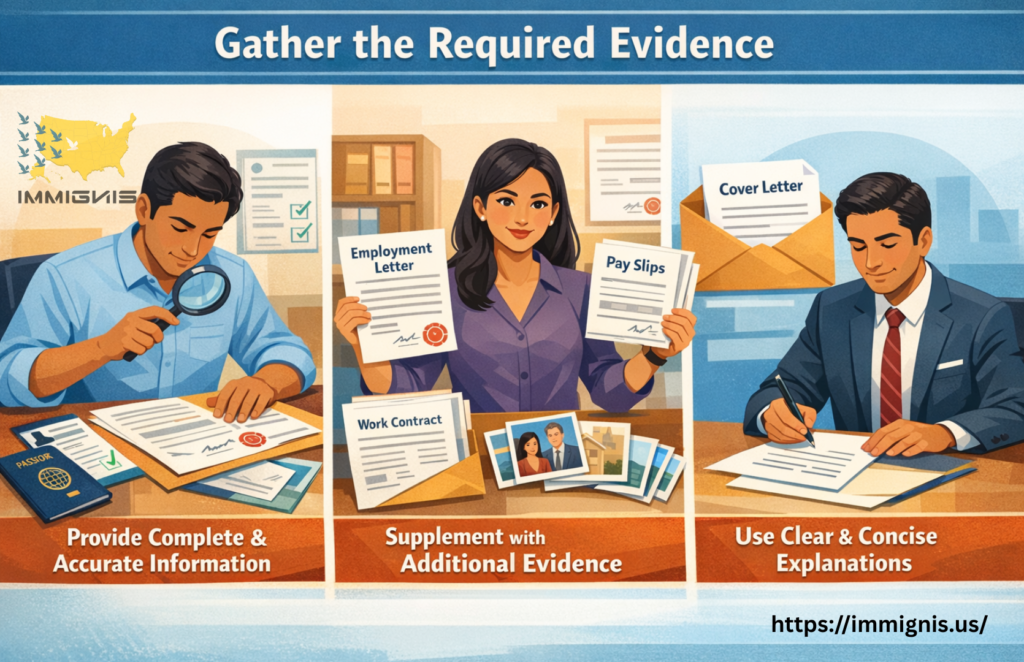
2. Gather the Required Evidence
- Provide Complete and Accurate Information: Make sure that all the documents that you present are in a correct manner and in a way that reflect what you submitted in your application.
- Supplement with Additional Evidence: Anything more than what is asked for can be useful in supporting a case. For example, if you are asked to prove your work history, provide employment letters, pay slips and work contracts.
- Use Clear and Concise Explanations: Where the evidence called for requires an explanation as to why it meets the criteria, then enclose a cover letter or explanation.
3. Organize Your Response
- Follow USCIS Instructions: USCIS may also guide on how the evidence should be arranged for example in a certain way or a certain file.
- Label Documents Clearly: To ensure that every document is easily identified, use tabs or headers and, if possible, refer each document to the corresponding section in the Request for Evidence.
- Include a cover letter: Make a summary of your answers and include them in a cover letter. Make a list of evidence provided and answer each query of USCIS.
4. Seek Help from a Professional
If RFE is not understandable, consider seeking help from an attorney. They will help you out in drafting your response in such a way that it meets USCIS standards and answers all of their queries.
Best Practices to Avoid RFEs
Taking the following steps will help you avoid reducing the chance of RFEs:
- Double-check requirements: Review USCIS guidelines and forms thoroughly before final submission.
- Evidence: Save yourself some trouble and offer more than enough documentation just in case the officials have some other random questions to ask.
- Stay Updated on Policy Changes: Immigration rules and regulations as well as the USCIS’s practices and policies change from time to time, thus making sure that your application is in conformity with the current laws should be ensured.
- Work with Experts: Contact an immigration lawyer or a consultant to help you get the right direction especially if the case is more complicated.
What next? This is followed by the submission of a response to the RFE
After sending your response, the adjudicator shall reconsider the additional evidence together with the initial application. Depending on the quality or completeness of the evidence provided, USCIS may:
- Approve your application if all the issues raised have been addressed.
- Reissue a second RFE in case more questions are raised.
- Deny the application if it is not possible to determine the eligibility for the benefits under the act even after the response.
The processing time, however, depends on the type of application and the level of complexity of the RFE, and USCIS works on applications with active responses.
It is important to know that RFE is stressful, but it is a chance and not a failure. Thus, increase your possibilities of success by understanding the triggers and presenting adequate evidence. Keep in mind that RFEs are common for many immigration cases. These enable USCIS to clarify the doubts and what are the right decisions to be taken. Thus, an RFE can be a milestone towards the realization of one’s immigration goals if proper steps are taken and within the right time.
What is a Request for Evidence (RFE) and why would USCIS issue one?
A Request for Evidence (RFE) is a written notice sent by the U.S. Citizenship and Immigration Services (USCIS) when the evidence submitted in support of your application is insufficient or incomplete. USCIS may issue an RFE for various reasons, such as missing forms, signatures, or required attachments, inconsistencies between documents, insufficient evidence to support claims, or complex cases that need further clarification. RFEs may also arise due to changes in immigration laws or USCIS practices.
Is receiving an RFE the same as having my application denied?
No, receiving an RFE is not a denial of your application. Instead, it is an opportunity to provide additional information to help clarify any uncertainties in your application. USCIS uses RFEs to gather the necessary details to make an informed decision. Most applicants who respond properly to an RFE end up having their applications approved.
How should I respond to a Request for Evidence (RFE)?
When responding to an RFE, it’s crucial to carefully read the notice and identify the specific information that is being requested. Ensure that you meet the deadline, as RFEs usually have strict timeframes. Organize the required documents, providing complete and accurate information, and supplement your response with any additional evidence that may help support your case. It’s also helpful to include a cover letter that summarizes your response and addresses each query. If you are unsure about the response process, it’s a good idea to consult with an immigration attorney to ensure that your response meets USCIS requirements.
How can I avoid receiving an RFE?
To reduce the chances of receiving an RFE, it’s essential to double-check all USCIS guidelines and forms before submission. Provide more documentation than required to preempt potential questions, and stay updated on any changes to USCIS policies or immigration laws. If your case is complex, consider working with an immigration lawyer or consultant to ensure that your application is complete and accurate before submission.
What happens after I submit my response to an RFE?
Once you submit your response to an RFE, USCIS will review the additional evidence alongside the initial application. Depending on the completeness and quality of your response, USCIS may approve your application, issue a second RFE if more information is needed, or deny your application if eligibility cannot be determined even after the response.



Comment
EB-2 NIW Visa: Easy Path for Skilled Workers & Entrepreneurs
March 24, 2026 - 7:49 am[…] Your petition needs evidentiary strengthening (premium processing with weak evidence often yields RFEs) […]