EB-1A for Architects explains how a Colombian architect secured approval after incremental social-housing designs, built-work documentation, architecture-biennale participation, design-press coverage, academic publication, competition judging, and urban-policy citations were organized into an attributable record of influence.
Key facts at a glance
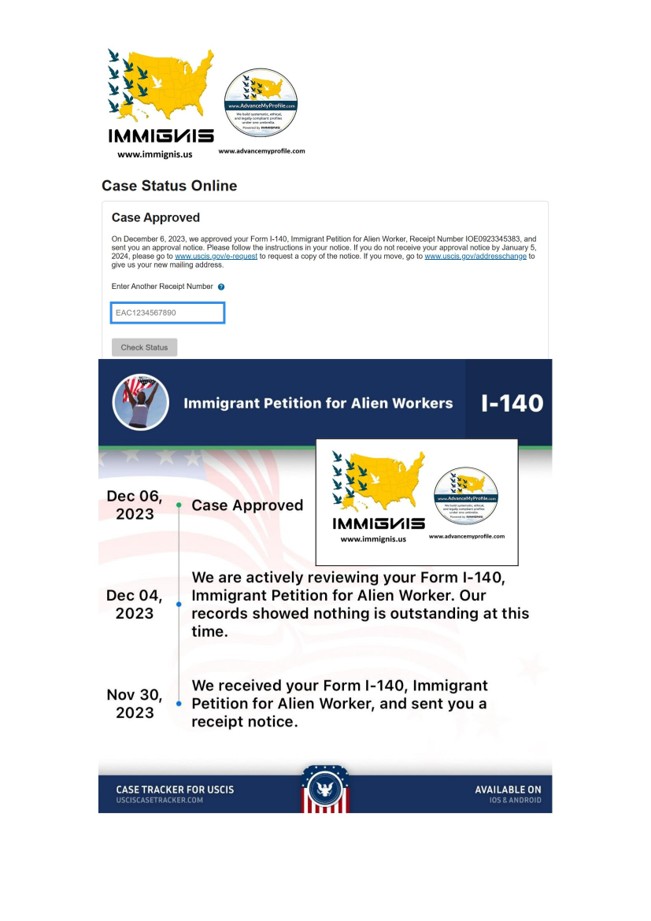
| Petition outcome | Form I-140 approved under EB-1A on December 6, 2023. |
| Professional profile | Colombian architect whose incremental-housing designs helped shape practical approaches to social housing and informal-settlement upgrading. |
| Field niche | Incremental social housing for Latin American cities. |
| Starting weakness | The design philosophy had influence beyond individual projects, but the built work was modest in budget and public credit often attached to the program, institution, or community rather than the architect. |
| Profile-building focus | Built-work and authorship documentation, architecture-biennale participation, design-press coverage, academic publication, design-competition judging, and urban-policy citation records. |
| Principal EB-1A evidence areas developed | Display of work at qualifying artistic exhibitions or showcases, original contributions, published material about the petitioner, judging the work of others, and leading or critical role. |
| Central issue | Showing that architectural influence could be measured through ideas, methods, policy use, and adoption rather than project cost, building size, or the number of square meters completed. |
| Approval lesson | A social-housing architecture case becomes stronger when modest projects are connected to attributable ideas that other designers, institutions, and urban-policy actors use or discuss. |
The projects were modest. The idea traveled.
Social-housing architecture is often judged through photographs, budgets, awards, and the visual scale of completed work. That can disadvantage architects whose most useful contribution is a system families can expand over time rather than a finished object designed to remain unchanged.
The petitioner worked in that quieter part of architecture. Individual projects were not presented as luxury landmarks or high-budget civic icons. Their importance came from an incremental design philosophy: provide a safe and workable starting structure, allow households to improve it as resources become available, and connect the dwelling to a wider approach to neighborhood upgrading.
USCIS approved the architect’s Form I-140 petition on December 6, 2023. The case became persuasive after Immignis and Advance My Profile traced the design ideas through built work, exhibitions, publications, policy references, press coverage, jury service, and records showing where the petitioner personally led the work.
Why social-housing architecture can look smaller than its influence
In conventional architectural publicity, size is easy to display. A large museum, tower, airport, or stadium arrives with photographs, budgets, opening ceremonies, and a clear project name. Incremental housing works differently. Its success may depend on restraint, affordability, repeatability, resident participation, and the ability of a modest first stage to support later change.
That makes the evidence less obvious. A small housing unit may embody a widely useful design principle, yet the public record may credit the municipal program, nonprofit organization, contractor, university studio, or community initiative. The architect’s intellectual contribution can disappear into a project described mainly through social outcomes.
The profile-building work therefore did not try to make modest projects sound physically monumental. It showed why the ideas were important, who developed them, where they appeared, and whether other professionals or policy actors treated them as useful beyond one site.
The field was defined as incremental social housing for Latin American cities
The petition did not frame the applicant as a general architect. It defined the field more precisely as incremental social housing for Latin American cities, including work connected to informal-settlement upgrading and the gradual improvement of homes and neighborhoods.
Incremental design accepts a practical reality: many households cannot obtain a complete, conventional dwelling in one step. The architect must decide what the first stage should provide, what later additions the structure can safely support, how services and circulation will work, and how household change can occur without undermining the original design.
This field definition gave the evidence a common purpose. Built projects showed application. Policy citations showed use of the ideas. Biennale participation and press coverage showed professional visibility. Publications preserved authorship. Jury service showed peer trust. Leading-role records explained who made the critical design decisions.
Built-work documentation established what the architect actually designed
The first task was to move beyond portfolio images. Photographs can show that a project exists, but they rarely establish who developed the housing logic, organized the phasing, set the structural rules, planned future expansion, or coordinated the relationship between a dwelling and its settlement context.
The case used project scopes, signed drawings, design reports, appointment records, presentation materials, planning submissions, correspondence, authorship histories, and letters from knowledgeable participants. Each record helped answer a basic question: what part of the work belonged to this architect?
The evidence also explained the design problem. A modest unit was not treated as significant simply because it served a low-income household. The petition identified the architectural reasoning behind the work, the constraints the design addressed, and the features that allowed the project to operate as an incremental system rather than an unfinished conventional house.
Urban-policy citations showed that the ideas moved beyond one project
The approval hook was influence measured in ideas adopted, not square meters built. Urban-policy citations were valuable because they helped show that the petitioner’s design approach had entered discussions about housing delivery, neighborhood upgrading, land use, affordability, or the treatment of informal urban growth.
A citation alone was not enough. The record needed to identify the cited work, connect it to the petitioner, explain the context in which it was used, and distinguish a passing reference from meaningful professional reliance. Policy papers, planning documents, technical guidance, academic studies, or institutional presentations became stronger when they discussed a method attributable to the architect.
This evidence supported the original-contribution argument because it showed movement from design concept to wider professional use. The petition did not claim that every policy reference proved adoption. It built a documented pattern showing that the ideas were being examined and carried into settings beyond the original commission.
Architecture-biennale participation made the design work publicly reviewable
Architecture biennales and curated design exhibitions can be important in this field because they select work for professional and public examination. The case documented the event, curatorial or selection process, the work displayed, the petitioner’s credited role, and the standing of the exhibition within architecture or urban design.
The petition treated exhibition evidence carefully. Participation was not described as an award unless an award was actually granted. Nor was every conference display labeled an artistic exhibition. The record focused on qualifying architecture showcases and explained why the selected work represented the petitioner’s professional design output.
For an architect whose built projects were financially modest, exhibition records also created a public archive. Models, drawings, diagrams, photographs, and explanatory texts could show the intellectual structure of incremental housing in a way that a finished unit alone could not.
Design-press coverage had to identify the architect and the method
Social-housing projects may receive substantial coverage because of the community, public program, or political debate around them. That does not automatically create published material about the architect. The petition separated articles about a housing issue from articles that actually discussed the petitioner and the petitioner’s work.
Useful design coverage identified the architect, explained the incremental approach, examined a project decision, quoted the petitioner, or connected the person to a wider discussion about housing and urban upgrading. The strongest pieces did more than reproduce a project description supplied by an organization.
This distinction kept the argument accurate. A neighborhood’s visibility was not converted automatically into the architect’s acclaim. Only material that made the petitioner a genuine subject of coverage was used for the published-material evidence area.
Academic publication preserved authorship of the design philosophy
Built work changes over time. Residents add rooms, facades change, institutions rename programs, and websites disappear. Academic and professional publication gave the architect’s ideas a more stable record.
Articles, chapters, design studies, or research-based essays could explain phasing, household adaptation, spatial standards, structural capacity, participatory design, settlement integration, or the limits of incremental construction. Publication made the reasoning available for other architects, planners, researchers, and policy professionals to examine.
The publication record was not used to make the petitioner appear more academic than the career actually was. Its purpose was to establish identifiable authorship and to show that the design philosophy could be articulated, scrutinized, and discussed beyond the project team.
Competition judging documented trust in professional judgment

Design-competition judging provided a direct form of peer evaluation. An architect selected to assess proposals is being trusted to compare the work of other professionals or emerging designers against architectural, social, technical, and contextual standards.
The case documented who appointed the petitioner, what was judged, the level of the entrants, the nature of the competition, and proof that the architect actually participated in the evaluation. Invitations without evidence of completed judging were treated cautiously.
This evidence was particularly useful because it showed influence in both directions. The petitioner had developed a recognizable approach to social housing and was also being asked to decide which ideas from others deserved professional recognition or advancement.
Leading role depended on design authority, not project budget
A modest budget does not mean a modest professional role. The leading or critical-role evidence focused on where the petitioner controlled or shaped the architectural work: defining the housing system, directing a design team, coordinating community or institutional input, approving key decisions, representing the proposal, or carrying responsibility for delivery.
The record also addressed the standing of the organizations or projects involved. It did not rely on a prestigious name alone. Letters and project records explained why the architect’s role mattered to the work and what would have been different without that contribution.
This allowed the petition to make a grounded argument. The architect was not extraordinary because a project cost more money. The record was strong because the petitioner held responsibility for ideas and decisions that others later studied, displayed, cited, or used.
Why this case worked
Each evidence source solved a different attribution problem. Built-work records connected the architect to specific designs. Policy citations traced the movement of ideas. Biennale participation showed curated display of the work. Design press made the petitioner visible. Publications preserved authorship. Jury service showed peer trust. Role documentation established decision authority.
The case also resisted the easiest but weakest argument. It did not ask USCIS to treat social importance as a substitute for proof of individual distinction. Instead, it showed how the petitioner’s own professional record emerged from work addressing a serious housing problem.
That is why the central lesson was more useful than a list of project sizes: architectural influence can be measured through concepts that travel, methods that are cited, and design choices that others adopt or debate.
What architects, planners, and housing professionals can learn
Preserve attribution while a project is active. Signed drawings, role descriptions, meeting records, design reports, presentation files, competition entries, exhibition credits, publication drafts, and policy correspondence are easier to collect before a team changes or an institution archives the project.
Document the idea as well as the building. A portfolio should explain what problem the design solved, what made the method different, how later expansion was anticipated, and where the approach was discussed or reused. Photographs alone rarely establish original contribution or personal responsibility.
Finally, do not apologize for modest scale. Social-housing professionals may have serious influence precisely because their methods can work under financial, land, regulatory, and community constraints. The immigration record still needs proof, but the proof does not have to look like a luxury-project portfolio.
Conclusion
The Colombian social-housing architect’s EB-1A approval came from making a distributed form of influence visible. The projects were modest in budget, but the design philosophy had a life across built work, exhibitions, publications, press, policy discussion, professional judging, and institutional responsibility.
Immignis and Advance My Profile organized that record without confusing social value with individual acclaim. The petition showed who developed the ideas, where those ideas appeared, and why other professionals and institutions paid attention to them.
The client’s name and identifying project details are omitted to protect privacy and confidentiality. The professional field, approval date, starting challenge, and evidence strategy reflect the underlying case record.
Frequently asked questions
Can a social-housing architect qualify for EB-1A?
Yes. The applicant must address the regulatory framework and show, through the total record, sustained recognition at the required level. Social value alone is not enough, but attributable design influence, peer recognition, publications, exhibitions, judging, and leading roles may provide relevant evidence.
Do low-budget projects weaken an architect’s EB-1A case?
Not automatically. Budget can provide context, but it is not a measure of extraordinary ability. The petition should explain the design difficulty, the applicant’s role, the originality of the method, and evidence that the work influenced others.
What is incremental social housing?
It is a housing approach in which an initial dwelling or structural framework is designed to support safe and planned improvement over time. The exact meaning varies by project, so the petition should define the applicant’s own method rather than rely on a broad label.
Can architecture-biennale participation support an EB-1A petition?
It may be relevant when the work was displayed at a qualifying artistic exhibition or showcase and the applicant’s authorship or credited role is documented. Selection, event standing, displayed work, and accurate attribution should all be explained.
Does a project exhibition count as an award?
No. An exhibition and an award are different forms of evidence. Participation should not be described as a prize unless the applicant or work actually received an award.
How can an architect prove that an idea influenced urban policy?
Useful records may include policy documents, planning guidance, institutional studies, technical reports, citations, invitations, correspondence, and letters explaining how the architect’s attributable work informed a later discussion or approach.
Can design-press coverage satisfy the published-material criterion?
Potentially, when qualifying material is about the applicant and the applicant’s work rather than only about a neighborhood, program, institution, or general housing issue. The publication and circulation requirements should also be evaluated.
Can competition-jury service satisfy the judging criterion?
It may when the architect actually judged the work of others in the same or an allied field. The petition should document the appointing body, the work evaluated, the level of participants, and completed service.
How can collaborative housing projects be attributed to one architect?
The record can use signed drawings, reports, project scopes, meeting minutes, authorship records, appointment documents, correspondence, public presentations, and detailed letters from people with direct knowledge. Team context should be preserved rather than overstated.
Do academic articles help an architecture case?
They can help establish authorship, professional identity, and the reach of a design method. Whether a publication also supports a specific regulatory criterion depends on its nature and the way it is presented.
What can prove a leading or critical role on a modest project?
Evidence may show responsibility for the design system, team direction, technical decisions, stakeholder coordination, approvals, public representation, or delivery. The petition should also explain the standing of the project or organization and why the role mattered.
Does working on informal-settlement upgrading automatically prove national importance or extraordinary ability?
No. The importance of the social problem is relevant context, but the petition still needs person-specific evidence showing the applicant’s achievements, recognition, and role.
How does profile building help a social-housing architect?
Ethical profile building identifies where strong work lacks attribution or public documentation. It may organize project evidence, strengthen publication and speaking records, document exhibitions and judging, and develop independent visibility without inventing achievements.
Start with the evidence already hidden in the work
Architects, planners, urban designers, housing researchers, and professionals working in community development may already have useful EB-1A evidence in project files, drawings, policy references, competition records, exhibitions, publications, committee work, teaching, media coverage, and specialist correspondence.
Start with a free EB-1A profile assessment to identify which projects are attributable, which forms of recognition can be documented independently, and which ethical profile-building activities could make the record clearer.