Key facts at a glance:
| Outcome | EB-1A approval for a Nigerian fintech fraud scientist working with a U.K.based fintech platform. |
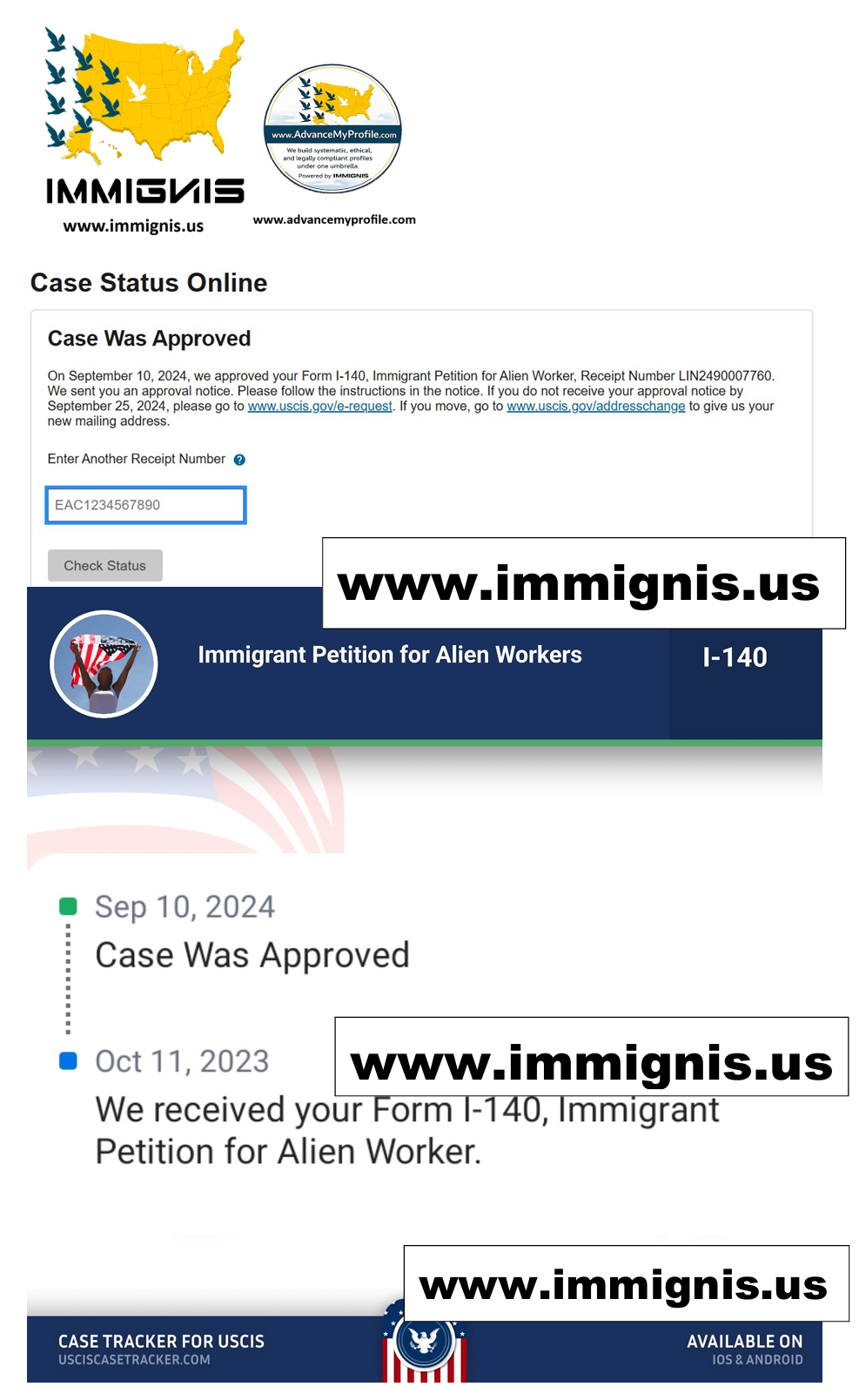
| Approval date | Approved on September 10, 2024. |
| Field niche | Graph-AI fraud detection for real time payment networks. |
| Starting problem | He had strong product results in fraud prevention, but limited academic visibility and weak independent recognition. |
| Path used | Ethical EB-1A profile building through focused fraud intelligence publications, open technical benchmarks, payment scam media commentary, a payments association white paper, patent filing, peer review, fintech award nomination, senior membership, and independent payment risk expert letters. |
| USCIS EB-1A criteria activated | Original contributions, scholarly articles, published material, judging, memberships, and leading role. |
EB-1A fintech approval case: A graph AI fraud scientist earned approval. The fraud alert arrived before the customer even knew anything was wrong. On the screen, it did not look dramatic. A transaction node. A device signal. A merchant connection. A pattern moving across a payment network faster than a human analyst could follow.
That was the work he knew best. He was a Nigerian fintech fraud scientist working with a U.K. based fintech platform, using graph-AI models to detect real time payment fraud. His systems helped identify suspicious relationships across accounts, devices, merchants, cards, and transaction behavior. Inside the company, the value was obvious.
Outside the company, the record was too quiet. He had built serious fraud prevention work. He had not yet built an EB-1A record that showed the field why it mattered.
Why did strong fintech results still look risky for EB-1A?
The risk was that product impact alone could look like private company success.
Fintech fraud detection is a high-stakes field. Real-time payment systems move quickly, and fraud networks adapt quickly. A strong model may reduce losses, protect customers, and help a platform respond to scams, but much of that proof sits inside dashboards, risk systems, product metrics, and confidential fraud operations.
That was the weakness in his case. His strongest evidence lived inside the platform. His public profile did not yet show enough publications, independent recognition, peer review, senior membership, or outside expert validation.
The EB-1A green card is a self-petition immigrant category for people who can show extraordinary ability through sustained national or international acclaim and evidence that they are among the small percentage at the top of their field.
That definition raised a hard question. Could a fraud scientist whose best work was proprietary still show sustained acclaim?
Yes, but the record had to be built carefully. It needed to show that his graph-AI fraud methods were more than employer tools. They had to be presented as a recognized contribution to payment-risk intelligence.
What made this fintech EB-1A case different?
Immignis did not treat this as a general data science case. That would have weakened it. A broad “AI professional” profile can feel scattered. The case needed a precise field where the evidence could build force over time.
Advance My Profile, powered by Immignis, narrowed the case to graph-AI fraud detection for real-time payment networks. That focus gave the record a center. Every activity then had to answer one question: how did his work help detect connected fraud behavior across modern payment systems?
The original file could have invited a Request for Evidence. USCIS could have asked whether the claimed contribution was his individual work, whether product results were confidential and unverified, whether recognition existed outside his employer, and whether the record proved sustained acclaim in a defined fraud intelligence field.
The answer could not be a list of job duties. It had to be a field-specific proof system.
What would USCIS need to see in a graph AI fraud detection case?
USCIS would need to see that the case was not just about a successful fintech employee.
For this profile, the final-merits issue was specific. The officer needed to understand why graph-based AI matters in fraud detection, why real-time payment networks create a different risk environment, and why the petitioner’s work showed recognized expertise beyond one platform.
The petition needed evidence that his methods addressed fraud as a network problem. Scam rings do not always appear as single suspicious transactions. They often appear through relationships: shared devices, repeated merchant patterns, coordinated accounts, unusual velocity, linked beneficiaries, and hidden behavioral clusters.
That made the evidence strategy different from a normal software case. It had to connect technical model design, fraud-prevention outcomes, independent expert views, public fraud commentary, peer review, and payment-sector relevance.
The officer needed to see a fraud-intelligence authority, not a private product engineer.
How did Advance My Profile build the authority record?
The build began with a fraud intelligence roadmap.
The legal strategy team, domain reviewers, content team, media professionals, and evidence team worked from one niche: graph-AI fraud detection for real time payment networks. The case was not expanded into unrelated AI topics. It stayed close to the work he could truthfully own.
First came authorship. With domain support, his knowledge was shaped into focused publications on graph analytics, real time fraud scoring, payment scam detection, and explainable fraud risk intelligence. The goal was not to flood the record. The goal was to make his name traceable to a specific fraud detection problem.
Then came open technical benchmarks. Because direct product data was confidential, the team helped develop safe, non-confidential benchmark material that could show how graph-based fraud approaches are evaluated. This gave the case a public technical layer without exposing platform secrets, customer data, or protected risk rules.
A payments association white paper became a second anchor. It translated the technical problem into industry language: real-time payments, account-to-account fraud, mule networks, authorized push payment scams, and the need for faster risk intelligence. The white paper was prepared for relevant payment-risk and fintech audiences, where the topic could be understood by people outside his employer.
Media visibility followed, but it stayed disciplined. He was positioned for commentary on payment scams, fraud rings, fintech risk, and AI-assisted detection. The point was to establish expert voice in the exact public conversation his work addressed.
The patent filing added intellectual-property evidence where the underlying method supported novelty. It was not used as decoration. It was tied to the same graph AI fraud detection niche and supported the original contribution argument.
Peer review strengthened the record further. As his public technical identity became clearer, he was positioned to review work connected to fintech AI, fraud detection, applied machine learning, and payment security. That mattered because EB-1A values evidence that the field trusts the person to evaluate others.
Recognition signals were pursued carefully. A fintech-award nomination was developed around legitimate fraud-prevention work, and senior membership opportunities were reviewed where eligibility matched his record. Immignis did not add weak honors for appearance. The profile needed recognition that could survive professional scrutiny.
Independent letters gave the case its outside voice. Payment-risk executives and fraud-intelligence leaders explained the significance of his work in real-time fraud prevention. Their letters helped separate his individual contribution from company branding.
The final petition then assembled these parts into one record: publications, benchmarks, white paper, expert commentary, patent filing, peer review, senior membership, award nomination, leading role evidence, and independent validation.
That is how hidden product work became visible field evidence.
Why did ethics matter in a fintech fraud case?

Fraud prevention is a trust field.
A person who works on payment-risk systems cannot afford a profile filled with weak journals, fake awards, paid citations, or media placements that pretend to be independent recognition. Those shortcuts can damage the petition and the professional name behind it.
Immignis treated the EB-1A profile as something the client would carry for life. The publications had to match the niche. The benchmark work had to be safe and truthful. The media commentary had to stay within his real expertise. The award and membership evidence had to be legitimate. The letters had to explain actual significance.
Profile decoration may look busy for one filing, but it can become a liability later.
Profile building creates a record the professional can show to fintech leaders, payment risk teams, conference organizers, journal editors, and future collaborators with confidence.
Could your own EB-1A profile be stronger than it looks?
If your strongest work is internal, product based, proprietary, or hidden inside a platform, your issue may be documentation.
Immignis offers a free profile assessment for professionals who want to understand whether their record may support an EB-1A green card, EB-2 NIW, O-1, or another merit based pathway. The assessment identifies the field niche, evidence gaps, realistic criteria, and the honest path forward.
Which USCIS EB-1A criteria did the final petition activate?
The final Form I-140 petition activated six USCIS EB-1A criteria and connected them through a fraud intelligence final merits narrative.
- Original contributions: The petition showed how his graph-AI fraud detection work supported faster identification of connected fraud behavior in real-time payment networks. Open benchmarks, patent evidence, the white paper, and independent letters helped show significance beyond routine product work.
- Scholarly articles: Focused publications tied his name to graph analytics, payment risk intelligence, and AI-assisted fraud detection.
- Published material: Media commentary on payment scams and fintech fraud placed his expertise in public view and linked his authority to a real industry problem.
- Judging the work of others: Peer-review assignments showed that professional and technical venues trusted him to evaluate work by others in applied AI and fraud detection.
- Memberships: Senior membership evidence supported recognition within relevant fintech, AI, or risk management communities.
- Leading or critical role: Product and role documentation showed that his work carried importance within a distinguished fintech platform and payment risk environment.
The final merits argument did the heavy work. It showed that the evidence was not a collection of disconnected activities. It pointed to one authority profile: a fraud scientist whose graph-AI work helped address a serious risk in real-time payment systems.
For this case, the central message was clear.
He was not only detecting fraud inside a platform. He was helping advance the way payment networks understand fraud as a connected, adaptive system.
What did EB-1A approval mean for him?
Approved on September 10, 2024, the EB-1A approval gave him a self-petition green card path without employer sponsorship and without PERM labor certification.
It also gave him a stronger professional record. Before the build, his value was visible mainly through product outcomes. After the build, he had focused authorship, public technical benchmarks, a payments sector white paper, media recognition, patent filing evidence, peer review, senior membership, award recognition activity, leading role documentation, and independent letters from payment risk executives.
The approval was the immigration result. The safest path is to build the recognition your real work deserves: focused publications, public technical evidence, expert commentary, peer review, selective membership, meaningful awards, independent letters, and a petition narrative that can survive review.
The authority record was the career asset.
If this sounds like you
You may be a fintech scientist, risk engineer, cybersecurity architect, data scientist, or AI specialist whose strongest work lives inside a product environment.
That does not mean your record is weak. It may mean your record is unfinished.
Do not build evidence you will need to hide later. Build an EB-1A profile that protects your name while strengthening your immigration future.
Can a fintech fraud scientist qualify for an EB-1A green card if most results are product based?
Yes. Product based work can support an EB-1A green card when the petition shows that the contribution has field level significance, not just employer value. In a fraud detection case, the strongest evidence may include original methods, safe technical benchmarks, publications, payment sector recognition, peer review, leading role evidence, and independent letters from fraud-risk experts.
How can graph-AI fraud detection be shown as an original contribution?
Graph-AI fraud detection can be framed as an original contribution when the record shows that the applicant developed or advanced methods for detecting connected fraud behavior across accounts, devices, merchants, or transaction networks. The petition should explain why the approach matters in real-time payments and support that explanation with technical evidence, expert validation, and industry facing documentation.
Can open technical benchmarks help when fintech data is confidential?
Yes. Open benchmarks can help when they are designed safely and do not expose customer data, platform secrets, or proprietary fraud rules. They allow the applicant to show technical thinking, evaluation methods, and field relevance in a way USCIS can review without violating confidentiality.
Why does media commentary matter in a payment fraud EB-1A case?
Media commentary matters when it shows that the applicant is being treated as an expert voice on a relevant public problem. In this case, commentary on payment scams, fraud rings, and AI-assisted risk detection helped connect the petitioner’s name with fintech fraud intelligence outside the employer.
What can create RFE risk in a fintech EB-1A petition?
RFE risk can arise when the case relies on internal product claims without independent proof. USCIS may question whether the work belongs to the applicant, whether the results are verifiable, whether the recognition is outside the employer, and whether the total record shows sustained acclaim in a defined field.
Is EB-1A useful for fintech professionals who do not want employer sponsorship?
Yes, for qualified applicants. EB-1A allows a person to self-petition by filing Form I-140 without employer sponsorship and without PERM labor certification. The applicant still must prove extraordinary ability through strong evidence and a persuasive final merits record.
Build an EB-1A success story around evidence you can trust
If you work in fintech fraud detection, payment-risk analytics, graph AI, cybersecurity, or applied machine learning, your strongest achievements may already exist. They may be hidden inside systems, dashboards, and product outcomes.
Immignis helps professionals build EB-1A profiles through ethical evidence development, field specific positioning, reputable visibility, independent validation, and petition ready storytelling.