Key facts at a glance:
| Outcome | EB-1A approval for a South African battery recycling metallurgist working with a U.S.-based clean tech startup. |
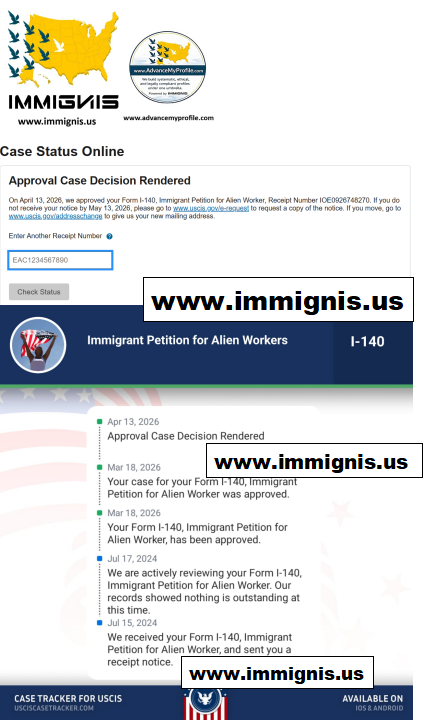
| Approval date | Approved on April 13, 2026. |
| Field niche | Critical mineral recovery from end of life EV batteries. |
| Starting problem | His initial record looked like ordinary process engineering, even though the work addressed battery supply chain resilience. |
| Path used | Ethical EB-1A profile building through focused technical articles, patent filing, pilot validation summary, recycling and mineral policy white paper, invited talk, media coverage, peer review, and independent battery and materials expert letters. |
| USCIS EB-1A criteria activated | Original contributions, scholarly articles, published material, judging, patents, and leading role. |
The approval came after the work finally had a name
A battery pack reaches the end of its life long before its metals lose their value.
He knew that better than most people in the room. Inside discarded EV batteries were lithium, nickel, cobalt, manganese, graphite, and the future of cleaner transportation. To him, battery waste did not look like waste. It looked like a recovery problem the world could no longer postpone.
Yet when he first looked at his immigration record, it did not tell that story and that is where this EB-1A Approval Case Recycling Metallurgist begins to take shape.
The file made him look like a capable process engineer in a clean-tech startup. It did not show a metallurgist helping recover critical minerals from end of life EV batteries. It did not explain why his work mattered to U.S. battery manufacturing, mineral independence, or the circular economy.
The science was there. The public proof was not.
Why did a critical minerals expert still look risky for EB-1A?
The risk was classification.
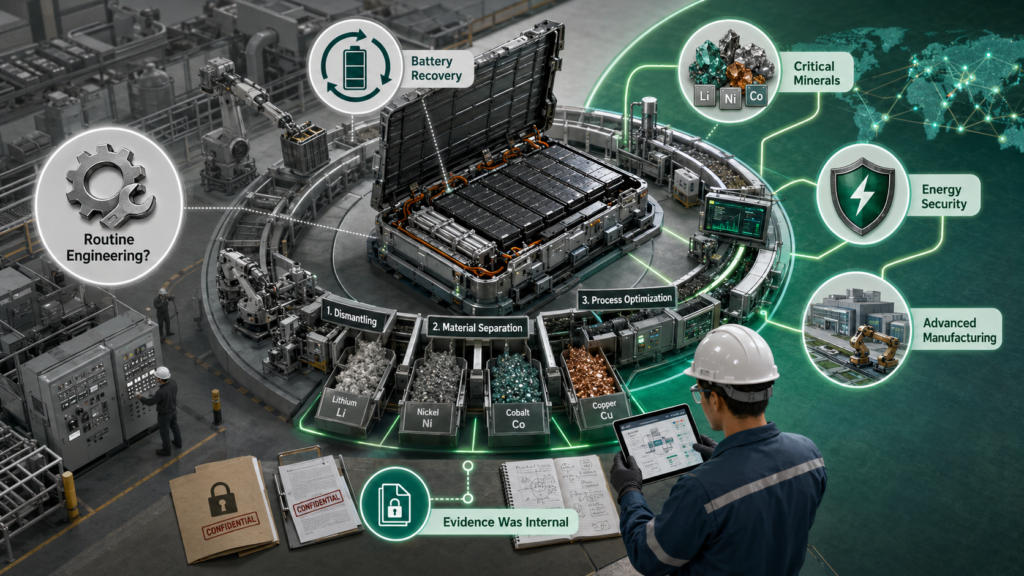
Battery recycling sits at the intersection of metallurgy, clean technology, industrial process design, and supply chain resilience. If that work is presented loosely, it can look like ordinary plant optimization. If it is documented correctly, it can show original contribution in a field that matters to energy security and advanced manufacturing.
His starting record had real technical work. It included process improvement experience, pilot-level learning, and problem solving inside a U.S.based clean-tech environment. But the evidence was scattered and mostly internal. Much of it lived in lab notes, process discussions, confidential startup documents, and technical decision making that was never written for USCIS.
The EB-1A green card is a self petition immigrant category for people who can show extraordinary ability through sustained national or international acclaim and evidence that they are among the small percentage at the top of their field.
That standard sounded distant at first. He was not a public academic. He was a technical operator in a hard industrial field. His worry was simple: would USCIS see critical-mineral recovery, or would it see routine process engineering?
What did Immignis change in the way the case was built?
Immignis changed the center of the case. The original profile was too broad. “Battery recycling” alone was not enough. “Process engineering” was too generic. The record had to be narrowed to a field where his work could be understood, measured, and validated: critical mineral recovery from end of life EV batteries.
That niche gave the case a stronger spine. Technical articles, patent evidence, pilot validation, white papers, media coverage, peer review, invited speaking, and independent letters could now point to the same professional identity.
Immignis did not treat the petition as a writing exercise. The team treated it as a profile building and evidence-conversion project. Legal strategy, metallurgy review, technical content, media positioning, IP coordination, and final evidence assembly were aligned around one question: could his contribution be shown as field-relevant recovery work, not routine startup labor?
What would USCIS need to see in a battery recycling EB-1A case?
USCIS would need to see the individual contribution behind the industrial work.
That was the heart of the case. In clean tech startups, many achievements can look collective. The officer may ask whether a process improvement came from the company, from the team, or from the petitioner personally. In battery recycling, the officer may also ask whether the claimed methods were actually significant, or just normal engineering adjustments made during scale up.
For this petition, the evidence had to answer practical questions. Did his work improve how valuable minerals could be recovered from spent EV batteries? Did his methods connect to lithium-ion battery recycling and critical-mineral supply challenges? Did independent materials experts understand the contribution? Did the record show recognition outside the employer? Did the total evidence rise above a good job description?
The final merits issue was narrow and important: the petition had to show that he was building recognized authority in critical mineral recovery, not merely participating in a clean tech project.
How did Advance My Profile turn process work into public authority?
The build began by separating what could be shown from what had to stay confidential.
That mattered because battery recycling work often involves proprietary flowsheets, reagent choices, recovery conditions, pilot data, customer discussions, and startup-owned technical decisions. Immignis helped identify safe, non confidential themes that could be used publicly without exposing trade secrets.
First came technical authorship. His knowledge was shaped into focused technical articles on end-of-life EV battery recycling, critical-mineral recovery, recovery process reliability, and the industrial challenge of turning battery waste into usable feedstock. The writing stayed close to his real field. It did not chase unrelated energy topics for appearance.
Then came the patent path. Where the technical work supported an invention claim, Immignis coordinated the evidence around a patent filing. The petition did not present the filing as a trophy. It explained how the underlying method connected to original contribution in battery-material recovery.
Pilot validation became the bridge between theory and field significance. Immignis helped prepare a pilot validation summary that explained the recovery problem, the tested approach, the practical value, and the role he played. The summary was written without disclosing confidential startup data, but it gave USCIS a way to understand why the work mattered.
A white paper followed for recycling and mineral policy audiences. This was one of the most important evidence pieces because critical minerals are not only a chemistry issue. They are a supply chain issue. The white paper framed end of life EV batteries as a domestic resource stream and positioned his work within the larger discussion on battery supply resilience, recycling capacity, and clean manufacturing.
Public recognition was built carefully. He developed media coverage around EV battery recycling, critical mineral recovery, and the need for safer, scalable recycling systems. The coverage did not exaggerate his role. It translated the technical value into language that policymakers, investors, manufacturers, and industry readers could understand.
The profile also gained professional evaluation signals. Peer-review service showed that the field trusted him to evaluate related technical work. An invited talk gave him a public platform to explain recovery methods and battery material challenges. Independent letters from battery and materials experts gave the petition its outside voice.
Step by step, the record stopped looking like internal process work. It began to look like a clear authority profile in critical-mineral recovery from end of life EV batteries.
Why did ethical profile building matter in this clean tech case?
Battery recycling is too important for artificial evidence.
A weak profile can be dressed up with low quality publications, vague awards, paid media, or exaggerated “green innovation” claims. That may look busy for a moment, but it creates risk. USCIS can question unsupported claims, and technical fields remember credibility problems.
Immignis built the record around evidence he could own. The publications were field-connected. The patent filing was tied to real technical work. The pilot validation summary was careful. The white paper had a clean audience and purpose. The media coverage spoke to a real industry problem. The letters came from experts who could explain significance, not just praise him.
That is the difference between profile building and profile decoration.
Profile decoration creates papers and publicity that a professional may later avoid mentioning. Profile building creates a career record the professional can continue using with employers, investors, conference organizers, industry groups, and future collaborators.
Could your own EB-1A profile be stronger than it looks?
If your strongest work is industrial, confidential, pilot based, or tied to a startup, your issue may be documentation rather than ability.
Immignis offers a free profile assessment for professionals who want to understand whether their record may support an EB-1A green card, EB-2 NIW, O-1, or another merit-based pathway. The assessment identifies the precise field niche, the evidence gaps, the realistic criteria, and the safest way to build recognition without weakening professional credibility.
Which USCIS EB-1A criteria did the final petition activate?
The final Form I-140 petition activated six USCIS EB-1A criteria and tied them into one final-merits narrative.
Original contributions: The petition showed how his work in critical-mineral recovery addressed the technical and industrial challenge of recovering value from end of life EV batteries. Pilot validation, technical documentation, patent evidence, white paper framing, and expert letters helped show significance beyond ordinary process support.
Scholarly articles and authored material: Focused technical articles showed authorship in battery recycling, metallurgy, and critical-mineral recovery.
Published material: Media coverage placed his work in public view and connected his name with EV battery recycling and battery supply chain resilience.
Judging the work of others: Peer-review service showed that he was trusted to evaluate related technical work in clean technology, materials, or recycling.
Patents: The patent filing supported the argument that his work involved protectable technical novelty tied to mineral-recovery methods.
Leading or critical role: Startup and project evidence showed that his role contributed to important recycling and recovery functions within a clean-tech organization working in a field of strong public and industrial relevance.
The final merits narrative did the heaviest work. It explained that the evidence was not a pile of disconnected clean-tech activities. It showed sustained professional growth in one defined field: critical mineral recovery from end-of-life EV batteries.
For this case, the central message was direct: he was not simply recycling batteries. He was helping build the recovery knowledge needed for a stronger battery supply chain.
What did EB-1A approval mean for him?
The EB-1A approval gave him freedom and recognition at the same time. The petition showed how a technical record that first looked like ordinary process engineering could be rebuilt into a documented authority profile. The case gave him a self-petition green card path through Form I-140 without employer sponsorship and without PERM labor certification.
The professional result was just as important. After profile building, he had a defined critical minerals niche, technical articles, patent evidence, a pilot validation summary, a policy-facing white paper, invited speaking, public media visibility, peer-review service, and independent expert validation. The approval was the immigration result. The authority record was the long term asset.
If this sounds like you:
You may be a metallurgist whose strongest work sits inside a plant, pilot line, lab, or startup. You may be a battery engineer, materials scientist, process specialist, or clean tech founder whose contribution is real but hard to see from the outside.
That does not mean your record is weak. It may mean your record is unfinished.
The safest path is not to invent recognition. The safest path is to build the recognition your real work deserves: focused authorship, pilot evidence, patent or IP work where appropriate, white papers, media coverage, peer review, invited talks, independent expert letters, and a petition narrative that can survive review.
Do not build evidence you will need to hide later. Build an EB-1A profile that supports your immigration future and strengthens your professional name.
Can a battery recycling metallurgist qualify for an EB-1A green card?
Yes. A battery recycling metallurgist may qualify for an EB-1A green card if the record shows extraordinary ability through sustained acclaim and evidence under the USCIS EB-1A criteria. Strong evidence may include original recovery methods, technical publications, patent filings, pilot validation, peer review, published material, leading role evidence, and independent expert letters.
What makes EV battery recycling work more than ordinary process engineering?
The petition must show individual contribution and field significance. In a critical-minerals case, that may involve recovery methods, pilot validation, patent evidence, technical adoption, or expert letters explaining why the work advances battery-material recovery beyond routine optimization.
How can proprietary clean-tech work be used in an EB-1A petition?
Proprietary work can be used when it is documented safely. The record should avoid trade secrets, customer data, detailed process parameters, and confidential startup information. Non-confidential summaries, white papers, patent documents, technical articles, and independent letters can make the work visible without exposing protected information.
Does a patent filing help if the patent has not yet been granted?
A patent filing can help when it is tied to real technical novelty and supported by other evidence. It is usually stronger when the petition explains the problem solved, the applicant’s role, the relevance to the field, and how the work connects to broader recovery or supply chain needs.
Why are white papers useful in a critical minerals EB-1A case?
A white paper can connect technical work to the industry or policy problem it helps address. For battery recycling, a strong white paper may explain the importance of end of life EV batteries, domestic mineral recovery, recycling capacity, and supply chain resilience. It should be serious, targeted, and field specific.
Is EB-1A better than EB-2 NIW for clean tech and battery professionals?
EB-1A and EB-2 NIW answer different questions. EB-1A focuses on extraordinary ability and sustained acclaim, while EB-2 NIW focuses on a proposed endeavor and national interest. A clean tech professional may be stronger for EB-2 NIW at first and later become EB-1A ready after building enough independent recognition.
Build an EB-1A success story around evidence you can trust
If you work in battery recycling, critical mineral recovery, clean technology, metallurgy, materials engineering, or EV supply chains, your strongest achievements may already exist. They may be hidden inside technical systems, pilot results, confidential startup work, or process evidence that has never been organized for immigration review.
Immignis helps professionals build EB-1A profiles through ethical evidence development, field specific positioning, reputable visibility, independent validation, and petition ready storytelling.