Key facts at a glance:
| Outcome | EB-1A approval for a Turkish surgical robotics engineer working with a U.S. based medtech company. |
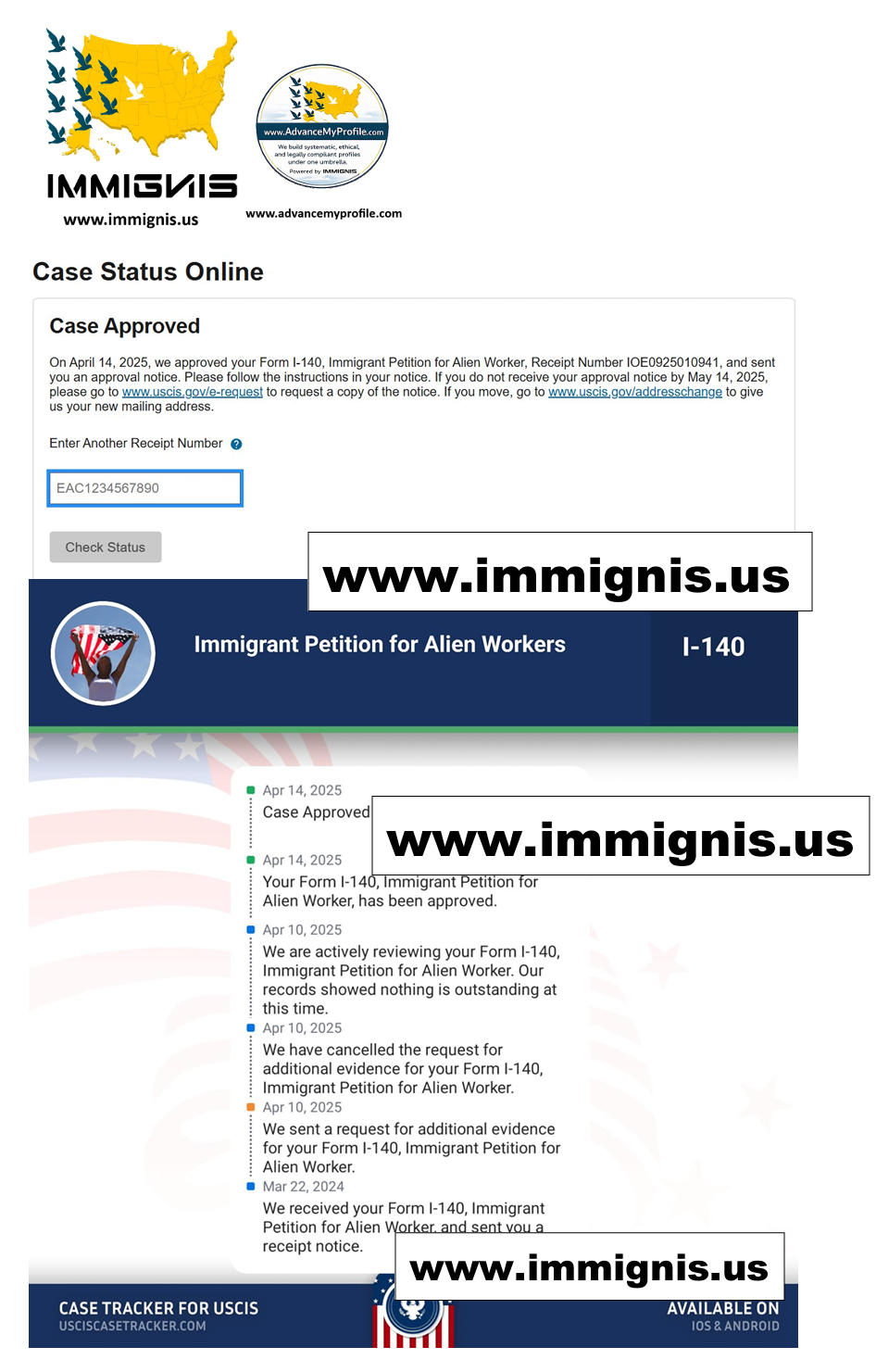
| Approval date | Approved on April 14, 2025. The public case history also reflected an additional evidence request that was later cancelled before approval. |
| Field niche | Robotic assistance for minimally invasive orthopedic surgery. |
| Starting problem | His employer achievements were substantial, but the original record did not clearly separate his individual engineering influence from the company’s product branding. |
| Path used | Ethical EB-1A profile building through non-confidential technical publications, patent family documentation, FDA facing design evidence, surgeon adoption letters, trade media features, invited demonstrations, medtech judging, high salary evidence, and independent expert letters. |
| USCIS EB-1A criteria activated | Original contributions, patents, published material, judging, leading role, and high salary. |
The EB-1A surgical robotics engineer could watch a surgeon guide a robotic arm and see the hidden engineering inside every movement. Torque limits. Instrument paths. Human factors decisions. Safety checks that nobody outside the design team would ever notice. The company saw the product. Surgeons saw the clinical usefulness. Investors saw a medtech story.
USCIS needed to see him. That was the difficulty. His work supported robotic assistance for minimally invasive orthopedic surgery, but the original record was wrapped inside employer branding. The strongest achievements were real, but they looked like company achievements first and individual achievements second. He had not built an ordinary engineering career. He had built a medtech career that needed to be separated from the machine around it.
Why did a surgical robotics engineer still look risky for EB-1A?
The risk was attribution. In medtech, a single device can carry the names of a company, a product line, a regulatory team, a clinical advisory board, a surgeon group, and an engineering department. That can make an individual engineer’s contribution difficult to prove, even when the contribution is central.
This Turkish engineer had helped advance robotic assistance in minimally invasive orthopedic surgery. His work touched design decisions that matter in an operating room: precision, usability, repeatable motion, safety constraints, and how surgeons interact with robotic support during delicate procedures.
Still, the early EB-1A record did not show enough field recognition. It had strong employment evidence and technical depth, but it did not yet explain why his individual contribution mattered beyond one company. The EB-1A green card is a self-petition immigrant category for people who can show extraordinary ability through sustained national or international acclaim and evidence that they are among the small percentage at the top of their field.
That definition can feel impossible to a medtech engineer whose work is proprietary. He was not publishing every design decision. He was not free to disclose internal device files. He could not turn confidential engineering records into public evidence. But he did not need to expose confidential technology. He needed a clean, lawful, field-specific evidence strategy.
What did Immignis see in the original record?
Immignis saw a serious engineer whose achievements were trapped inside company language. The case was not treated as automatically ready because he worked in surgical robotics. A U.S based medtech role, patent history, and device responsibilities can help, but they do not by themselves prove sustained acclaim. The first question was more precise: could the record show his individual engineering influence behind clinically useful robotic systems?
The original file could have invited hard questions. Was he a key contributor or one member of a product team? Were the patents tied to his actual engineering work? Did surgeons or independent medtech experts recognize the value of his contribution? Did the evidence show a field-level impact in medical device robotics, not only a job inside a strong company?
Immignis narrowed the story to one field: robotic assistance for minimally invasive orthopedic surgery. That focus gave the case a center. It allowed the publications, patent-family evidence, surgeon-adoption letters, trade media, demonstrations, judging, leading-role proof, and salary documentation to point in the same direction.
What would USCIS need to see in this surgical robotics case?
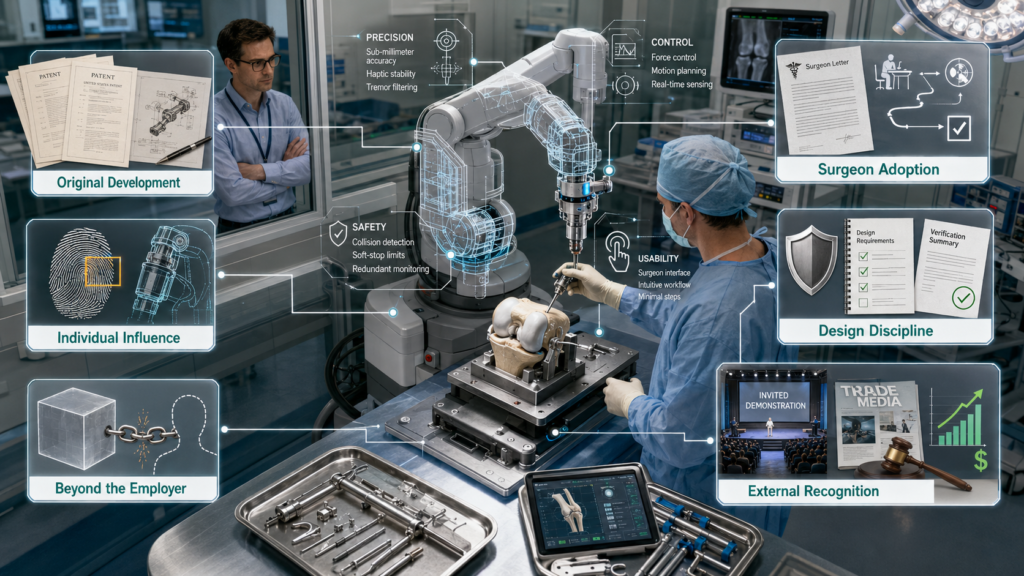
USCIS needed to see engineering influence that could be separated from the employer’s product brand. For this profile, the final-merits issue was not whether surgical robotics is important. It clearly is. The issue was whether this particular engineer had a recognized role in advancing robotic assistance for orthopedic surgery, and whether the record showed that others in the field viewed his contribution as meaningful.
The petition had to answer several case-specific questions:
- Could his individual work be connected to specific robotic surgery design, control, usability, or safety functions without revealing confidential company files?
- Could patent family documentation show his role in original technical development, not only his employment on a product team?
- Could surgeon doption letters explain how the technology supported clinical workflow in minimally invasive orthopedic procedures?
- Could FDA facing design evidence show disciplined medical device engineering without claiming approvals or regulatory facts that were not in the record?
- Could trade media coverage, invited demonstrations, medtech judging, and high-salary evidence show recognition beyond internal employment?
That is why the case could not be built as a simple founder-style or employee-achievement story. It had to be built as a medical-device engineering record with a clear technical spine.
How did Advance My Profile build his authority record ethically?
The build began by removing the noise. Advance My Profile, powered by Immignis, started with a bespoke assessment. The legal strategy team, medical-device reviewers, technical writers, media team, and evidence team reviewed what could be used, what had to remain confidential, and what needed to be built publicly.
The profile was repositioned from a broad “surgical robotics engineer” label to a sharper authority niche: robotic assistance for minimally invasive orthopedic surgery. That language helped keep the evidence focused on one professional identity.
First came non-confidential technical publications. These pieces did not disclose protected employer technology. They explained the engineering problems behind robotic assistance: accuracy, surgeon control, human-machine interaction, device reliability, and safety-aware design thinking. The goal was to show authorship and technical understanding in the same field as the petition.
Then came patent-family documentation. Immignis helped organize the available patent evidence around the engineer’s personal contribution. The petition did not present patents as trophies. It explained how the patent-family record fit into the original-contribution argument.
FDA-facing design evidence added a different kind of strength. This evidence helped show that his work lived in a regulated, safety-sensitive environment where documentation, risk controls, validation thinking, and design discipline matter. The story stayed accurate. It did not claim confidential approvals or unsupported regulatory outcomes.
Surgeon-adoption letters became a key bridge between engineering and clinical use. These letters explained how robotic assistance can support minimally invasive orthopedic workflows and why careful engineering behind usability, precision, and safety matters to the people using the technology.
Trade media features and invited demonstrations widened the record. They showed that his work was no longer locked inside a company presentation deck. The field could now see a technical professional connected to medical device robotics, surgical workflow, and clinically useful innovation.
Medtech judging strengthened the recognition evidence. Once he was invited to evaluate medical device or health-innovation work, the record shifted from being only about what he built to showing that others trusted his judgment.
High-salary evidence helped complete the market-value picture. Comparative compensation data showed that his remuneration reflected senior technical value in medical device robotics, not a standard engineering role.
Independent expert letters tied the case together. The strongest letters did not repeat praise. They explained why his work mattered in surgical robotics, how his engineering contribution differed from routine product support, and why his profile belonged in the conversation about minimally invasive orthopedic technology.
Why did the ethical approach matter in surgical robotics?
In surgical robotics, weak evidence is dangerous. A medical device engineer works in a field where patients, surgeons, regulators, hospitals, and companies all depend on trust. Fake awards, loose media claims, inflated clinical impact, or careless disclosure of confidential material can harm both the petition and the professional’s name.
Immignis treated the profile as a career asset, not a one-time filing packet. The publications had to stay within his field. The patent evidence had to match the actual record. The surgeon letters had to explain genuine adoption and clinical relevance. The design evidence had to be safe and lawful. The media coverage had to make the technical contribution visible without turning medical-device work into hype.
That is the difference between profile building and profile decoration. Profile decoration creates documents for a filing. Profile building creates a record the professional can continue to own, explain, and use in future career opportunities. In this case, the goal was not to make the engineer look bigger than his work. The goal was to make the work finally visible under his own name.
Could your own EB-1A profile be stronger than it looks?
If your strongest work sits inside a product, a hospital system, a design history file, a regulated engineering process, or a company-owned platform, your issue may be evidence visibility.
Immignis offers a free profile assessment for professionals who want to understand whether their record may support an EB-1A green card, EB-2 NIW, O-1, or another merit-based pathway. The assessment identifies the field niche, evidence gaps, realistic criteria, and the honest path forward.
Which USCIS EB-1A criteria did the final petition activate?
The final Form I-140 petition activated six USCIS EB-1A criteria and tied them into a final-merits narrative.
Original contributions: The petition showed how his work supported clinically useful robotic assistance in minimally invasive orthopedic surgery. Patent family documentation, design evidence, surgeon-adoption letters, and expert opinions helped explain the significance.
Patents: The patent family record was organized to show his personal connection to original medical device engineering work and to support the contribution narrative.
Published material: Trade media features placed his expertise in public view and connected his name with surgical robotics, medical-device engineering, and orthopedic innovation.
Judging the work of others: Medtech judging showed that he was trusted to evaluate emerging health technology and medical device work by others.
Leading or critical role: Employer and project evidence showed that his engineering role was important to significant surgical robotics functions inside a distinguished medtech environment.
High salary: Comparative remuneration evidence showed that his compensation reflected senior market value in medical-device robotics.
The final merits argument did the heaviest work. It explained that the record was not a collection of unrelated achievements. It showed a focused medtech engineer whose publications, patent evidence, surgeon adoption, trade visibility, judging, leading role, and remuneration all pointed to one field.
For this case, the central message was clear: he was not only employed by a surgical robotics company. He had documented individual engineering influence behind robotic systems designed to support minimally invasive orthopedic care.
What did EB-1A approval mean for him?
The approval gave him more than immigration progress. Approved on April 14, 2025, the case showed how an engineer whose work was once absorbed into company branding could become visible as a recognized medical device robotics professional. The public case history also reflected an additional evidence request that was later cancelled before approval, which made the clean organization of the record even more important. With EB-1A, he had a self-petition green card path without employer sponsorship and without PERM labor certification. The professional result was just as important.
After profile building, he had a defined niche, non confidential technical authorship, patent-family evidence, surgeon adoption support, FDA-facing design documentation, trade media recognition, invited demonstrations, medtech judging, high-salary evidence, and independent expert validation. The approval was the immigration result. The authority record was the long-term asset.
If this sounds like you:
You may be a surgical robotics engineer whose strongest work is buried inside product development. You may be a medtech founder, systems engineer, human factors specialist, biomedical engineer, or device architect whose contribution is real but hard to separate from the employer brand. That does not mean your record is weak. It may mean your record is unfinished. The safest path is not to invent recognition.
The safest path is to build the recognition your real work deserves: technical authorship, patent documentation, clinical adoption support, credible media, invited demonstrations, judging, high salary evidence, independent expert letters, and a final petition narrative that can withstand close review. Do not build evidence you will need to hide later. Build an EB-1A profile that protects your name and strengthens it.
FAQ:
Can a surgical robotics engineer qualify for an EB-1A green card?
Yes. A surgical robotics engineer may qualify for an EB-1A green card if the record shows extraordinary ability through sustained acclaim and evidence under the USCIS EB-1A criteria. Strong evidence can include patent-family documentation, original technical contributions, published material, judging, leading role proof, high remuneration, surgeon adoption letters, and independent expert opinions.
How can an engineer prove individual contribution when the product belongs to a company?
The petition should separate the engineer’s personal role from the employer’s product brand. This can be done through non confidential technical publications, patent records, design documentation, role evidence, surgeon or user-adoption letters, and independent expert letters that explain what the engineer personally contributed.
Can FDA-facing design evidence help an EB-1A surgical robotics case?
Yes, when used carefully. FDA-facing or regulatory facing design evidence can show that the engineer worked in a safety sensitive medical device environment involving validation, risk controls, usability, and design discipline. It should not overstate approvals or reveal confidential documents.
Do surgeon-adoption letters matter in a medical-device robotics petition?
They can matter when they explain real clinical relevance. A strong surgeon letter should describe how the robotic assistance supports minimally invasive orthopedic workflow, precision, usability, or clinical adoption. The letter should not be generic praise; it should connect the engineering work to practical surgical use.
What should a petition do if the case history shows an additional evidence request?
The story should be accurate. If USCIS issued and later cancelled an additional-evidence request, the article and petition history should not imply a frictionless timeline. The stronger point is that the record was organized clearly enough to support approval after scrutiny.
Does a surgical robotics EB-1A applicant need to be a physician?
No. A surgical robotics applicant does not need to be a physician if the claimed field is engineering, medical-device robotics, biomedical engineering, or a related technical area. The evidence should show top-level standing in the applicant’s own field, not in clinical practice unless the person is actually practicing medicine.
Build an EB-1A success story around evidence you can trust
If you work in surgical robotics, medical-device engineering, orthopedic technology, biomedical systems, or another safety critical field, your strongest achievements may already exist. They may simply be hidden inside company systems, product files, or confidential development work.
Immignis helps professionals build EB-1A profiles through ethical evidence development, field-specific positioning, reputable visibility, independent validation, and petition-ready storytelling.