Key facts at a glance
| Outcome | EB-1A approval for a Swedish autonomous vehicle safety researcher working at a Sweden-based mobility lab. |
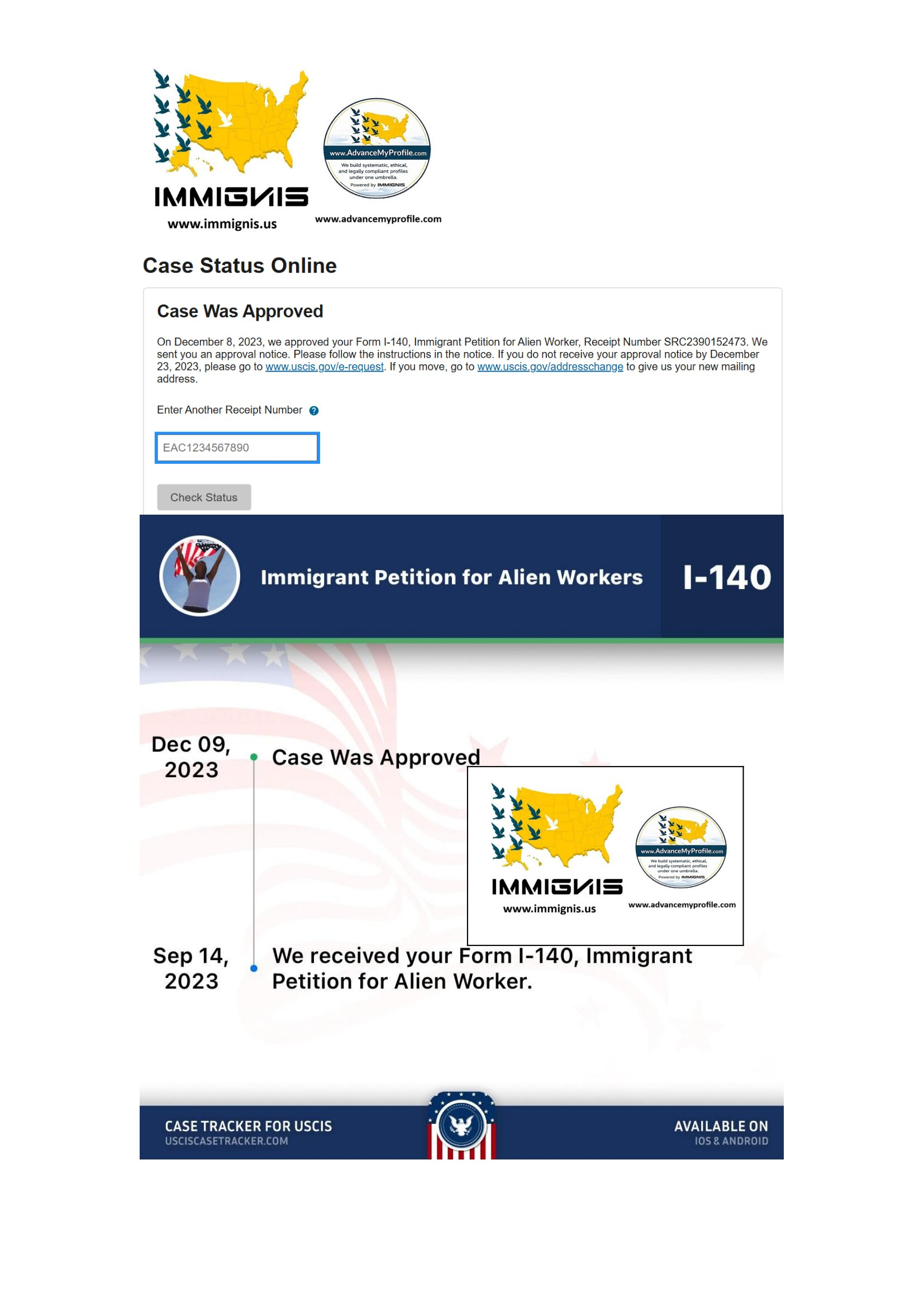
| Approval date | Approved on December 8, 2023. |
| Field niche | Scenario-based safety validation for autonomous vehicles and safe autonomous mobility systems. |
| Starting problem | His technical validation work was strong, but public acclaim, independent recognition, and a focused EB-1A authority narrative were limited. |
| Path used | Ethical EB-1A profile building through focused publications, an open scenario library, a transportation-safety policy paper, media interviews, an invited expert panel, standards participation, peer review, selective professional membership, and independent letters from mobility safety experts. |
| USCIS EB-1A criteria activated | Scholarly articles, original contributions, published material, judging, and memberships. |
The approval came on December 8, 2023.
By then, his career had been reorganized around the moments an autonomous vehicle should not be allowed to look confident.
A pedestrian partly hidden by a parked van. A sudden cut in. Temporary road markings. A rare combination of traffic and human behavior that may appear infrequently but still has to be handled safely.
Those were the situations he studied.
Inside a mobility lab, the work was serious. Outside it, almost no one could see why his approach mattered.
He had validation expertise. He did not yet have a public authority record.
Why did autonomous vehicle safety work still look ordinary on paper?
Validation work often disappears behind the product or research program it protects.
Autonomous vehicle teams publicize demonstrations, perception advances, and system milestones. The people asking whether the system has been challenged by the right scenarios can remain almost invisible.
His work focused on scenario-based safety validation: defining meaningful situations, organizing edge cases, identifying coverage gaps, and testing how an automated driving system behaves when the road does not match a clean simulation.
The EB-1A green card is a self-petition immigrant category for people who can demonstrate extraordinary ability through sustained national or international acclaim and evidence placing them among the small percentage at the top of their field.
His technical value was visible to colleagues. His acclaim was not visible to the wider autonomous mobility field.
The science was not the problem.
The evidence architecture was.
The turning point was one narrower question: was the system tested against the right danger?
Advance My Profile, powered by Immignis, reviewed the research record with legal strategists and mobility-safety domain experts.
The team did not position him as a general AI researcher or a broad autonomous vehicle engineer. The field niche became scenario-based safety validation for autonomous vehicles.
That focus connected his work to a precise safety problem: driving more miles or performing well in common traffic does not, by itself, explain whether difficult and safety relevant scenarios have been identified and evaluated in a disciplined way.
What did USCIS need to see in this autonomous vehicle safety case?
USCIS needed to see the difference between routine testing and an original contribution with recognized significance.
For original contributions, the petition had to identify his own scenario validation approach and explain what made it useful. Saying that he tested autonomous vehicles would not be enough. The record needed to show how he organized safety relevant scenarios, addressed coverage gaps, or created methods and resources that other specialists could understand and use.
The open scenario library mattered because it moved part of the work from an internal validation environment into a field-facing resource. Independent experts could evaluate the structure and explain why scenario documentation can help researchers discuss underrepresented edge cases and validation coverage.
USCIS also needed outside recognition. Were mobility safety experts familiar with the work? Did technical journals trust him to review other specialists’ research? Did transportation safety audiences seek his analysis?
For published material, articles he authored were not enough. Media evidence needed to discuss him, his work, or his expertise.
For memberships, ordinary enrollment was not enough. Any membership claim needed the organization’s actual admission or advancement standards.
Standards participation supported the final-merits narrative, but it was not presented as an automatic substitute for a qualifying membership criterion.
The real question was whether he had become independently recognized for advancing the way autonomous vehicle safety scenarios are defined and validated.
The open scenario library made a hidden validation method inspectable
One of the strongest field assets was the open scenario library.
The team helped document non-confidential scenario structures and organize them around validation questions rather than company specific system data. The resource showed a disciplined way to describe unusual interactions, limited visibility, sudden traffic changes, and other situations where ordinary driving averages can hide difficult risk.
The library did not claim to contain every dangerous road event.
Its value was methodological. It made scenario structure and coverage easier to inspect and discuss.
A researcher could find the resource without reading an immigration petition. A safety team could understand the logic. An invited panel could see the subject he was qualified to discuss.
The evidence had a professional reason to exist.
Publications and a transportation-safety paper built two different kinds of authority
With domain support, his publications were concentrated around scenario based validation, edge-case coverage, and safety evaluation for autonomous mobility.
The policy impact paper served a different audience. It translated a technical concern into a transportation safety question: what kind of scenario evidence should safety groups and mobility stakeholders expect when automated systems are evaluated?
The paper did not claim to create a law or regulatory standard. It explained why scenario coverage, traceability, and understandable safety evidence matter to people responsible for transportation risk.
Its central idea was simple and quotable: driving more miles does not, by itself, prove that a system has been tested against the scenarios most capable of exposing a dangerous weakness.
The paper helped move his work beyond a laboratory conversation.
How did media, an invited panel, and standards activity change the profile?
They made the researcher visible as an expert rather than only an author.
Media interviews focused on why rare scenarios matter, why simulation and road testing answer different questions, and why strong performance in common conditions can still leave important validation gaps.
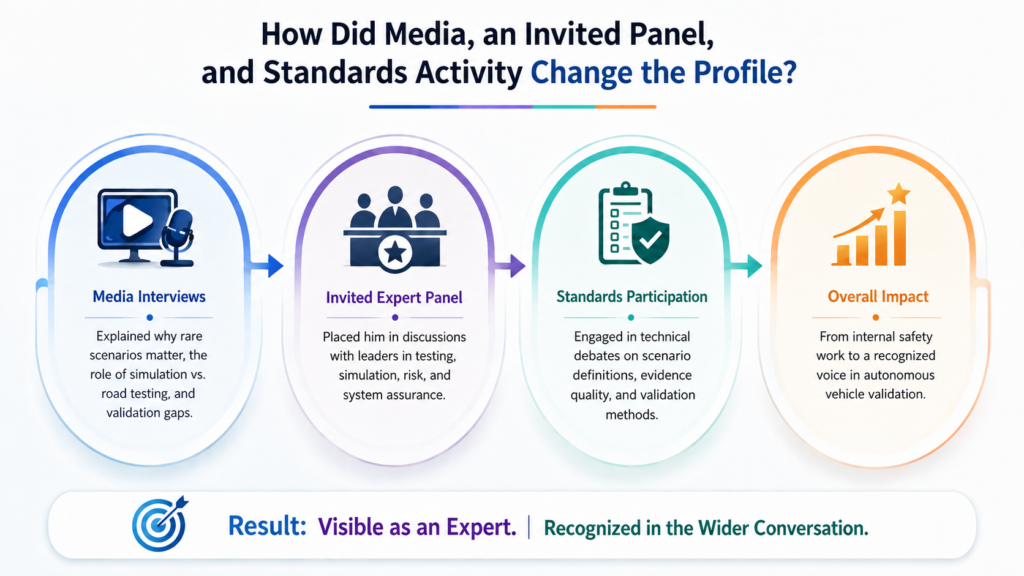
An invited expert panel placed him in a discussion with professionals who understood testing, simulation, transportation risk, and system assurance.
Standards participation brought him closer to technical debates about scenario definitions, evidence quality, and validation methods.
Together, the activities showed progression from internal safety work to a recognized role in the wider conversation about autonomous vehicle validation.
Why did peer review and selective membership matter?
Peer-review assignments showed that technical journals trusted him to evaluate research submitted by other specialists. The team documented the invitations, completed activity where available, and the connection between the reviewed work and his field.
Selective professional membership was handled separately. Mobility, transportation, engineering, and safety organizations were reviewed for grades based on achievement, experience, or expert assessment.
Where a membership claim was included, the petition documented the admission standards and the basis on which he qualified.
An open association can be professionally useful. It should not be presented as a selective EB-1A membership if anyone can join by paying a fee.
The purpose was to build credible evidence, not force every activity into a criterion.
Independent mobility-safety letters supplied the outside technical voice
Immignis developed a referee plan around autonomous mobility, transportation safety, and vehicle-validation experts who could understand scenario-based testing.
The strongest letters did not rely on adjectives. They explained the safety problem first.
Rare events can expose weaknesses that ordinary performance summaries do not reveal. Scenario-based validation helps structure what has been tested, what remains underrepresented, and why certain safety-critical interactions deserve focused evaluation.
The experts then discussed his contribution to that problem, including the open scenario work, his research, and his approach to validation coverage.
Advance My Profile prepared evidence-based drafts for expert review. Referees could revise the language and sign only what they considered accurate.
The letters made technical significance understandable.
They did not manufacture significance.
Why was fake profile building especially dangerous in autonomous vehicle safety?
This is a field where technical claims can be checked.
Papers can be read. Open resources can be inspected. Standards activity can be verified. Peer-review work can be documented.
In a safety field, fake awards, paid citations, weak journals, invented judging roles, or exaggerated influence can damage more than an immigration case. They can damage the professional’s credibility.
The profile therefore had to survive a harder test: could he discuss the same work with a vehicle-safety researcher years later and still be proud of the record?
That was the standard.
Do not build evidence you must hide after approval.
Build a record that gives your professional life a clearer direction.
Which USCIS EB-1A criteria did the final Form I-140 petition activate?
Scholarly articles: Focused publications connected his authorship to scenario-based safety validation, edge-case coverage, and autonomous mobility assurance.
Original contributions: The open scenario library, technical research, field-facing context, and independent expert letters explained his contribution to more structured autonomous vehicle safety validation.
Published material: Media interviews and coverage discussed his work and expertise in autonomous vehicle safety, rare scenarios, and validation evidence.
Judging the work of others: Peer-review assignments showed that technical journals trusted him to evaluate research by other specialists in autonomous systems and mobility safety.
Memberships: Selective professional membership evidence was supported with relevant admission or advancement standards and documentation showing how his qualifications were evaluated.
The final-merits narrative connected the evidence.
The publications showed technical depth. The scenario library made the method inspectable. The policy paper translated it for transportation-safety audiences. Media and panel activity created public visibility. Standards participation showed field engagement. Peer review showed evaluative trust. Selective membership and independent letters added outside recognition.
The petition did not ask USCIS to count activities and stop.
It showed a pattern of sustained recognition in one precise field: scenario-based safety validation for autonomous vehicles.
What did the December 2023 EB-1A approval mean?
USCIS approved the Form I-140 on December 8, 2023.
The displayed case history shows receipt of the petition in September 2023 and later approval. It does not show a request for additional evidence.
By approval, he had focused publications, an open scenario library, a transportation-safety paper, media interviews, an invited panel, standards participation, peer review, selective professional membership, and independent letters from mobility-safety experts.
The approval gave him an EB-1A self-petition path without employer sponsorship or labor certification.
The professional result was equally clear.
A journalist could identify the safety question he understood. A transportation group could see the policy relevance. A journal could recognize his review area. A mobility-safety expert could evaluate a public resource rather than rely on a private lab description.
The immigration result was approval.
The career result was a safety niche the wider field could finally see.
If your most important work is validation, testing, or risk prevention
You may worry that EB-1A rewards only the person who builds the product, publishes the headline model, or founds the company.
Safety validation, reliability, assurance, testing, and risk analysis can also involve original contributions when the applicant shows individual influence and recognized significance in a defined field.
The challenge is evidence.
Internal testing work must be separated from confidential system data. Contributions must be attributed to the applicant. The public record should show real technical authority. Independent experts should be able to explain why the work matters.
Do not invent acclaim because your best work happened behind the scenes.
Build credible recognition around the expertise you already own.
FAQs
Can autonomous vehicle safety validation support an EB-1A original-contribution claim?
Yes, when the applicant can identify an original validation method, scenario framework, safety resource, or analytical contribution and show that it has recognized significance. The petition should connect the applicant’s individual work to technical publications, field-use context, independent expert analysis, or other evidence showing significance beyond routine testing.
Why is an open scenario library useful in an autonomous vehicle EB-1A case?
An open scenario library can make a validation methodology visible outside the applicant’s employer or laboratory. Its value depends on the quality and significance of the work, but it can help show how the applicant structures safety-relevant scenarios, addresses coverage questions, and contributes a resource other specialists can inspect or use.
Is driving millions of autonomous miles enough to prove vehicle safety?
Mileage can be an important part of a safety record, but mileage alone does not explain whether rare or difficult scenarios were adequately represented. Scenario-based validation asks what situations were tested, how safety-critical interactions were organized, and whether the evidence addresses cases capable of exposing system weaknesses.
Does standards participation satisfy the EB-1A membership criterion?
Not automatically. Standards participation may support the final-merits narrative by showing substantive field engagement, but the membership criterion concerns associations that require outstanding achievements judged by recognized experts. A petition should document the actual membership requirements rather than treat every professional group as selective.
Can journal peer review count as judging in an autonomous vehicle EB-1A case?
Genuine peer review can support the criterion for judging the work of others when the applicant actually evaluates technical or scholarly work. The file should document the review invitations, completed activity where available, and the relationship between the reviewed work and the applicant’s field.
Do I need a PhD in robotics or artificial intelligence for an EB-1A autonomous vehicle case?
No specific degree is required for the EB-1A extraordinary ability category. A PhD may support technical expertise, but USCIS evaluates the extraordinary-ability evidence and the record as a whole. Original contributions, focused authorship, judging, qualifying memberships, published material, and sustained independent recognition may all be relevant.
Build an EB-1A success story around the safety work others cannot afford to ignore
If you work in autonomous vehicles, mobility safety, simulation, testing, validation, reliability, perception assurance, or another safety critical technology field, your strongest contribution may be the work that prevents failure rather than the work that gets the headline.
Immignis and Advance My Profile help professionals identify a defensible niche, build credible field recognition, document individual impact, and prepare an EB-1A record around real and verifiable work.
Start with a free EB-1A profile assessment and find out whether your safety or validation expertise can be developed into a clearer authority record.