
Key facts at a glance
| Outcome | EB-1A approval for an Australian disaster-resilience engineer working at a U.S.-based resilience consultancy. |
| Approval date | Approved on August 15, 2024. |
| Field niche | Flood-resilient infrastructure design for coastal cities, with a focus on repeatable methods for tracing flood pathways, protecting essential functions, and planning recovery. |
| Starting problem | He had worked across many resilience projects, but the record read as a list of assignments and clients rather than a clear personal engineering authority. |
| Path used | Ethical EB-1A profile building through technical articles, a FEMA-facing style flood-resilience white paper, a conference keynote, storm-related media interviews, a professional award, judging, selective professional membership, project-method evidence, and independent engineering letters. |
| USCIS EB-1A criteria activated | Original contributions, published material, recognized prizes or awards, judging, memberships, and leading or critical role. |
USCIS approved his Form I-140 on August 15, 2024. At the first profile review, his project history filled page after page. The problem was finding him in it.
EB-1A for Engineers requires more than a long project history. He was an Australian engineer working at a U.S. based resilience consultancy. Coastal flood studies, infrastructure assignments, design reviews, and post storm work had given him a wide view of how water disrupts cities. On paper, however, one project ended and the next project began. The reader saw clients and locations. The engineering method that kept reappearing was much harder to notice.
A long project list can make an engineer look less distinctive
A proposal names the client. A project sheet describes the scope. A resume records the engineer’s role and dates. When the work spans several cities or types of infrastructure, the result can look impressive while still leaving one basic question unanswered: what does this engineer repeatedly do that reflects his own expertise?
The EB-1A green card is a self-petition immigrant classification for people who can show extraordinary ability through sustained national or international acclaim and recognition of achievements in the field.
USCIS had to evaluate his own standing. The consultancy’s portfolio could provide context, but the petition needed to trace his individual contribution across the work.
Advance My Profile, powered by Immignis, reviewed the project record with legal strategists and engineers familiar with flood and infrastructure resilience. The same sequence kept appearing in his better-documented work.
The repeated engineering sequence became the center of the case
He began with the route water could take through a site or urban system. Then he looked at the function that had to remain available. A structure might survive direct inundation while access fails. A protected asset may still lose power. Drainage can become part of the problem when water cannot leave or moves through an unexpected connection.
His work examined those dependencies before a design response was selected. The profile team described the method in practical terms: trace the flood pathway, identify the essential function, document likely failure points, compare feasible interventions, and plan for how the asset or service returns to use.
This was not presented as a patented formula or a universal design standard. It was the recurring engineering logic visible across his own project record.
What did USCIS need to see in a flood-resilience EB-1A case?
For original contributions, the petition had to show an individual engineering methodology or contribution of major significance and evidence that the work had been used, relied upon, or recognized outside a routine assignment. Project sheets alone could not carry that argument.
The file therefore traced his role in resilience assessments and design work, identified repeatable parts of his engineering approach, and added independent context from professionals who understood flood risk and infrastructure design.
Published material had to be about him or his work. His own technical articles were useful professional evidence, but they were not relabeled as independent media coverage.
The award criterion depended on actual professional recognition and the evidence behind it. Judging required genuine evaluation of other professionals’ work. Membership evidence turned on the admission standards of the association used for the criterion.
For leading or critical role, USCIS needed to understand why significant consultancy work relied on his engineering judgment, not simply that he held a senior title.
The technical articles stopped following project boundaries
One line of work examined how engineers can follow a flood pathway through a site instead of treating the mapped flood boundary as the end of the analysis. Another addressed the relationship between asset protection and continued access. Other technical subjects considered drainage, utility vulnerability, recovery sequencing, and the way one weak connection can undermine a protected facility.
The articles used non-confidential examples and public engineering concepts. Client specific drawings and protected project material stayed out.
The white paper was written for FEMA facing resilience audiences
The paper was written for professionals who work with FEMA programs, public infrastructure, municipal resilience, and post disaster planning. It discussed flood pathways, essential functions, access, utilities, design response, and recovery.
The paper was not described as a FEMA publication. It did not claim FEMA endorsement, adoption, or authorship.
Its value came from the engineering analysis. The white paper translated his project experience into a framework that public agencies, consultants, and infrastructure owners could discuss.
Engineers with long consulting careers often have more EB-1A evidence than their project list shows. A free profile assessment can identify the method, adoption evidence, professional recognition, judging, and independent support that belong to you rather than to the client or firm.
A keynote gave him space to explain why flood protection can fail at the edges
The conference keynote was built around an issue familiar to resilience engineers: a city or facility can invest in a protective measure and still remain vulnerable through connected systems.
He used public examples and general engineering scenarios to discuss access routes, drainage connections, utility dependencies, and recovery planning. The talk focused on the way flood risk moves across boundaries between assets and services.
An industry audience invited him to explain the engineering approach itself, giving the method visibility outside a client assignment.
After storms, media interviews were tied to the engineering questions he actually studied
He explained why visible flood depth is only one part of a damage story, how loss of access can isolate an asset that remains structurally intact, and why drainage or utility failures may extend disruption after water begins to recede.
The interviews did not turn a recent storm into marketing for the consultancy. He discussed public engineering concepts and avoided speculating about project details or communities he had not assessed.
For the published material criterion, the petition used qualifying coverage about him and his work. His authored technical articles were kept in their proper evidentiary lane.
The professional award was documented from the selection rules outward
Advance My Profile gathered the award record, the field in which it was granted, available information about the selection process, and evidence connecting the honor to his resilience engineering work.
Infrastructure and sustainability awards vary widely. Some recognize projects, some recognize firms, and some recognize individuals. The evidence had to show what this award recognized and why the client was the recipient being presented under the EB-1A criterion.
Judging showed that other professionals trusted his assessment of resilience work
The record documented the event or program, the submissions, and his actual evaluation role. Panel appearances and speaking invitations were kept separate.
After years of reviewing design assumptions, flood pathways, infrastructure dependencies, and resilience options, he was being asked to assess the quality of other professionals’ work.
Selective membership evidence was handled separately. The petition used membership only where the organization or grade relied on relevant achievement and expert assessment, with the admission standards included in the file.
Independent engineers explained the methodology without copying the consultancy’s language
They described the engineering problem of connected flood failure. A protected structure can still lose function through access, utilities, drainage, or another dependent system. The experts then discussed how the client’s work approached those connections and why they considered the methodology useful. The letters helped USCIS see his own engineering contribution within a large portfolio of consultancy assignments.
How the USCIS EB-1A criteria were supported
Original contributions: Project-method evidence, documented use of his flood-resilience approach, technical writing, and independent engineering letters explained his individual contribution to coastal infrastructure resilience and its significance in the field.
Published material: Independent storm and infrastructure coverage discussed him or his expertise in flood resilient infrastructure, coastal risk, and the operational consequences of flooding.
Recognized prizes or awards: A professional award was supported with evidence of the recognition, its field, the available selection framework, and the connection between the honor and his resilience engineering work.
Judging the work of others: Engineering and resilience judging records documented genuine evaluation of submissions and professional work by other specialists.
Memberships: Selective professional membership evidence included the relevant admission or advancement standards and documentation showing how his achievements were assessed.
Leading or critical role: Consultancy and project records showed why significant resilience work relied on his engineering judgment, methodology, and responsibility within the organization.
Technical articles described the recurring problems. The white paper organized the methodology for public and emergency management audiences. The keynote and media coverage took the same subject to independent audiences. Award, judging, membership, role, and expert evidence showed recognition from several parts of the profession.
Approval came on August 15, 2024
The approved EB-1A petition gave him a self-petition path without employer sponsorship or labor certification. Form I-140 approval is one stage of the employment-based immigrant process, and later permanent residence timing may depend on visa availability and the applicant’s next immigration step.
If you have dozens of projects and still cannot explain your field in one sentence
Review the work for repeated decisions and methods. What problem do clients repeatedly bring to you? Which part of the analysis depends on your judgment? Where has the same approach appeared across different assignments?
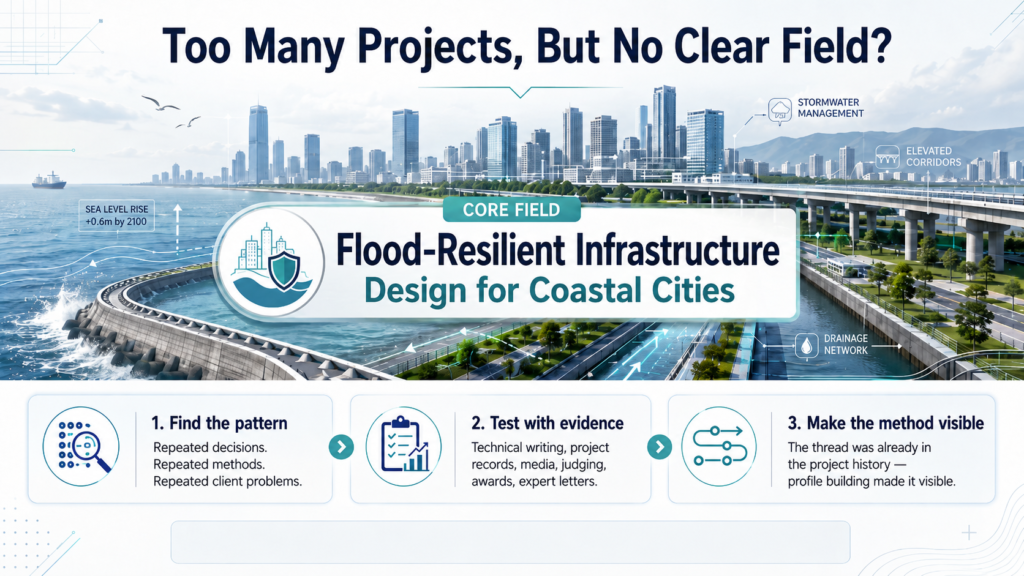
Then test the answer against evidence. Technical writing can make the method public. Project records may show use. Media can discuss the same field. Judging and awards can document outside recognition. Independent experts can explain why the work matters when they have enough evidence to evaluate it.
For this engineer, the useful thread was flood resilient infrastructure design for coastal cities. The method was already present in the project history; profile building made it visible.
FAQs
Can many engineering projects support an EB-1A original-contribution claim?
Yes, but project quantity alone does not establish an original contribution of major significance. The record should identify the applicant’s individual method or technical contribution, show how it was used or recognized, and separate the engineer’s work from the wider project team. A repeatable approach across several projects can be useful when the evidence supports it.
Can a FEMA-facing white paper be used in an EB-1A profile?
A field-facing white paper can help document authorship, expertise, and professional authority when it addresses a real problem in the applicant’s field. It should not be described as a FEMA publication, endorsement, or adopted methodology without evidence of that relationship. Clear wording about the intended audience and the document’s actual status is important.
What counts as published material for an EB-1A resilience engineer?
Published material generally concerns independent coverage about the applicant and the applicant’s work in professional, major trade, or major media sources, subject to the USCIS criterion requirements. The engineer’s own technical articles are authored material and should not be relabeled as independent published material about the applicant.
Can judging infrastructure or resilience awards count for EB-1A?
It can support the judging criterion when the applicant actually evaluates the work of others. The petition should document the judging invitation, the nature of the submissions, and the applicant’s role in assessment. Speaking on a panel is a different activity unless the person was also asked to judge.
How can a consultant prove a leading or critical role when projects belong to the firm?
The evidence should explain the consultant’s own responsibilities, decisions, technical functions, and the reason significant work relied on that person’s expertise. Project documents, organizational evidence, letters, and records of technical responsibility can help separate the individual role from the firm’s reputation.
Do I need a PhD to pursue EB-1A as a flood-resilience or civil engineer?
No specific PhD is required for EB-1A extraordinary ability. Engineers may rely on applicable evidence such as original contributions, awards, judging, qualifying memberships, published material, leading or critical roles, and sustained independent recognition. The full record still must support the extraordinary ability standard.
Build an EB-1A success story around the engineering method behind your projects
If you work in flood resilience, coastal infrastructure, civil engineering, disaster mitigation, urban resilience, or climate adaptation, a long client list may still hide your individual contribution. Immignis and Advance My Profile help identify the technical thread across a career, document project use and leadership, build credible public recognition, and prepare an EB-1A record around work that can be verified.