
How a Peruvian chef-restaurateur secured EB-1A approval by turning internationally ranked restaurant success into a person-centered record built on ranking documentation, culinary-press profiles, festival invitations, culinary-competition judging, cookbook authorship, business-scale evidence, and independent letters.
Key facts at a glance
| Petition outcome | Form I-140 approved under EB-1A on April 17, 2026. |
| Professional profile | Peruvian chef-restaurateur elevating regional Peruvian cuisine into internationally ranked restaurants. |
| Field niche | Peruvian haute cuisine and culinary entrepreneurship. |
| Starting weakness | Restaurant rankings and market success named the venue, while investment, creative leadership, and personal authorship needed clearer documentation. |
| Profile-building focus | Restaurant-ranking documentation tied to her role, culinary-press profiles, festival invitations, culinary-competition judging, cookbook authorship, business-scale evidence, and independent letters. |
| EB-1A criteria supported | Awards/rankings, published material, judging, leading role, and commercial success. |
| Central issue | Proving that the recognized restaurant success belonged to the petitioner personally, not only to the brand or venue. |
| Approval lesson | Restaurant rankings can operate as the field's native award system when the petition ties the recognition to the individual chef-restaurateur and her leadership. |
The approval
EB-1A for Chefs became the basis of this case when, On April 17, 2026, USCIS approved the Form I-140 petition of a Peruvian gastronomy entrepreneur whose work elevated regional Peruvian cuisine into internationally ranked restaurants and a recognized culinary business platform.
Inside the hospitality world, the petitioner was already known as the creative and entrepreneurial force behind restaurant concepts that brought regional Peruvian ingredients, techniques, and stories into a higher-end international dining context.
For EB-1A, however, that achievement created a specific evidence problem. Restaurant rankings, press coverage, and market success often name the restaurant or the brand, while the founder's creative leadership, investment decisions, and strategic authorship remain under-documented.
That became the central challenge of the case: proving that the acclaim belonged not only to the venue, but also to the chef-restaurateur whose culinary vision and business leadership produced the recognized result.
The evidence problem in gastronomy and restaurant-founder cases
Culinary entrepreneurship is difficult to document because success is often recorded at the venue level. A restaurant may appear in rankings, food guides, critic lists, festival programs, and business media, yet those materials do not always explain who created the concept, directed the cuisine, secured the resources, or led the execution.
The petitioner's starting weakness was not lack of achievement. The weakness was that the strongest achievements were wearing the restaurant's name. Rankings named the venue. Investors discussed the business. Reviews praised the dining experience. The individual contribution needed to be pulled out clearly and ethically.
The case therefore needed a precise field definition. It was not framed as generic restaurant ownership or ordinary hospitality management. It was framed as Peruvian haute cuisine and culinary entrepreneurship, with emphasis on regional-cuisine elevation, concept development, market positioning, and international recognition.
That field definition gave the petition a practical measuring stick. The question was not simply whether the restaurants were popular. The question was whether the petitioner had achieved recognized distinction in a specialized culinary field through creative leadership, public recognition, peer trust, and commercial success.
Why restaurant fame could not be treated as automatic personal acclaim
A common mistake in restaurant-based EB-1A cases is assuming that a famous venue automatically proves the extraordinary ability of the person behind it. USCIS still needs a clear bridge between the public recognition and the beneficiary's own work.
The petition therefore avoided two risks. It did not rely on general claims that the restaurants were successful, and it did not ask the officer to infer the petitioner's importance from the brand alone. Instead, the record connected specific rankings, press coverage, awards, festivals, business records, and expert letters to the petitioner's personal role.
That approach included restaurant-ranking documentation tied to her leadership, culinary-press profiles naming her as the creative force, festival invitations, judging roles, cookbook authorship, business-scale evidence, and letters from owners, critics, chefs, and hospitality professionals.
This made the case stronger. It showed USCIS that the petitioner was not merely associated with a recognized restaurant. She was the professional whose vision, leadership, and execution helped create the recognized culinary outcome.
Awards and restaurant rankings as the field's native acclaim system
The strongest part of the case was the use of restaurant rankings and culinary distinctions as field-specific recognition. In fine dining, acclaim often appears through rankings, guide listings, critic selections, destination-restaurant features, and industry lists rather than through a single formal trophy.
The petition documented how those rankings functioned within the culinary field. It explained why placement on respected restaurant lists can operate like an award system: the field compares restaurants, evaluates quality, and publicly identifies the venues that represent exceptional achievement.
Importantly, the petition did not overclaim. It did not say every restaurant ranking automatically belonged to the petitioner personally. It showed why, in this case, the ranked restaurant success flowed from her cuisine concept, regional positioning, leadership, and entrepreneurial execution.
That evidence gave USCIS a concrete way to understand awards and recognition in gastronomy. The ranking became more than publicity; it became proof that the field recognized the petitioner's work through the restaurant she created and led.
Published material made the individual visible behind the restaurant
Published material was essential because culinary press can transform venue recognition into person-specific evidence. Articles, interviews, profiles, reviews, and food-industry commentary helped show that the petitioner herself was identified as the creative and strategic leader behind the restaurant concepts.
The petition used culinary-press coverage carefully. The most useful materials did not simply describe dishes or décor. They connected the petitioner by name to regional Peruvian cuisine, culinary innovation, restaurant concept development, and the business story behind the acclaimed venues.
This evidence helped solve the attribution problem. USCIS could see that the petitioner's reputation existed outside internal company documents and that the field's writers and commentators recognized her as an important figure in the restaurants' success.
For hospitality professionals, this distinction matters. Press about a restaurant is helpful, but press that explains the individual's authorship and leadership is far stronger for EB-1A.
Leading-role evidence had to prove creative and business authority
A founder title alone does not automatically prove a leading role. For EB-1A, the record had to show that the petitioner carried responsibility that was important to the restaurants, the brand, and the field niche being claimed.
The petition documented her role in culinary concept design, menu direction, regional ingredient positioning, restaurant expansion strategy, investor and business decisions, quality systems, staffing leadership, and public-facing brand development. The emphasis was on authority, authorship, and accountability, not title alone.
This helped distinguish the petitioner from passive ownership or ordinary restaurant management. She was presented as a gastronomy entrepreneur whose work shaped both the creative identity and commercial structure of the restaurants.
For chef-founders and hospitality entrepreneurs, this is often the key issue. The record must connect the individual to the outcome. It is not enough to show that a restaurant was admired; the petition must show why the petitioner was central to that admiration.
Commercial success had to be framed as field evidence
Commercial success can support EB-1A in culinary entrepreneurship cases, but it must be framed with care. Revenue alone does not prove extraordinary ability, and business growth alone can look like ordinary entrepreneurship if it is not connected to field recognition.
The petition therefore used business-scale evidence as part of a broader record. It showed market response, expansion strength, reservation demand, investment significance, and the economic value of the petitioner's culinary concepts while connecting those results to rankings, press, and expert recognition.
That balanced approach helped USCIS understand that the restaurants were not only profitable or popular. They were commercially successful expressions of a recognized culinary contribution within Peruvian haute cuisine and restaurant entrepreneurship.
Judging and festival invitations showed peer trust
Judging evidence was important because it showed that the field trusted the petitioner to evaluate the work of others. In gastronomy, judging can appear through culinary competitions, restaurant awards, tasting panels, hospitality prizes, food festivals, and professional selection committees.
The petition framed those roles as evidence of peer recognition. The petitioner was not only operating successful restaurants; she was being invited into settings where experienced professionals assess quality, originality, technique, and market relevance.
That mattered because EB-1A requires more than customer approval. Judging and festival invitations showed that culinary institutions and peers viewed the petitioner as someone capable of representing and evaluating excellence in the field.
Cookbook authorship and culinary voice
Cookbook authorship strengthened the record because it preserved the petitioner's culinary voice in a form USCIS could evaluate. Restaurant experiences are temporary, menus change, and dishes disappear, but authorship creates a stable record of ideas, methods, ingredients, and philosophy.
The record showed how the petitioner's authorship helped explain regional Peruvian cuisine to a wider audience. It supported the argument that she was contributing to the field intellectually and culturally, not simply running a restaurant business.
This was important because a chef-restaurateur's influence often appears through interpretation: how traditions are selected, modernized, presented, and taught. Authorship helped document that interpretive contribution.
Why the petition worked
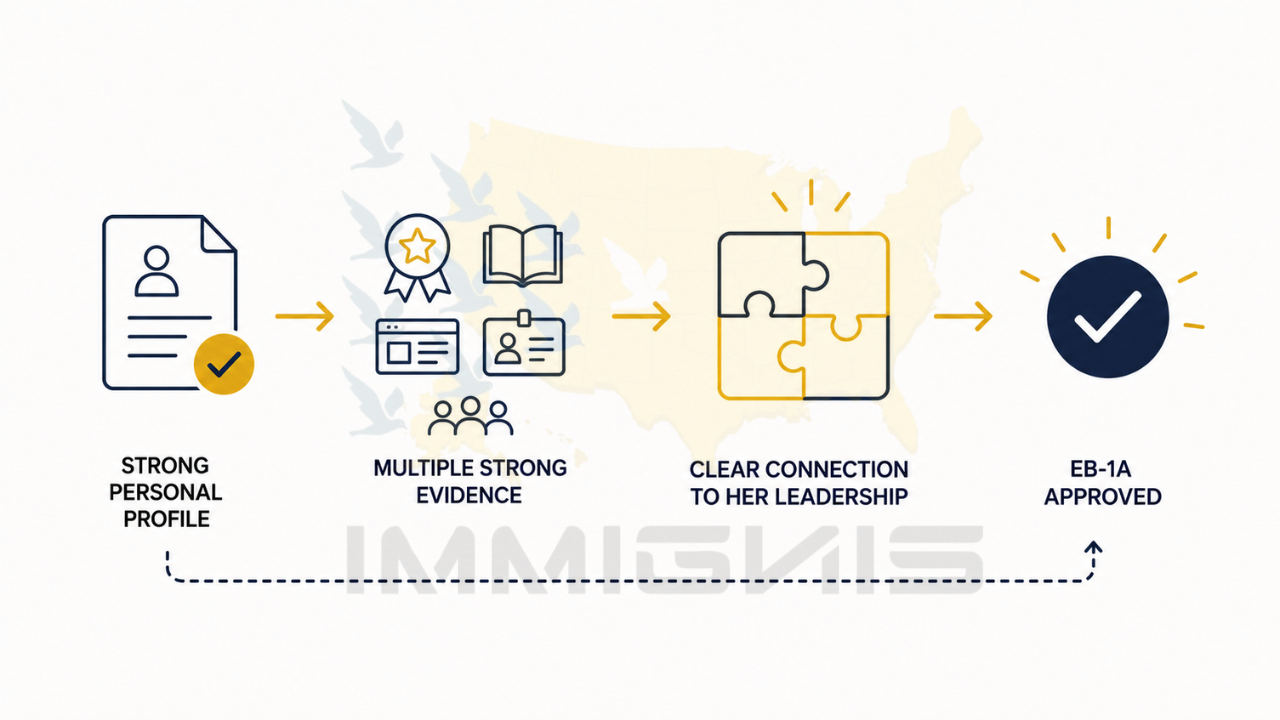
The success of the case came from disciplined attribution. Instead of presenting a famous restaurant and asking USCIS to assume the petitioner's role, the petition built a person-centered record around the professional behind the recognition.
The evidence worked together. Rankings showed field recognition. Published material made the petitioner visible. Judging and festival roles showed peer trust. Leading-role evidence showed authority. Cookbook authorship showed culinary voice. Business-scale evidence showed market validation.
That structure solved the most common weakness in hospitality EB-1A cases: the gap between a recognized venue and an adjudicator-readable record of the person who created the value.
Why the approval mattered
The approval mattered because it showed that culinary entrepreneurship can be presented as extraordinary ability when the evidence is specific, person-centered, and grounded in the way the field actually recognizes excellence.
For this Peruvian gastronomy entrepreneur, the petition did not rely on restaurant fame alone. It showed external recognition, creative leadership, business impact, judging service, authorship, and independent validation through a structured evidence record.
Most importantly, the petition translated restaurant-level acclaim into personal extraordinary-ability evidence. It made clear that the ranking system recognized the venue because of the petitioner's work, leadership, and culinary direction.
The broader lesson for chefs, restaurateurs, and hospitality entrepreneurs
This case offers a useful roadmap for chefs, restaurateurs, culinary founders, hospitality brand builders, restaurant-group leaders, and food entrepreneurs whose strongest recognition often appears through the restaurants they create rather than directly under their personal names.
Many such professionals have strong achievements, but the documentation is scattered across rankings, reviews, menus, investor materials, festival programs, and business records. The key is to connect those materials to the individual through clear role evidence and independent recognition.
For many culinary professionals, useful evidence may include restaurant rankings, guide placements, culinary-press profiles, festival invitations, judging roles, authored books or guides, business-scale documentation, expert letters, and owner or investor letters explaining creative and operational authorship.
The approval confirmed the central lesson of the case: restaurant rankings can support EB-1A when the petition proves that the individual professional, not only the venue, is the true bearer of the field's acclaim.
Lessons for gastronomy, culinary, and restaurant professionals
This case is useful for chefs, restaurateurs, culinary entrepreneurs, restaurant operators, food-brand founders, hospitality strategists, and gastronomy professionals whose achievements are visible in the market but not yet organized as immigration evidence.
A strong EB-1A case in this space usually depends on translating culinary reputation into proof the officer can evaluate. That means moving beyond restaurant praise and showing how the field itself has recognized the petitioner's individual work.
It also helps to define the field precisely. "Restaurant owner" sounds too broad. "Peruvian haute cuisine and culinary entrepreneurship" gives USCIS a narrower and more meaningful way to evaluate the petitioner's work.
Questions to ask before building the record
For these professionals, the evidence should be built around personal attribution rather than unsupported claims about restaurant success.
A strong record usually begins with the following questions:
- Can restaurant rankings, awards, or guide placements be clearly tied to the petitioner's creative and business leadership?
- Do culinary publications, interviews, or profiles recognize the petitioner by name, not only the restaurant?
- Can leading-role evidence show responsibility for concept creation, menu direction, sourcing strategy, expansion, and brand development?
- Can judging, festival invitations, or guest-chef roles show peer trust beyond the petitioner's own business?
- Can cookbook authorship, business-scale records, and expert letters explain why the petitioner's work is significant in the culinary field?
When those questions are answered with documents, restaurant success becomes much easier for USCIS to evaluate as personal extraordinary-ability evidence. That is often the difference between a well-known venue and a successful EB-1A record for the professional behind it.
Frequently asked questions
Can a chef-restaurateur qualify for EB-1A?
Yes. A chef-restaurateur may qualify for EB-1A if the evidence shows extraordinary ability in a defined culinary field through awards or rankings, published material, judging, leading roles, authorship, commercial success, or other recognized indicators of distinction.
Can restaurant rankings help an EB-1A petition?
Yes. Restaurant rankings can help when the petition explains why those rankings are meaningful in the culinary field and clearly ties the recognition to the petitioner's own creative and business leadership.
Does culinary press coverage support EB-1A?
Yes. Culinary-press coverage, interviews, profile pieces, and food-industry features can support EB-1A when they identify the petitioner by name and connect the individual to notable culinary or business achievements.
Can judging culinary competitions support an EB-1A case?
Yes. Judging competitions, tasting panels, restaurant awards, or culinary selection committees can help show that the field trusts the petitioner to evaluate the work of others.
Can commercial success help a restaurant-based EB-1A case?
Yes. Commercial success can help when it is presented carefully and tied to the petitioner's field-level leadership, rather than used as a simplistic claim that revenue alone proves extraordinary ability.
Can Immignis and Advance My Profile help gastronomy professionals build EB-1A evidence?
Build an EB-1A record around culinary leadership, public recognition, and market proof
Many gastronomy professionals create internationally respected work, but the public often remembers the restaurant name more easily than the individual behind it.