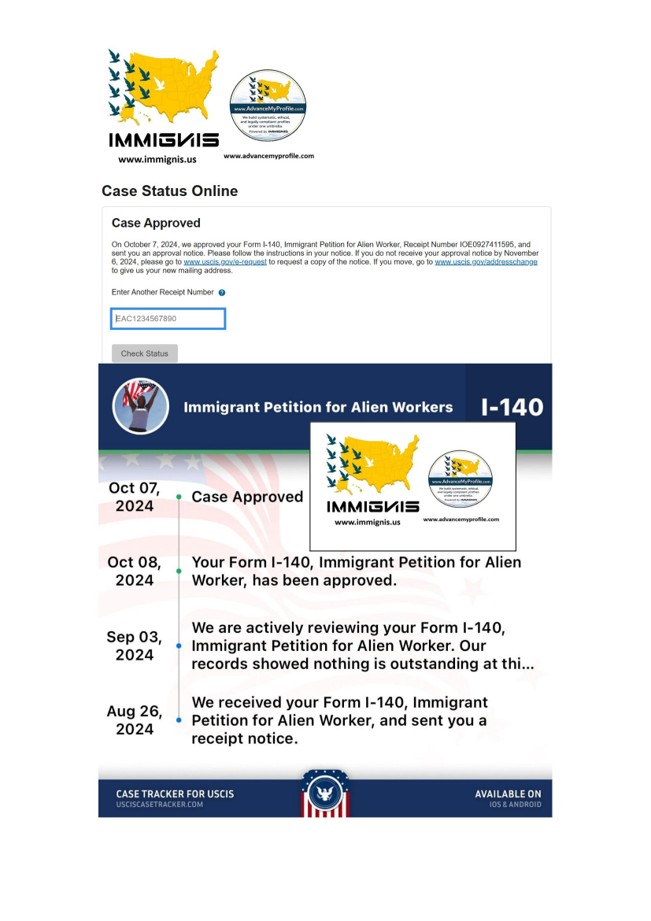
EB-1A Hydropower Grid Engineer: How a Paraguayan hydropower grid engineer secured EB-1A approval by transforming anonymous megaproject work into a petition-ready immigration profile built on project-attribution documentation, power-engineering publication, CIGRE-type body participation, conference presentations, media commentary, and ethical profile building.
Key facts at a glance
| Petition outcome | Form I-140 approved under EB-1A on October 7, 2024. |
| Professional profile | Paraguayan engineer optimizing output and transmission for one of the world’s largest hydroelectric complexes. |
| Field niche | Mega-dam grid integration and binational power systems. |
| Starting weakness | A binational bureaucracy where individual engineering credit dissolved into project names, government entities, utility reports, and institutional decision-making. |
| Profile-building focus | Project-attribution documentation, power-engineering publication, CIGRE-type body participation, conference presentations, media commentary on regional energy, expert letters, and immigration-specific profile building. |
| EB-1A criteria supported | Leading role, original contributions, scholarly articles, membership, and published material. |
| Central issue | Showing that the petitioner was not merely one engineer inside a massive public utility project, but a named technical contributor whose work improved grid integration, output optimization, and regional power-system reliability. |
| Approval lesson | In large infrastructure cases, EB-1A profile building must extract individual engineering identity from anonymous megaprojects and convert project work into person-centered USCIS evidence. |
The approval
On October 7, 2024, USCIS approved the Form I-140 petition of a Paraguayan hydropower grid engineer whose work focused on mega-dam grid integration and binational power systems.
The approval was important because the petitioner’s strongest achievements came from a technical environment where individual credit is naturally difficult to separate. Large hydroelectric complexes involve utilities, government agencies, binational authorities, contractors, and operations teams. The public record often names the project, not the engineer whose decisions keep the system stable.
That created the central evidence problem. The petitioner had worked on output optimization and transmission for one of the world’s largest hydroelectric complexes, but the visible record looked institutional. Without immigration-specific profile building, USCIS could easily see the work as a strong job inside an important project rather than extraordinary engineering influence in a specialized field.
Immignis and Advance My Profile helped convert that record into a petition-ready EB-1A profile. The profile-building strategy focused on project-attribution documentation, power-engineering publication, CIGRE-type body participation, conference presentations, media commentary on regional energy, and expert letters that connected the petitioner’s work to recognized EB-1A criteria.
The evidence problem in mega-dam grid integration and binational power systems
Mega-dam grid integration is a field where the technical work can be enormous while the individual paper trail remains thin. Engineers may help stabilize transmission, optimize generation output, coordinate cross-border energy flows, and solve grid-reliability problems, yet their names rarely appear in public announcements or institutional reports.
The petitioner’s starting weakness was therefore not a lack of importance. It was attribution. In a binational power system, authority is shared, documentation is layered, and engineering credit often disappears inside committees, departments, project codes, and operational records.
The petition defined the field carefully as mega-dam grid integration and binational power systems. It did not present the petitioner as a general electrical engineer or routine power-plant employee. It framed him as a specialist working at the intersection of hydropower operations, transmission planning, grid stability, output optimization, and regional electricity coordination.
This field definition was essential for EB-1A profile building. It gave USCIS a clear lens for evaluating the petitioner’s achievements and helped explain why technical decisions inside a hydroelectric megaproject could have field-level significance even when public credit was limited.
Why binational infrastructure work needed person-centered evidence
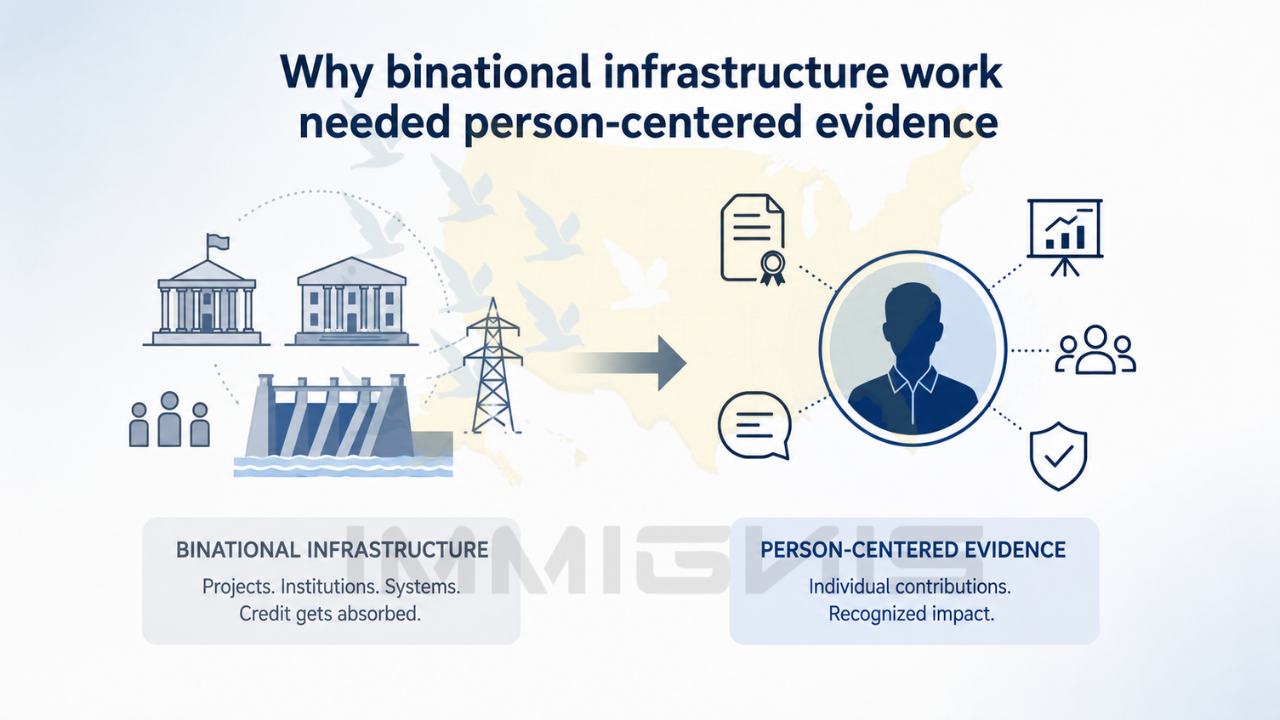
A binational bureaucracy can make a professional invisible. Reports may be signed by authorities. Improvements may be described as system upgrades. Grid-stability achievements may be absorbed into operational success. That kind of structure is normal for major infrastructure, but it creates a serious problem in extraordinary-ability immigration cases.
USCIS evaluates the individual, not the dam, the utility, or the national power authority. The petition therefore had to answer one practical question again and again: what did this engineer personally do that was important to the field?
The profile-building process focused on extracting individual engineering identity from the broader megaproject. It connected the petitioner’s role to specific technical challenges, project outcomes, publications, professional-body participation, and public energy commentary.
This is a key lesson for professionals searching for profile building, immigration profile building, EB-1A profile building, EB-2 NIW profile building, or profile improvement for engineers. If the work sits inside a large institution, the evidence must show authorship, responsibility, technical influence, and external recognition at the individual level.
Project-attribution documentation made anonymous engineering measurable
Project-attribution documentation became the backbone of the case. In power engineering, the most persuasive evidence often starts with proof of responsibility: what system the engineer worked on, what problem he addressed, what technical function he performed, and how the work affected output, transmission, stability, or reliability.
The petition organized evidence around the petitioner’s role in optimizing output and transmission for a major hydroelectric complex. Instead of relying on broad claims about project prestige, the record identified the petitioner’s specific contributions and connected them to the technical needs of binational power delivery.
This evidence supported the leading-role and original-contributions arguments because it showed that the petitioner was involved in consequential engineering work, not merely routine participation. The documentation helped translate operational responsibility into USCIS-readable achievement.
For infrastructure and engineering profile building, this type of attribution is especially important. It turns anonymous megaproject service into countable, explainable, and person-centered evidence.
Power-engineering publication gave the record a technical foundation
Power-engineering publication helped move the case beyond internal project evidence. Publications gave the petitioner’s work a formal technical frame and showed that his knowledge could be evaluated by professionals outside the immediate project environment.
The petition used publication evidence to support scholarly-articles and original-contributions arguments. It showed that the petitioner was not only executing technical functions but also contributing knowledge about grid integration, hydropower operations, transmission, or regional energy systems in a form the field could read and assess.
Publication was also useful because it helped explain the field itself. Mega-dam grid integration is technical and difficult for a non-specialist to understand. Written technical work gave USCIS a clearer basis for understanding why the petitioner’s experience mattered beyond one employer or one facility.
As part of professional profile building and immigration-specific profile building, publication development helped convert practical engineering experience into a stronger, more visible record of expertise.
CIGRE-type body participation showed professional standing
Participation in a CIGRE-type power-engineering body helped demonstrate that the petitioner was connected to recognized professional structures in the power-systems field. This mattered because the case needed evidence that the petitioner was not only valued internally, but also situated within the broader professional community.
The petition used this participation to support membership and final-merits arguments. In specialized engineering fields, professional-body involvement can show that the person’s expertise is relevant beyond a single employer and that the field has mechanisms for recognizing qualified technical voices.
This evidence also helped overcome the anonymity of infrastructure work. Where a megaproject’s public face may be institutional, professional-body participation can make the individual engineer more visible to USCIS.
For EB-1A profile building, this category is useful because it helps link technical experience to independent professional recognition, especially in engineering sectors where awards and media attention are less common.
Conference presentations and regional-energy commentary built visibility
Conference presentations helped show that the petitioner’s expertise was not trapped inside the internal bureaucracy of the hydroelectric complex. Speaking or presenting in technical settings demonstrated that his knowledge was useful to other professionals working on power systems, transmission, grid reliability, or regional energy planning.
Media commentary on regional energy added another layer of visibility. In an infrastructure case, media evidence must be used carefully. It should not be treated as celebrity press. It should show that the petitioner’s expertise helped explain meaningful energy issues to the public, industry, or policy audiences.
Together, conference and media evidence strengthened the published-material and final-merits components of the case. They showed that the petitioner had a professional voice beyond internal engineering functions.
This was important for profile improvement because it turned a quiet technical record into a more visible immigration profile without exaggerating the petitioner’s work.
Leading role and original contributions in a megaproject environment
The leading-role argument depended on showing that the petitioner held meaningful technical responsibility within a major infrastructure setting. In a megaproject environment, job title alone is rarely enough. USCIS needs to see the relationship between the role, the scale of the project, and the importance of the work performed.
The petition therefore connected the petitioner’s responsibilities to power-output optimization, transmission coordination, and grid-integration challenges inside a binational system. This helped show that his role carried significance beyond ordinary engineering support.
The original-contributions argument focused on how the petitioner’s work improved or shaped technical outcomes in the field niche. In power systems, original contribution does not always look like a laboratory invention. It can include applied engineering methods, operational improvements, integration solutions, and technical frameworks that affect reliability or performance at scale.
This framing was critical. It allowed USCIS to understand why an engineer working inside a large hydroelectric complex could demonstrate extraordinary ability through applied technical impact, not only through patents or academic citations.
How profile building changed the case
Before profile building, the petitioner’s record could have looked too institutional and too anonymous. The project was massive, the field was technical, and the bureaucracy absorbed much of the visible credit.
Immignis and Advance My Profile helped organize the evidence around a focused EB-1A theory: the petitioner was a specialized power-systems engineer whose work in mega-dam grid integration and binational energy systems showed leading role, original contribution, professional standing, publication, and public visibility.
The profile-building process turned project-attribution documentation into person-centered impact evidence, publication into technical proof, CIGRE-type participation into professional recognition, and conference and media activity into visibility evidence.
For engineers, infrastructure professionals, energy specialists, power-grid experts, and technical leaders searching for immigration profile building or EB-1A profile building services, this case shows how real work inside a large institution can be translated into a stronger USCIS evidence record.
Why this case worked
The case worked because every evidence category solved a specific problem. Project-attribution documentation solved the anonymity problem. Publication solved the technical-legibility problem. Professional-body participation solved the independent-recognition problem. Conference presentations and media commentary solved the visibility problem.
The petition also respected the collaborative nature of power infrastructure. It did not pretend that one engineer alone ran a binational system. Instead, it showed that within that system, the petitioner had specific, important, and independently recognizable contributions.
Most importantly, the case translated infrastructure engineering into USCIS language. It showed why grid integration, hydropower optimization, and binational power-system work can represent extraordinary ability when the individual’s role is documented clearly.
That is why this case became a strong example of ethical profile building for engineers, energy professionals, infrastructure specialists, and technical leaders pursuing EB-1A or planning long-term profile improvement for talent-based immigration.
Conclusion
The Paraguayan hydropower grid engineer’s EB-1A approval shows that even the most anonymous infrastructure work can support an extraordinary-ability case when the individual contribution is documented correctly.
The petition succeeded by turning mega-dam grid integration work, project-attribution records, power-engineering publication, CIGRE-type participation, conference presentations, and regional-energy commentary into a coherent immigration profile.
The broader lesson is clear: engineering identity can be extracted from a megaproject. With ethical profile building and disciplined evidence development, a technical professional working inside a binational power system can be presented as a named expert whose work matters beyond the institution.
Frequently asked questions
Can a power engineer qualify for EB-1A?
Yes. A power engineer may qualify for EB-1A when the record shows extraordinary ability through original contributions, leading roles, scholarly articles, professional membership, published material, judging, or other strong evidence of field-level distinction.
Can work inside a large infrastructure project support EB-1A?
Yes. Infrastructure work can support EB-1A when the petition documents the petitioner’s specific role, technical contribution, and significance inside the project rather than relying only on the project’s reputation.
Does project-attribution documentation matter for engineering EB-1A cases?
Yes. Project-attribution documentation is often essential because engineers working in large organizations are rarely named publicly. Attribution helps show what the individual actually did.
Can professional-body participation help an engineer’s EB-1A profile?
Yes. Participation in recognized technical bodies can support membership, professional standing, and final-merits arguments, especially in specialized engineering fields.
Do conference presentations and media commentary help technical EB-1A cases?
Yes. They can help show visibility and recognition when they are connected to the petitioner’s actual technical expertise and field niche.
Can Immignis and Advance My Profile help engineers build EB-1A evidence?
Yes. Immignis and Advance My Profile help engineers, energy specialists, infrastructure professionals, and technical leaders define a niche, document achievements, improve visibility, and build petition-ready EB-1A or EB-2 NIW profiles through ethical profile building and immigration-specific evidence development.
Build an EB-1A record around engineering impact, project attribution, and technical leadership
Many engineers already have meaningful field impact, but the evidence is often scattered across project records, internal documentation, publications, presentations, professional-body activity, and expert letters.