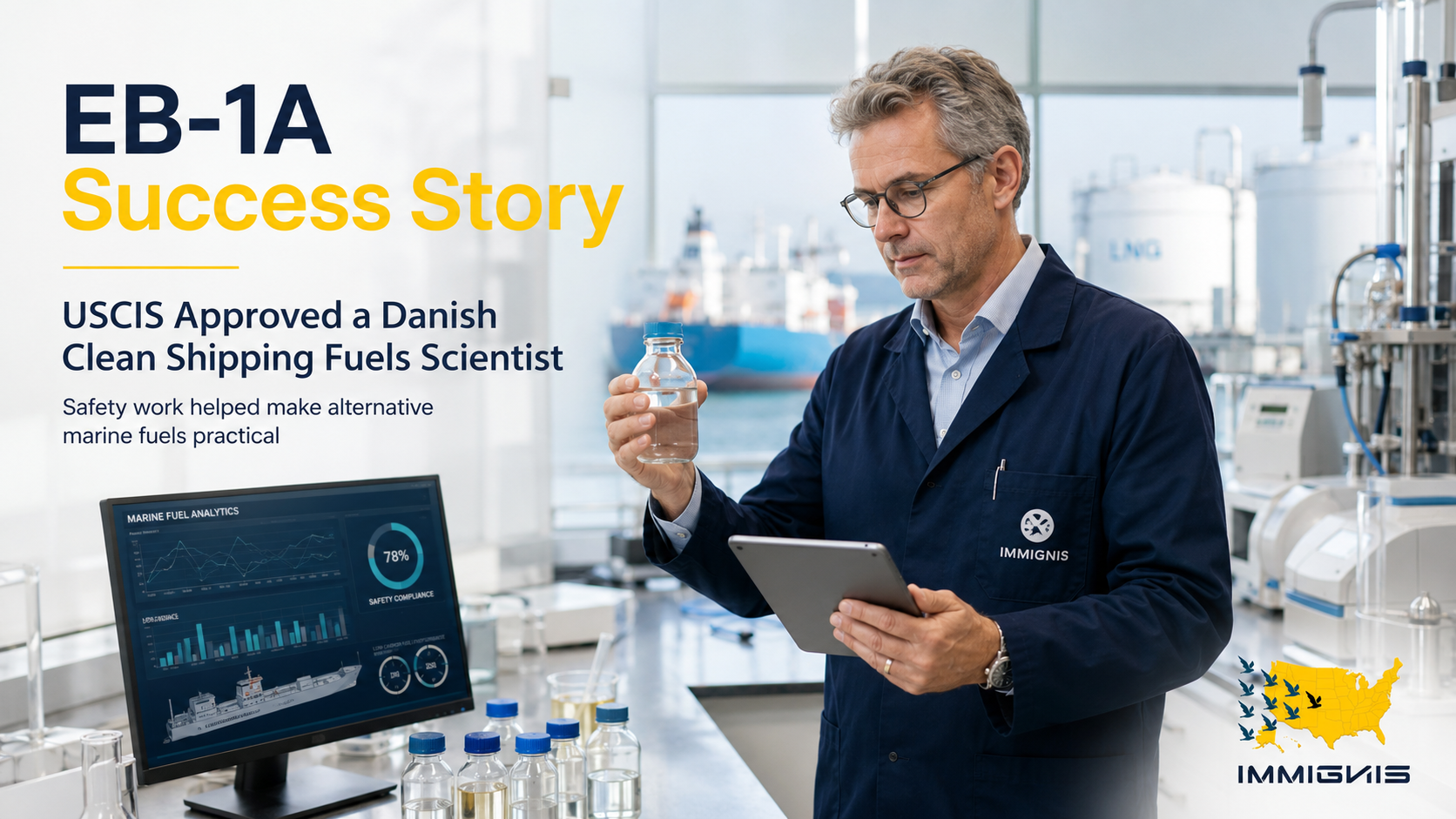
How a Singapore-based maritime fuel specialist built an EB-1A record around ammonia and methanol fuel safety for decarbonized shipping
Key facts at a glance
| Outcome | EB-1A approval for a Danish clean shipping fuels scientist working with a Singapore-based maritime fuel project. |
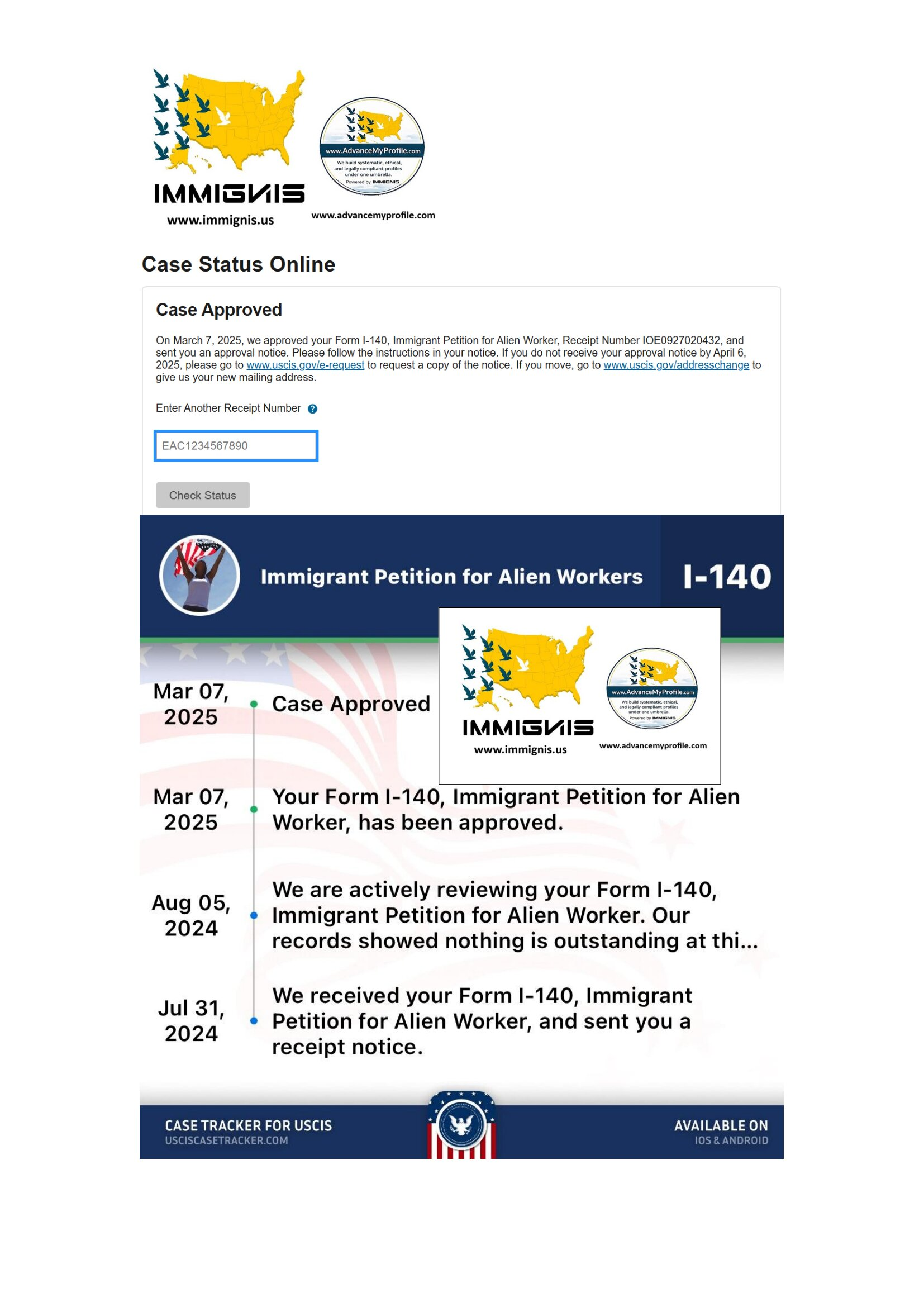
| Approval date | Approved on March 7, 2025. |
| Field niche | Ammonia and methanol fuel safety for decarbonized shipping, with a focus on fuel handling, leak and exposure risk, bunkering safety, operational controls, and the reliability of alternative marine-fuel adoption. |
| Starting problem | The field was receiving serious industry attention, but his strongest work remained inside maritime fuel programs, standards discussions, and employer-linked projects. |
| Profile-building path | Focused fuel-safety papers, a maritime white paper, standards engagement, trade-media interviews, a podcast appearance, peer review, professional award evidence, selective membership documentation, and independent letters from shipping decarbonization and marine-safety experts. |
| Evidence presented under EB-1A criteria | Scholarly articles, original contributions, published material, awards, judging, and memberships. |
USCIS approved his Form I-140 on March 7, 2025.
The approval came in a field that many people describe in sweeping language: decarbonized shipping, alternative marine fuels, ammonia, methanol, net-zero logistics. Those phrases create context. They do not, by themselves, prove extraordinary ability.
The petition had to show something more specific. It had to show that this Danish scientist was recognized for work that helped the maritime sector understand how cleaner fuels can be handled, stored, monitored, and used safely enough for real shipping operations.
Before the EB-1A record was built, much of his strongest work was internal. He had worked with maritime fuel safety, alternative-fuel adoption, operational controls, and technical risk questions, but the public file did not yet make his individual contribution easy to see. Advance My Profile, powered by Immignis, helped organize the record around one narrow authority niche: ammonia and methanol fuel safety for decarbonized shipping.
The case was not about whether clean shipping matters
Clean shipping matters. That was not the difficult part of the case.
The harder question was whether the petitioner had become a recognized expert in a defined part of that field. EB-1A does not approve a person because an industry is important. It approves when the evidence shows sustained acclaim and a level of expertise placing the person among the small percentage at the top of the field.
For maritime fuel transition, safety is not a side issue. Ammonia can raise concerns involving toxicity, exposure, storage conditions, ventilation, detection, emergency response, and crew procedures. Methanol can raise different issues involving flammability, handling, fuel quality, storage, and operating controls. Neither fuel can move from a policy ambition to regular maritime use without credible safety systems around it.
That became the center of the petition. His work was not presented as a broad claim that he was a clean-energy expert. It was presented as a specialized record in fuel safety for ammonia and methanol adoption in the maritime sector.
Why an internal maritime-fuel record can look weaker than it really is
Alternative-fuel projects often generate strong evidence that is not immediately useful for EB-1A. Internal safety reviews, risk registers, bunkering analyses, fuel-handling procedures, hazard evaluations, supplier discussions, operational scenarios, and standards comments can all reflect serious technical judgment. But when they remain inside a company or project, USCIS may see only employment responsibilities.
That was the starting weakness here. The field was high-interest, but the record was mostly internal. The petitioner’s contribution could have been misunderstood as participation in an employer’s fuel program rather than recognized expertise in marine-fuel safety.
The profile-building work therefore did not try to turn every internal task into an award. It separated what could be safely documented, what could be discussed publicly, what could support original contributions, and what needed independent corroboration from maritime safety and shipping-decarbonization experts.
What USCIS needed to see in a clean shipping fuels EB-1A case
USCIS needed a record that connected technical work to a recognized professional niche. It was not enough to show that the petitioner worked on ammonia or methanol. The petition needed evidence of his individual role, the significance of the safety problem, and recognition from outside a single project environment.
For original contributions, the petition identified his fuel-safety methods, risk-analysis work, operational safety frameworks, and technical judgment in alternative-fuel adoption. Independent experts explained why those contributions mattered to safer maritime decarbonization.
For scholarly articles, the record used papers focused on ammonia and methanol safety, marine-fuel transition, risk controls, bunkering issues, and operational readiness. The papers were not treated as decoration. They gave the technical work a public language that experts and USCIS could evaluate.
For published material, trade-media interviews and podcast coverage had to discuss his expertise, not merely mention the general rise of cleaner marine fuels. For judging, the petition documented peer review and professional evaluation of other specialists’ work. For awards, the record identified the scope, selection basis, and relationship to professional achievement. For memberships, ordinary open enrollment was kept separate from selective or achievement-based recognition.
The public record was built around fuel-safety decisions
The petition reorganized the technical record around the decisions that make alternative marine fuels practical.
What risks appear during storage? How should crews detect exposure or leakage? Which operating controls matter during bunkering? What information should move between fuel suppliers, vessel operators, ports, and safety teams? When does a fuel-safety assumption need another review before a project moves forward?
This approach helped the record avoid two common mistakes. It did not claim that the petitioner alone made clean shipping possible. It also did not hide behind broad environmental language. The evidence stayed with the technical questions he could address: safety, controls, risk analysis, and adoption readiness for ammonia and methanol fuels.
The papers showed that safety was a technical contribution, not a compliance afterthought
With domain support, he developed and documented papers on ammonia and methanol fuel safety, maritime decarbonization, operational risk, bunkering controls, and safety readiness for alternative marine fuels.
One paper examined how an alternative fuel can appear attractive in emissions planning while still requiring careful safety design before operational use. Another addressed the gap between a demonstration project and a repeatable safety framework that ports, operators, and fuel teams can understand.
The publications mattered because they moved the petitioner’s work out of internal program files. They allowed the case to show a coherent body of authorship in a defined maritime safety specialty.
The maritime white paper gave the industry-facing argument a clear form
The white paper was written for professionals who work around vessel operations, fuel suppliers, port planning, maritime safety, and decarbonization strategy.
Its central point was practical. Alternative fuels cannot be evaluated only through emissions potential. They also need safe handling, credible operational controls, crew awareness, emergency planning, port-side coordination, and a clear understanding of what changes when a vessel moves from conventional fuels to ammonia or methanol.
The white paper avoided a common weakness in climate-technology writing: treating future adoption as inevitable. It explained why adoption depends on the details. Fuel properties, storage arrangements, bunkering procedures, leak detection, ventilation, training, maintenance, and port procedures can determine whether a promising fuel pathway becomes operationally credible.
Standards engagement showed recognition in the professional process
Standards engagement helped the case because maritime fuel safety is shaped through technical discussion, not only through academic publication. The record documented the subject of his participation, the groups or professional settings involved, and the technical issues connected to his work.
The petition did not exaggerate standards activity. It did not present attendance as leadership. Where the evidence showed technical comments, working participation, or specialized contribution to safety discussions, those facts were tied to the larger record of original contributions and professional recognition.
Membership evidence was handled separately. The record identified the membership or advancement standard used in the petition and documented why it reflected professional achievement or expert assessment rather than simple payment of dues.
Media coverage and podcast discussion made the safety problem understandable
Trade-media interviews and a podcast appearance helped translate a technical safety specialty for a wider maritime audience.
He explained why alternative-fuel adoption is not only an engineering or procurement decision. Ammonia and methanol require different safety thinking, and a vessel operator, port, fuel supplier, insurer, and crew may each need different information before the fuel can be used responsibly.
The published coverage was useful because it connected him personally to the field niche. It showed that independent outlets were not only discussing clean shipping in the abstract; they were turning to him for explanation of a safety-critical part of the transition.
Peer review and professional judging showed that others relied on his technical judgment
Peer review and professional judging were important because the original record could have looked like internal project work. Review activity showed that others trusted him to evaluate work by professionals and researchers in related maritime, energy, fuel-safety, or decarbonization fields.
The petition documented review invitations and completed evaluation activity where available. It explained the subject matter reviewed and why it required specialized judgment.
This evidence did not simply add another criterion label. It helped USCIS see that his expertise was being used beyond his employer’s fuel project.
Award evidence was used carefully
The professional award evidence supported the recognition record because it was documented by scope, selection basis, and relevance to his field. It was not treated as a substitute for original contributions or final-merits analysis.
In EB-1A cases, an award can be helpful when it reflects real professional recognition. But an award alone rarely tells the full story. Here, it worked with the rest of the evidence: focused authorship, public explanation, judging, standards engagement, selective membership evidence, and independent expert letters.
Independent letters explained why fuel safety affected decarbonized shipping
Independent expert letters were central because they helped separate the petitioner’s individual contribution from the broader activity of the maritime fuel sector.
The strongest letters did not simply praise him. They explained the technical problem, identified the safety work attributed to him, and described why that work mattered to the adoption of ammonia and methanol as marine fuels.
They also helped frame safety as an enabling condition for decarbonization. A cleaner fuel that cannot be safely handled, monitored, bunkered, or integrated into operations will not solve the shipping industry’s emissions problem. That made the contribution practical and field-relevant.
How the EB-1A evidence came together
The petition worked because the evidence did not point in different directions. It described one professional identity: a clean shipping fuels scientist focused on safety for ammonia and methanol adoption.
- Scholarly articles showed a focused body of work in alternative marine-fuel safety and maritime decarbonization.
- Original-contribution evidence identified safety frameworks, operational risk analysis, and technical methods connected to ammonia and methanol fuel adoption.
- Published material showed that his expertise was discussed in trade media and podcast coverage outside the employer setting.
- Judging evidence documented peer review and professional evaluation of work by other specialists.
- Award and membership evidence supported the recognition record where the selection or admission standards were documented.
- Independent letters explained why safer alternative-fuel adoption matters to decarbonized shipping.
At final merits, the petition did not depend on the popularity of clean shipping. It showed a defined expert with a coherent record of work, recognition, and professional judgment in a safety-critical part of the industry.
The approval
USCIS approved the Form I-140 on March 7, 2025.
For the petitioner, the approval showed that a maritime fuel safety career can support EB-1A when the record is organized around individual expertise rather than a general industry trend.
The case also offered a broader lesson for clean-energy professionals. It is not enough to work in a sector that policymakers, investors, and industry groups are watching closely. The petition must show the person’s own recognized contribution, how the field has relied on that expertise, and why the evidence as a whole supports extraordinary ability.
What clean shipping and maritime energy professionals can learn from this case
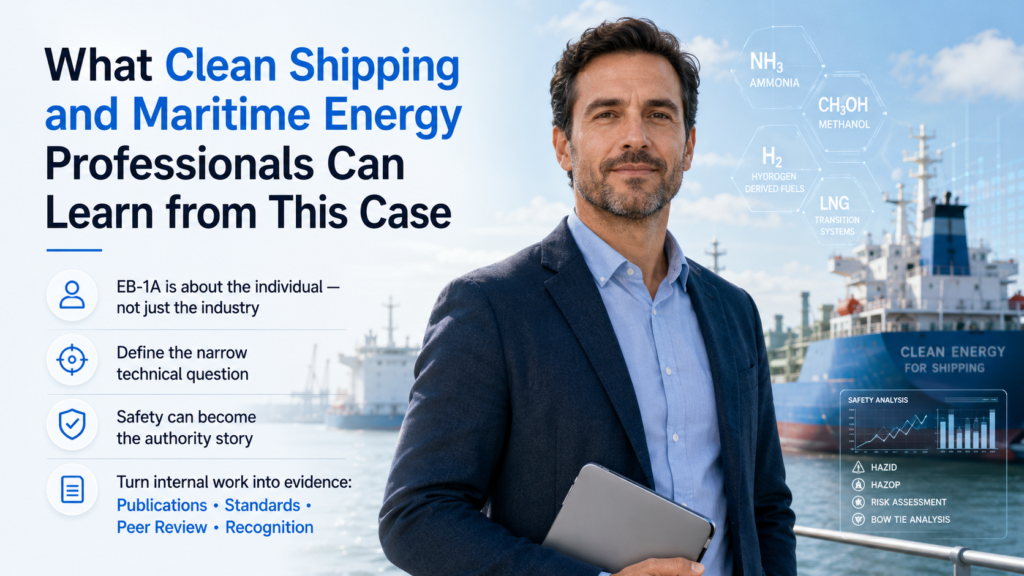
Professionals working in maritime decarbonization often assume the importance of the sector will carry the immigration case. That is risky. EB-1A requires evidence about the individual, not only the industry.
For engineers and scientists working with ammonia, methanol, hydrogen-derived fuels, LNG transition systems, marine fuel safety, port operations, or vessel decarbonization, the strongest evidence may be scattered across internal projects. The first step is to identify the narrow technical question the professional is known for answering.
For this client, that question was safety. How can alternative marine fuels be evaluated, handled, and integrated without treating safety as an afterthought? Once that question became clear, the record could be developed through publications, standards engagement, public commentary, peer review, professional recognition, and independent expert analysis.
That is what transformed a strong internal record into an EB-1A-ready authority profile.
FAQs
Can maritime decarbonization work support an EB-1A petition?
Yes, but the petition must show the person’s own recognized expertise. Working in clean shipping or alternative fuels is not enough. The record should identify a focused contribution, independent recognition, and evidence that the work matters beyond one employer or project.
Can ammonia or methanol fuel safety count as an original contribution?
It can, if the petition identifies specific safety methods, frameworks, technical analysis, or operational controls attributable to the petitioner and explains their significance through documentation and independent expert evidence.
Does standards engagement help an EB-1A case?
Standards engagement can help when the record documents real technical participation, comments, working activity, or professional recognition. It should be described accurately and connected to the applicable EB-1A criteria rather than overstated as proof by itself.
Are media interviews and podcasts useful for EB-1A?
They can be useful when they are independent, field-relevant, and focused on the petitioner or the petitioner’s expertise. Coverage that merely discusses an industry trend without connecting the person to recognized expertise is much weaker.
What is the main lesson for clean-energy and shipping professionals?
The industry’s importance is only context. A strong EB-1A case must show the applicant’s own contribution, recognition, judging or peer evaluation, public evidence, and final-merits credibility in a defined professional niche.
Build an EB-1A record around the maritime expertise you can prove
Advance My Profile, powered by Immignis, helps engineers, researchers, founders, and technical leaders identify a defensible authority niche, build credible public evidence, and prepare EB-1A records around facts that can be verified and explained professionally.