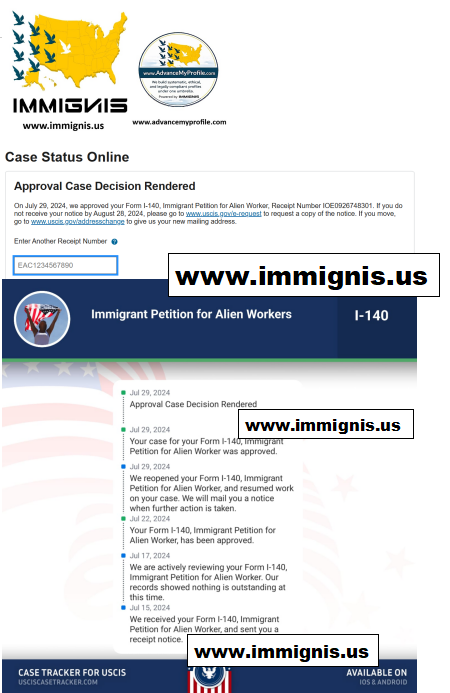
Key facts at a glance:
| Outcome | EB-1A approval for an Egyptian 5G cybersecurity founder based in the United States. |
| Approval date | Approved on July 29, 2024. |
| Field niche | AI driven 5G network security for IoT and smart infrastructure. |
| Starting problem | The original story looked too business-focused and needed independent technical recognition. |
| Path used | Ethical EB-1A profile building through technical publications, a SOC and cybersecurity white paper, expert commentary, startup media, keynote applications, senior membership, peer review, advisory-board activity, trademark and product-identity evidence, and independent telecom-security expert letters. |
| USCIS EB-1A criteria activated | Original contributions, scholarly articles, published material, memberships, judging, and leading role. |
He did not need another pitch deck He needed proof.
By the time he came to Immignis, the founder could explain the problem in one breath: 5G was expanding into factories, ports, hospitals, vehicles, and smart city infrastructure, but the security model had not caught up with the attack surface.
He had built a cybersecurity company around AI-driven protection for 5G networks, IoT devices, and smart infrastructure. Customers understood the risk. Investors understood the market. Technical teams understood the value.
USCIS would need something different.
His startup story was strong, but it read like a business case. It showed ambition, product development, and founder leadership. It did not yet show enough independent technical recognition in 5G network security.
He had built a company around a serious problem. He had not yet built an EB-1A record around his own technical authority.
Why did a strong cybersecurity founder still look risky for EB-1A?
The risk was that the founder looked like a capable entrepreneur, not yet a field-recognized cybersecurity expert.
For EB-1A, that distinction matters. A founder can have a promising product, users, revenue conversations, and media attention, yet still face a difficult question: is the person being recognized for original technical contribution, or only for launching a company?
His field was also complex. AI-driven 5G network security sits across telecom architecture, IoT identity, anomaly detection, SOC workflows, edge computing, and smart-infrastructure protection. If the evidence stayed broad, the petition could feel scattered.
The EB-1A green card is a self-petition immigrant category for people who can show extraordinary ability through sustained national or international acclaim and evidence that they are among the small percentage at the top of their field.
That standard forced the case to move past founder enthusiasm. It had to show that his work contributed to secure communications in a way the field could recognize.
What did Immignis see beneath the founder story?
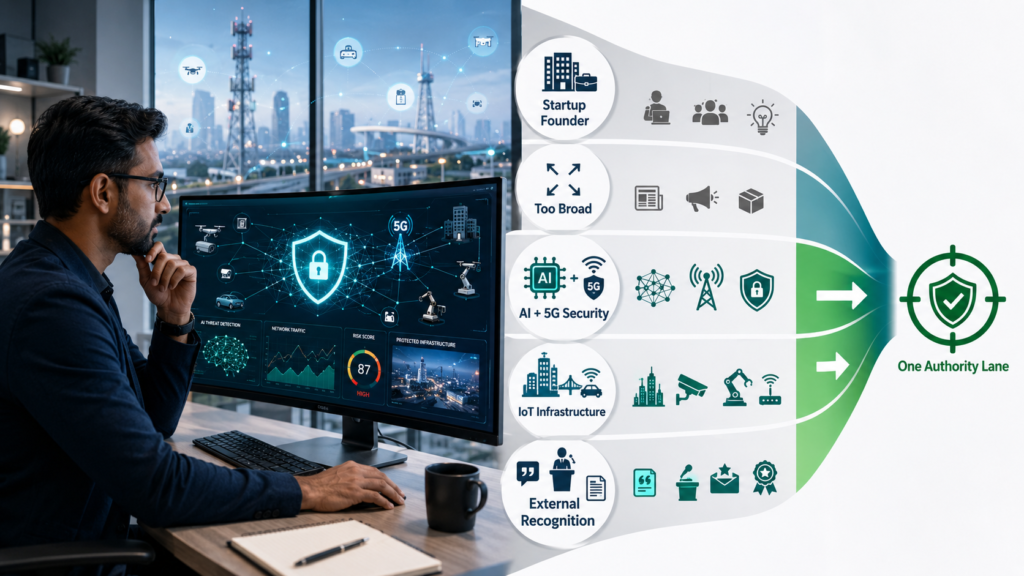
Immignis saw a technical founder with a positioning problem. The first review separated the business narrative from the EB-1A narrative. The business narrative said: he built a cybersecurity startup. The EB-1A narrative needed to say something more precise: he developed and promoted AI-driven 5G security methods for IoT and smart infrastructure risk environments.
That difference changed the case. The petition could not lean only on startup media, product branding, or founder titles. It needed proof that people outside his company were evaluating, discussing, citing, inviting, and recognizing his technical work.
Immignis narrowed the profile to one authority lane: AI driven 5G network security for connected infrastructure. From that point forward, every activity had to support that lane.
What would USCIS need to see in a 5G cybersecurity founder case?
The officer would need to see that the case was not just a business success story with cybersecurity language attached.
For this profile, the field-specific question was direct: did his work help define how AI can detect, prioritize, or prevent threats in 5G-connected IoT and smart-infrastructure environments?
USCIS would also need to see whether the founder’s contribution could be separated from the company as a legal entity. The petition had to explain his personal role in the security architecture, the technical vision, the published work, the product identity, and the expert facing cybersecurity discussion.
A second risk involved evidence quality. Startup media can support visibility, but it cannot carry an EB-1A petition by itself. The record needed technical publications, peer review, senior membership, advisory board activity, independent telecom security letters, and a final merits argument showing sustained acclaim in a defined cybersecurity niche.
The case also needed to address trust. In cybersecurity, weak awards, paid media, vague product claims, and exaggerated “AI security” language can quickly damage credibility. The evidence had to survive review by both an immigration officer and a technical reader.
How did Advance My Profile build the authority record?
The build started by taking pressure off the pitch deck and putting weight on technical evidence.
Advance My Profile, powered by Immignis, began with a bespoke assessment led by immigration strategy, cybersecurity reviewers, content professionals, and an evidence team. The team did not push him into a generic “tech founder” profile. They built the record around 5G security, IoT risk, and smart-infrastructure protection.
First came technical authorship. The team helped develop focused publications on AI-supported network defense, anomaly detection in high volume connected environments, and the operational challenge of securing 5G-enabled IoT systems. The writing stayed close to his real work and avoided hollow trend language.
Then came the SOC and cybersecurity white paper. This became a major turning point because it translated the founder’s technical approach into a format security teams, telecom stakeholders, and infrastructure decision makers could understand. It connected his work to real problems: device proliferation, network slicing, edge exposure, alert fatigue, and incident response in connected systems.
Expert commentary followed. The founder began appearing in relevant cybersecurity and technology outlets on issues such as payment-network attacks, IoT exposure, 5G infrastructure security, AI in security operations, and smart city risk. The media work did not try to make him a general commentator on every technology topic. It built recognition around his actual field.
Startup media was used carefully. It supported the story of a founder building a product in a serious security sector, but it was not treated as enough by itself. The stronger goal was independent technical recognition.
Keynote applications and invited speaking efforts added another public signal. The team pursued opportunities where his subject matter fit the audience: telecom security, IoT defense, cyber resilience, and AI-enabled SOC modernization.
Senior membership opportunities were reviewed where the eligibility standards matched his experience and contribution. Peer-review activity helped move the record from being evaluated by others to evaluating others. Advisory-board activity gave the petition another sign that organizations valued his judgment in cybersecurity and connected infrastructure.
Product identity also mattered. The team documented trademark and product-identity evidence in a careful way. In a founder case, brand assets do not replace technical contribution. But when tied to a real cybersecurity platform and explained properly, they help show that the founder’s work had a defined market and technical identity.
Independent letters completed the record. Immignis helped structure letters from telecom security experts who could explain why AI-driven 5G defense matters beyond one startup and why the founder’s work belonged in a field level conversation.
Why did the ethical path matter in cybersecurity?
Cybersecurity is built on trust. That made the ethics of the profile especially important.
A founder in 5G security cannot afford a public record filled with weak awards, paid citations, fake media, or exaggerated AI claims. Those shortcuts may appear useful for one filing, but they can damage a founder’s reputation with customers, investors, partners, and technical reviewers.
Immignis treated the profile as something the founder could carry into board meetings, security conferences, product discussions, and future immigration steps. The publications had to be relevant. The white paper had to make sense to security professionals. The media commentary had to sound like field knowledge, not promotion. The letters had to explain the technical significance in plain terms.
That is the difference between profile decoration and profile building. Profile decoration makes a file look busy. Profile building creates a record the professional can own for life.
Could your own EB-1A profile be stronger than it looks?
If your work sits inside a startup, platform, product roadmap, SOC design, patent idea, or confidential security architecture, your issue may be evidence structure.
Immignis offers a free profile assessment for founders, engineers, cybersecurity specialists, AI researchers, and technical leaders who want to understand whether their record may support an EB-1A green card, EB-2 NIW, O-1, or another merit based pathway. The assessment looks at your field niche, evidence gaps, recognition signals, and realistic criteria.
Which USCIS EB-1A criteria did the final petition activate?
The final Form I-140 petition activated six USCIS EB-1A criteria and tied them into one final-merits narrative.
Original contributions: The petition presented his AI-driven 5G security methods as contribution evidence in IoT and smart-infrastructure defense. Publications, the SOC and cybersecurity white paper, product-identity evidence, advisory activity, and expert letters helped explain significance beyond a company pitch.
Scholarly articles: Focused technical publications showed authorship in AI-supported cybersecurity, 5G network defense, and connected infrastructure risk.
Published material: Startup media, cybersecurity commentary, and technology coverage placed his expertise in public view and connected his name with secure communications and 5G infrastructure protection.
Memberships: Senior or selective professional membership evidence supported recognition within cybersecurity, telecom, or technology communities.
Judging: Peer-review work showed that he was trusted to evaluate technical work by others, which strengthened the record beyond founder self-promotion.
Leading role: Founder, product, advisory, and company evidence showed that he played a leading role in a distinguished technical venture focused on high value cybersecurity problems.
The final-merits argument connected the evidence to one central message: he was not only building a cybersecurity company. He was building recognized technical authority in AI-driven 5G security for connected infrastructure.
What did EB-1A approval mean for him?
The approval gave the founder freedom to keep building without tying his future to a single employer sponsor.
Approved on July 29, 2024, the case showed how a business-heavy founder profile could become an EB-1A success story when the technical contribution was documented, positioned, and independently validated.
By the time the petition was filed, his record no longer depended only on startup ambition. It included focused publications, cybersecurity white paper work, expert commentary, startup media, keynote positioning, senior membership evidence, peer review, advisory board activity, trademark and product identity documentation, and independent letters from telecom-security experts.
The approval was the immigration result. The authority record became the business asset.
If this sounds like you
You may be a cybersecurity founder whose best work lives inside a product roadmap, SOC architecture, threat model, or platform that customers use but the public cannot fully see.
You may have real technical value, but your profile may still look like a business story.
The safest path is not to invent recognition. The safest path is to build the recognition your real work deserves: technical authorship, credible media, senior membership, peer review, advisory roles, white papers, product-identity evidence, independent expert validation, and a petition narrative that explains why your work matters beyond your company.
Do not build evidence you will need to hide later. Build an EB-1A profile that strengthens your immigration future and your professional name.
Can a cybersecurity founder qualify for an EB-1A green card?
Yes. A cybersecurity founder may qualify for an EB-1A green card when the record shows extraordinary ability through recognized technical contribution, sustained acclaim, and evidence under the USCIS EB-1A criteria. For a 5G security founder, strong evidence may include technical publications, a cybersecurity white paper, independent expert letters, peer review, senior membership, advisory activity, media recognition, and proof of a leading role.
Why is startup traction alone usually not enough for EB-1A?
Startup traction can help, but EB-1A requires more than a business story. USCIS needs evidence that the person has extraordinary ability in a defined field, not only that a company exists or has market promise. In this case, the founder’s work had to be reframed around AI-driven 5G security contribution, technical recognition, and independent validation.
How can proprietary 5G cybersecurity work be documented safely?
Proprietary security work can be documented through non-confidential technical articles, white papers, expert letters, role evidence, product-identity documents, and public commentary that explains the problem without exposing source code, customer data, network architecture, or protected security details. The goal is to show the contribution without creating business or security risk.
Do trademarks or product identity help an EB-1A founder petition?
They can help when used properly. A trademark or product identity does not prove extraordinary ability by itself, but it can support the original contribution and leading-role narrative when connected to a real technical platform, market recognition, and independent expert evidence. It should be one supporting piece, not the center of the case.
Why are peer review and advisory-board roles useful in a cybersecurity EB-1A case?
Peer review and advisory board roles show that others trust the founder’s judgment. In a technical field like 5G cybersecurity, this helps move the record beyond self-promotion and customer facing claims. It shows the person is participating in how the field evaluates ideas, risks, and technical work.
Is EB-1A or EB-2 NIW better for a cybersecurity founder?
EB-1A and EB-2 NIW answer different questions. EB-1A focuses on extraordinary ability and sustained acclaim, while EB-2 NIW focuses on a proposed endeavor with national importance and whether the applicant is well positioned to advance it. A cybersecurity founder may be evaluated for both, and the stronger path depends on the evidence record.
Build an EB-1A success story around security work the field can trust
If you work in 5G cybersecurity, AI security, IoT protection, SOC modernization, smart infrastructure, or another advanced technical field, your strongest achievements may already exist. They may simply be hidden inside a product, company, security program, or technical system.