Key facts at a glance
| Outcome | EB-1A approval for a Dutch circular food systems expert after USCIS received a response to a request for additional evidence. |
| Approval date | Approved on March 18, 2024. |
| Field niche | Upcycled protein systems for resilient food manufacturing and circular protein supply chains. |
| Starting problem | His work stretched across sustainability, food innovation, partnerships, and circular economy projects, making the EB-1A record too broad. |
| Path used | Ethical EB-1A profile building through focused papers, a lifecycle-assessment brief, trade-media coverage, industry-partnership evidence, conference judging, a technical book chapter, selective professional membership, and independent letters from food system leaders. |
| USCIS EB-1A criteria activated | Scholarly articles, original contributions, published material, judging, memberships, and leading or critical role. |
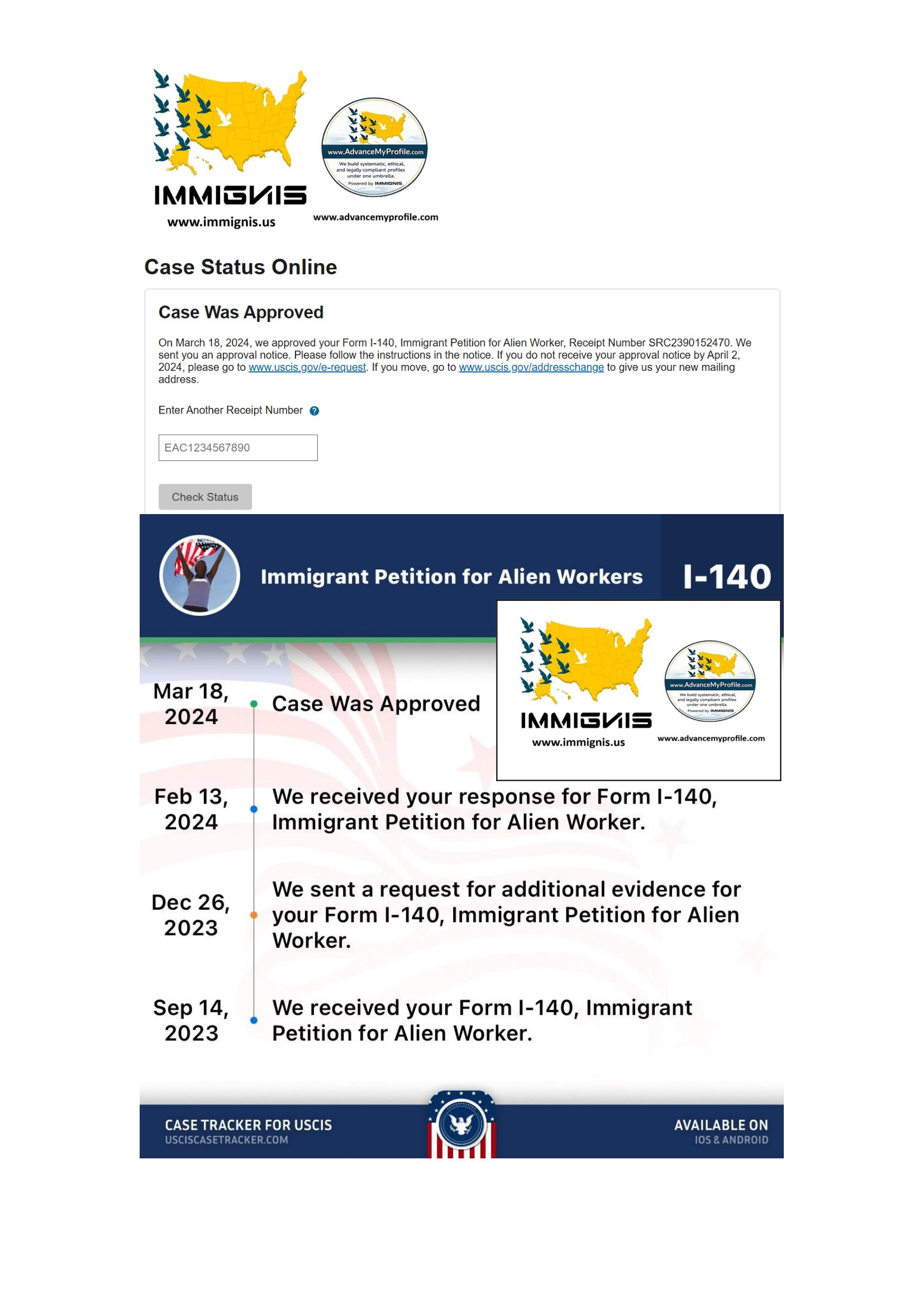
On March 18, 2024, his EB-1A case was approved.
Three months earlier, USCIS had sent a request for additional evidence. The response received on February 13, 2024, helped strengthen this EB-1A approval in circular food systems case..
The approval screen was brief. The career behind it was not. For years, he had worked across sustainability, food innovation, circular economy projects, startup acceleration, and industry partnerships. Every project made sense on its own. Together, they created a problem.
His professional identity could mean almost anything.
He was a sustainability expert. A food tech professional. A circular economy specialist.
All true.
None precise enough.
Why was “sustainability” too broad for this EB-1A case?
His starting weakness was not a lack of impact. It was a lack of concentration.
The EB-1A green card is a self-petition immigrant category for people who can demonstrate extraordinary ability through sustained national or international acclaim and evidence placing them among the small percentage at the top of their field.
The word field mattered here. “Sustainability” covered too many different industries and problems. Even “food technology” left the record spread across unrelated activities.
Advance My Profile, powered by Immignis, mapped his projects and looked for the technical thread that kept returning.
That thread was upcycled protein. More specifically, it was upcycled protein systems for resilient food manufacturing: how protein rich side streams and underused inputs could be evaluated, processed, and moved into repeatable food production pathways.
Once that niche was defined, the case stopped looking like a collection of green projects. It began to look like one professional record.
What did USCIS need to see in an upcycled-protein EB-1A case?
USCIS needed to see more than a professional who supported sustainable food programs.
For original contributions, the petition had to identify his own methods, analytical work, or implementation influence in circular protein manufacturing. It had to explain how his contribution affected ingredient recovery, manufacturing use, lifecycle decisions, or the ability of food system actors to convert side streams into viable inputs.
Industry partnerships also required attribution. A partnership between an accelerator, startup, manufacturer, or research group does not automatically prove one person’s extraordinary ability. The record needed to show what he personally designed, evaluated, led, or advanced.
The lifecycle assessment evidence had to answer practical questions. Was an upcycling pathway only attractive in a sustainability presentation, or did the analysis address processing demands, resource use, waste diversion, usable yield, and manufacturing reality?
For leading or critical role evidence, a senior title was not enough. The case needed to show why projects and organizations relied on his judgment.
The final-merits question was whether the record showed one recognized specialist whose publications, industry work, judging, professional standing, and independent recognition all converged on circular protein manufacturing.
The profile-building plan started by removing noise
This case did not need random new activities. It needed a narrower professional center. Legal strategists and food systems domain specialists reviewed his past work. Projects genuinely connected to upcycled proteins, resource recovery, and resilient food manufacturing were developed and documented. Unrelated sustainability work was not forced into the core narrative.
With domain PhD support, the publication strategy focused on circular protein systems, by product valorization, and the technical questions that determine whether an upcycled ingredient can move from an idea into a repeatable manufacturing input.
The goal was not to produce the largest number of papers. The goal was for another food systems researcher to encounter several pieces of his work and recognize the same specialist each time.
A technical book chapter extended that identity. It connected ingredient recovery, manufacturing, and food system resilience in a longer field facing format. The record was becoming more coherent.
Why did the lifecycle-assessment brief and partnership evidence matter?
Because circular food claims can become vague very quickly. A company can call a product circular. A campaign can say a process reduces waste. Neither statement proves that a protein pathway is technically useful or environmentally credible.
The lifecycle assessment brief forced the profile to engage with evidence. It examined source materials, processing requirements, resource intensity, waste diversion, usable output, and the manufacturing context in which an upcycled protein system would operate.
Advance My Profile helped shape the brief for food industry and supply chain audiences rather than treating it as an immigration exhibit.
Partnership evidence was handled with the same discipline. The team documented his role in evaluating upcycling pathways, connecting manufacturers with innovation teams, shaping technical direction, and advancing specific projects.
The case did not rely on partnership logos. It showed what he did.
That evidence supported both the original-contribution story and the argument that his role was important to recognized food tech and circular manufacturing activities.
How did the wider field begin to recognize him?
Trade media coverage gave the work an audience outside accelerator programs and private partnerships.
The media strategy stayed narrow. He was not positioned as a commentator on every climate or sustainability issue. Coverage focused on upcycled proteins, food manufacturing resilience, ingredient recovery, and the limits of treating food waste as a branding problem.
His commentary explained why circular protein systems require more than collecting by products. Source streams must be understood. Processing must be viable. Ingredient quality and repeatability matter. Manufacturers need confidence that a system can work beyond a pilot.
Conference judging added another type of recognition. Food tech and innovation venues trusted him to evaluate work presented by others. The evidence documented the event, his role, and the work he was asked to assess.
Selective professional membership was approached carefully. Where membership evidence was used, the record addressed the actual admission or advancement standards rather than assuming that payment of dues proved extraordinary ability.
Independent food system leaders then explained why his niche mattered. Their letters connected his analysis and industry work to the broader challenge of turning underused protein resources into viable manufacturing pathways.
The strongest letters did not repeat his resume. They interpreted his contribution.
The RFE became part of the case, not something to hide
The response had to bring USCIS back to the evidence and make the professional record readable as one field-level story.
For a broad sustainability professional, coherence can be decisive. Publications, lifecycle work, partnership evidence, media, judging, memberships, and independent letters should not look like unrelated career fragments.
They should explain the same professional identity. In this case, that identity was circular protein manufacturing.
Why did ethical profile building matter in food technology?
Food sustainability is full of easy marketing language: circular, zero waste, climate smart, future food.
Those phrases become dangerous when they are used to decorate a weak immigration profile.
A fake award, paid citation scheme, weak journal, or exaggerated claim about food-system impact may create a document for one filing. It also creates a public record the professional may later have to explain to manufacturers, investors, researchers, and partners.
Immignis took the opposite approach.
The papers stayed close to his real work. The lifecycle brief examined real decision factors. Partnership evidence separated his role from the organization. Judging was genuine. Membership standards were documented. Independent letters explained specific contributions.
The record had to be something he could discuss with a food scientist or manufacturing executive after the immigration case was over.
Do not build what you need to hide for the rest of your career. Build a professional record you can continue to use.
Which USCIS EB-1A criteria did the final Form I-140 petition activate?
Scholarly articles: Focused publications connected his research and authorship to upcycled protein systems, circular food manufacturing, and resilient food supply chains.
Original contributions: Lifecycle analysis, project documentation, partnership evidence, and independent expert letters explained his individual influence on circular protein approaches and their manufacturing relevance.
Published material: Trade-media coverage discussed his expertise and work in upcycled proteins and circular manufacturing, creating independent public recognition around the defined niche.
Judging the work of others: Conference judging evidence showed that food tech and innovation venues trusted him to evaluate work presented by other professionals and teams.
Memberships: Selective professional membership evidence was supported with the organization’s admission or advancement standards and the basis on which his standing was evaluated.
Leading or critical role: Project and partnership records showed why his technical and strategic judgment mattered to recognized food-tech, accelerator, and circular manufacturing activities.
The final merits narrative did not present six criteria as six separate stories. It showed one professional record through six types of evidence.
Research explained circular protein systems. Lifecycle analysis translated sustainability claims into evidence. Partnership work showed application. Trade coverage created independent visibility. Judging showed evaluative trust. Selective membership and independent letters added outside recognition.
That is what converted broad sustainability work into a focused food-technology authority record.
What did the March 2024 EB-1A approval mean?
USCIS approved the Form I-140 on March 18, 2024.
By then, his professional record no longer depended on the word sustainability to explain everything.
He had focused publications, a lifecycle assessment brief, industry partnership evidence, trade media recognition, conference judging, a technical book chapter, selective professional membership, and independent letters from food system leaders.
The approval gave him an EB-1A self-petition path without employer sponsorship or labor certification.
The profile-building work also created a clearer professional identity.
A food manufacturer could understand his field. A trade journalist could see what subject to call him about. A conference organizer could identify his judging area. An industry partner could understand the connection between his technical analysis and circular protein manufacturing.
The EB-1A approval was the immigration result. The focused authority record was the long-term professional result.
If your work is valuable but your professional identity is too broad
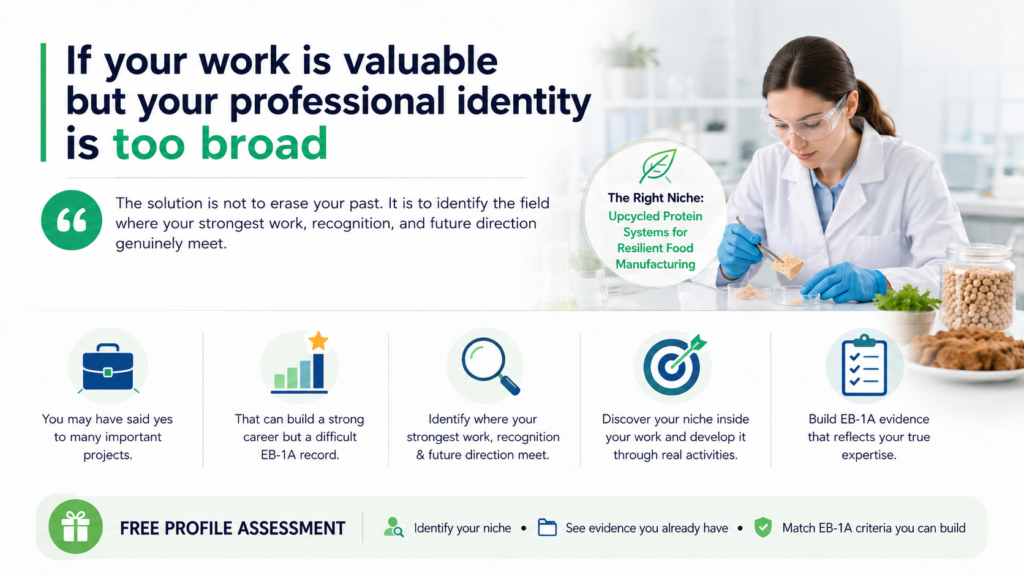
You may have spent years saying yes to important projects. That can build an excellent career and still create a difficult EB-1A record.
The solution is not to erase your past. It is to identify the field in which your strongest work, recognition, and future direction genuinely meet.
For this client, that field was upcycled protein systems for resilient food manufacturing.
The right niche should not be invented. It should be discovered inside the work you have already done and developed through real, credible professional activities.
Immignis offers a free profile assessment to identify that niche, the evidence already available, and the EB-1A criteria that may be realistically developed.
FAQs
Is “sustainability” too broad as an EB-1A field?
It can be. Sustainability covers many unrelated industries and technical problems, so a petition may be difficult to evaluate if the claimed field is too general. A narrower specialty such as circular protein manufacturing can make contributions, authorship, judging, and independent recognition easier to connect in the final merits analysis.
What are upcycled protein systems, and why can they matter in a food-technology EB-1A case?
Upcycled protein systems seek to recover protein value from side streams, by-products, or underused inputs and convert that value into viable food or ingredient pathways. The EB-1A issue is whether the applicant made recognized contributions to the technical, manufacturing, lifecycle, or supply-chain problems that determine whether those systems can work.
Can a lifecycle-assessment brief support an original-contribution argument?
It can strengthen the argument when it documents the applicant’s own analytical contribution and independent evidence helps show why the analysis mattered beyond one organization. The brief should explain the methodology, decision factors, and practical relevance rather than make unsupported sustainability claims.
How can industry partnerships be used when someone works through a food-tech accelerator?
Partnership logos are not enough. The evidence should identify the applicant’s personal role in evaluating technology, shaping technical direction, connecting manufacturers with innovation teams, or advancing specific projects. Project records and independent letters can help separate the individual’s contribution from the accelerator’s general activity.
Does receiving an RFE mean an EB-1A case was likely to be denied?
No. An RFE means USCIS is requesting additional evidence or clarification before completing adjudication. The response must address the request with an organized evidentiary record. In this case, the public timeline shows an RFE, USCIS receipt of the response, and later approval.
Do I need a food-science PhD for EB-1A in circular food technology?
No specific degree is required for EB-1A extraordinary ability. A PhD may support technical expertise, but USCIS evaluates sustained acclaim and the record as a whole. For an industry-focused food-systems expert, original contributions, authorship, judging, selective professional recognition, critical-role evidence, and independent validation may be especially important.
Build an EB-1A success story around a field people can actually recognize
If your work spans food technology, sustainability, circular economy, alternative proteins, manufacturing innovation, or resilient supply chains, your career may be stronger than your current professional positioning suggests.
Immignis and Advance My Profile help professionals identify a defensible niche, build credible recognition around real work, document individual impact, and prepare an EB-1A record that tells one coherent professional story.
Start with a free EB-1A profile assessment and find out whether your broad experience can be developed into a clearer authority record.