Key facts at a glance:
| Outcome | EB-1A approval for a Chilean climate hydrology scientist working across Chile and U.S. collaborative projects. |
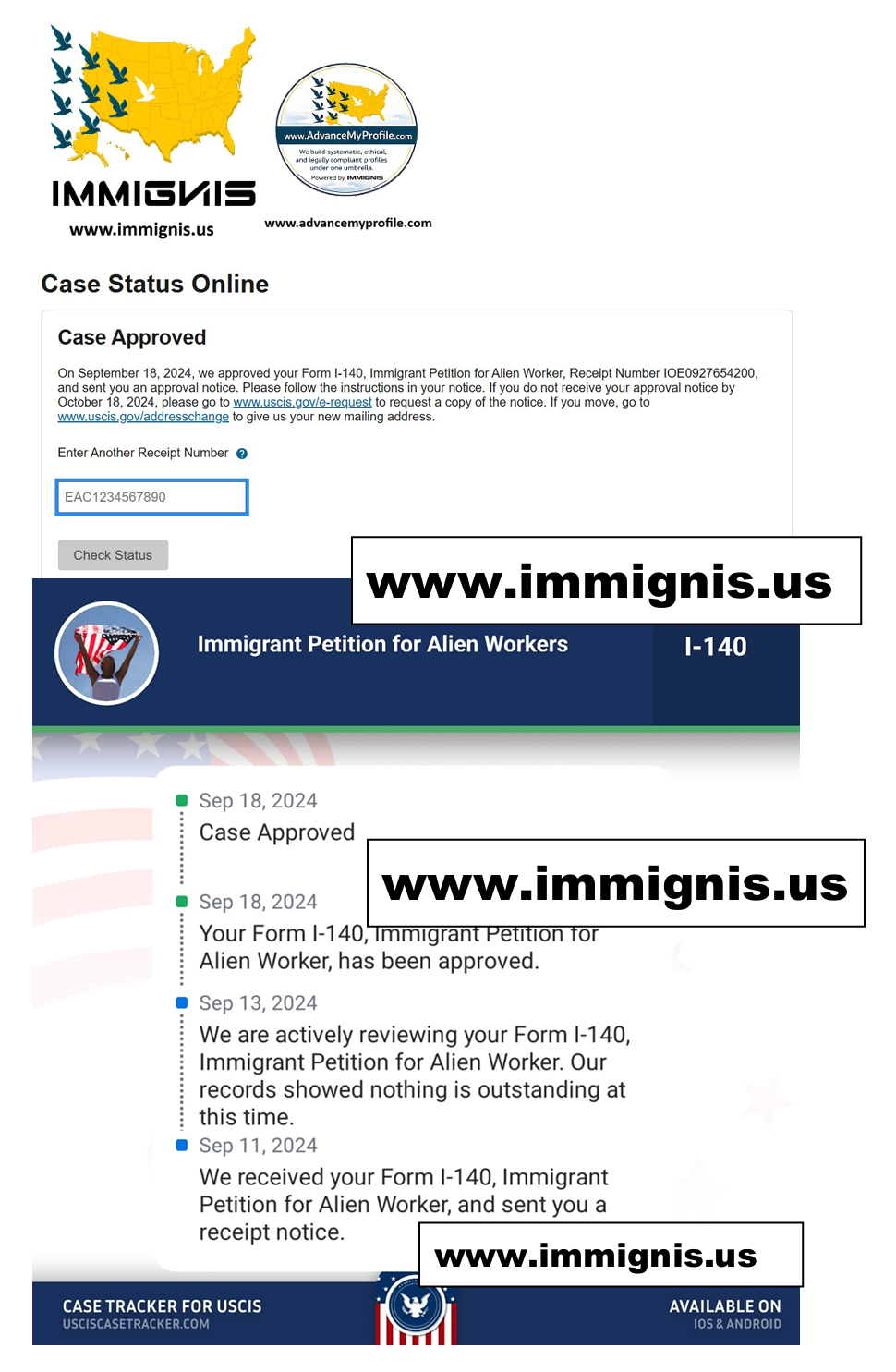
| Approval date | Approved on September 18, 2024. |
| Field niche | Flood and drought modeling for western U.S. water resilience. |
| Starting problem | Strong regional climate and hydrology research had limited U.S specific national framing. |
| Path used | Ethical EB-1A profile building through focused publications, a U.S. water security white paper, water-management stakeholder outreach, invited podcast, flood season media quotations, peer-review roles, selective hydrology membership, and independent U.S. water policy expert letters. |
| USCIS EB-1A criteria activated | Scholarly articles, original contributions, published material, judging, and memberships. |
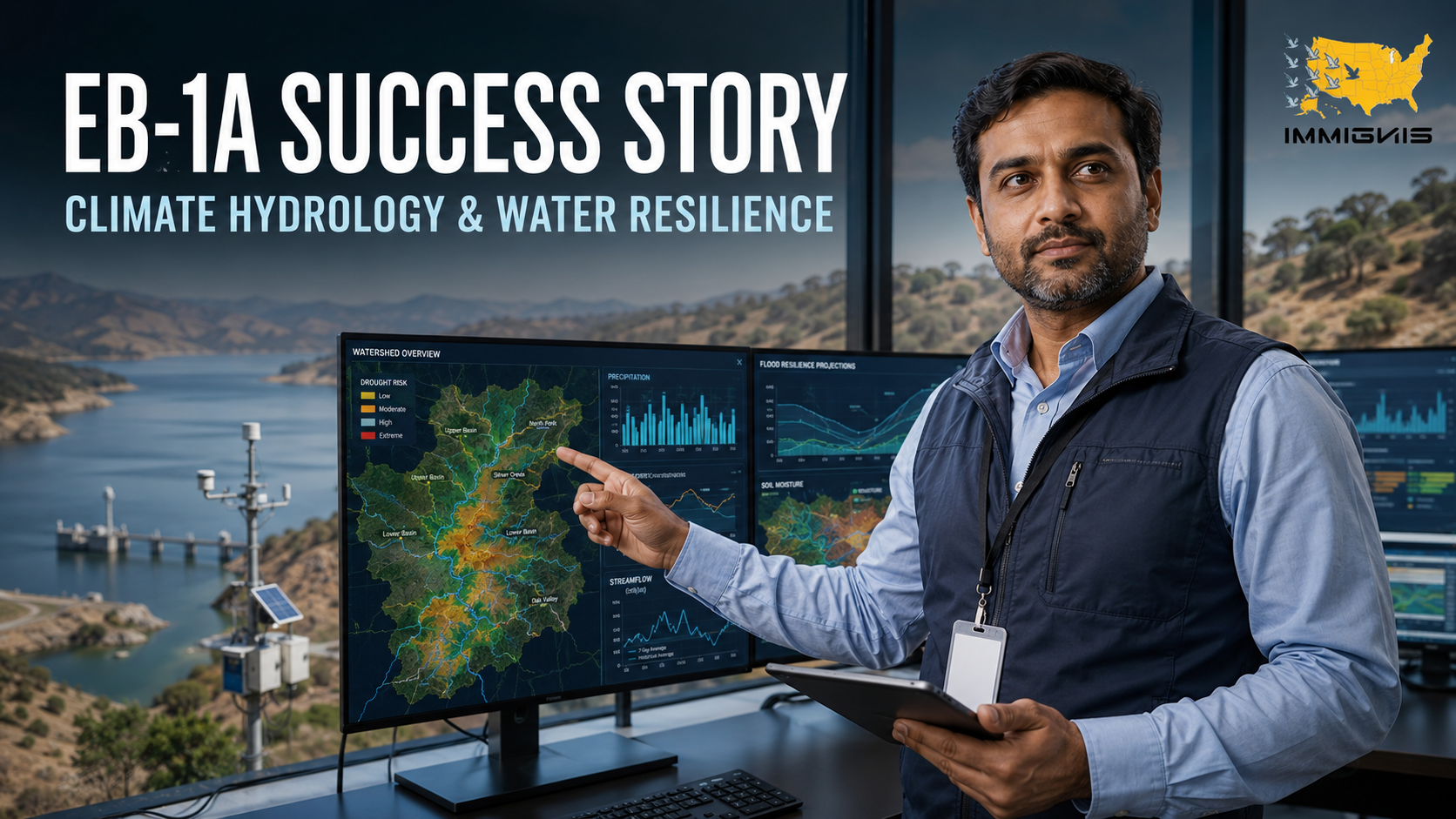
EB-1A climate hydrology scientist: The map on his screen did not look dramatic at first. A dry valley. A river basin under stress. A model run comparing what the land had done before with what it might do next.
Then came the question that always sat behind his work: what happens when the rain comes too fast, or not at all? He was a Chilean climate hydrology scientist whose research had already helped people understand floods, droughts, watersheds, and changing climate patterns. The science was real. The problem was the frame.
His record looked regional. His impact was broader than that. For EB-1A, that gap mattered. USCIS would not be reviewing a climate report. It would be reviewing whether this scientist had built sustained recognition in a defined field and whether his work showed a level of expertise above ordinary research activity.
Why did a strong climate hydrology record still need rebuilding?
The starting weakness was not lack of research. It was scattered positioning. He had publications and regional climate hydrology experience, but the record did not yet explain why his modeling work mattered to U.S. water resilience. A paper about one watershed, a collaboration involving another basin, and a technical model applied in another setting can all be valuable. For EB-1A, they must speak together.
The EB-1A green card is a self-petition immigrant category for people who can show extraordinary ability through sustained national or international acclaim and evidence that they are among the small percentage at the top of their field.
That standard can feel distant to researchers whose work serves public agencies, water managers, and climate teams more than newspaper headlines. Their influence may appear inside planning documents, stakeholder meetings, model outputs, and emergency preparedness discussions. Useful work, often quiet work.
His fear was simple. Would USCIS see a recognized climate hydrology scientist, or would it see a researcher with a few regional projects?
What did Immignis change in the case strategy?
Immignis did not try to turn him into a general climate expert. That would have weakened the case. The first step was to narrow the field to flood and drought modeling for western U.S. water resilience. That phrase gave the petition a center. It connected hydrology, climate risk, water planning, drought stress, flood preparedness, and the practical needs of western U.S. communities.
This was important because western U.S. water challenges are not abstract. Water managers must plan across dry years, sudden storms, reservoir pressure, agricultural demand, wildfire affected watersheds, and urban growth. A climate hydrology model becomes valuable when it helps decision-makers anticipate risk earlier and allocate attention more intelligently.
The case shifted from “he has done climate research” to “his modeling work supports how vulnerable regions prepare for flood and drought conditions.” That change made every piece of evidence stronger.
What would USCIS need to see in this climate hydrology case?
USCIS needed to see that the work was not only academically competent. It needed to see a field recognized contribution to water resilience modeling.
For this profile, the final merits risk was very specific. The officer could have asked whether his work was too regionally framed, whether Chile based research could support a U.S. relevant EB-1A theory, whether his publications clustered around one specialty, whether independent experts outside his immediate circle recognized the work, and whether stakeholder-facing materials showed practical significance beyond citation counts.
The petition had to answer those questions directly. It had to show that his climate hydrology expertise could be transferred into western U.S. water concerns. It had to connect flood modeling to emergency preparedness and drought modeling to long-term water security. It also had to prove that he was not simply participating in collaborative research, but contributing methods and analysis that others in the field could recognize.
That is why the evidence plan did not rely on publications alone. It paired scholarship with policy facing explanation, media visibility during flood season, peer review, selective membership, and independent U.S. water policy letters.
How did Advance My Profile build the authority record?
The build began with a disciplined roadmap. Advance My Profile, powered by Immignis, aligned the immigration strategy, climate hydrology review, research positioning, media plan, and evidence assembly before the public work expanded. The record had to grow in one direction. Flood and drought modeling for western U.S. water resilience.
First came the publications. The team helped shape focused articles around flood risk modeling, drought prediction, watershed stress, and decision useful hydrology. The purpose was not to make his record larger. The purpose was to make it easier for a reviewer to understand what he was known for.
A U.S. water security white paper followed. It translated scientific modeling into a stakeholder language that water agencies, associations, emergency planners, and policy facing audiences could understand. The white paper explained why predictive hydrology matters when climate extremes pressure infrastructure, agriculture, public health, and local budgets.
Then the team built public recognition around the same niche. He appeared as an expert voice in relevant climate, water, and resilience discussions. During flood season coverage, his quotations helped explain risk without drama. He spoke about what models can show, what they cannot promise, and why early warning depends on data quality, basin context, and responsible interpretation.
An invited podcast added a different kind of visibility. It allowed him to explain the human side of hydrology: a model is not only a calculation. It can help a community decide where to look first when conditions change.
Peer review roles strengthened the judging criterion. His record moved from being only published to being trusted to evaluate hydrology and climate risk work by others. That shift mattered for EB-1A because evaluating others is direct evidence that the field sees the person as an authority.
Selective hydrology membership helped show professional recognition. Immignis reviewed membership pathways tied to achievement, expertise, and field contribution, not simple paid enrollment. The goal was to build evidence that could survive scrutiny.
Independent letters were then drafted with care. The strongest letters came from U.S. water-policy experts, hydrologists, and resilience professionals who could explain why his work mattered to water planning and climate adaptation. These letters did not repeat praise. They connected his work to the actual decisions facing drought prone and flood-prone regions. Every activity stayed inside the same field. That was the discipline that made the profile stronger.
Why did ethics matter in a climate and water resilience case?
Climate science depends on trust. Water policy depends on trust even more. A hydrology profile built with weak journals, unrelated awards, paid citation schemes, or irrelevant media would not only create immigration risk. It would weaken the professional’s name in a field where public agencies, researchers, and communities rely on credibility.
Immignis treated the profile as something the scientist could carry into future collaborations. The publications had to fit the specialty. The white paper had to be useful to real stakeholders. The media commentary had to stay careful and grounded. The letters had to be specific. The petition had to show honest significance, not decorated ambition.
Profile decoration creates evidence that a professional may later avoid explaining. Profile building creates a record the professional can keep using.
In this case, the EB-1A strategy helped him become easier to recognize for the work he was already doing: modeling water risk before it becomes visible to the public.
Could your own EB-1A profile be stronger than it looks?
If your work is public-sector, policy facing, regional, or embedded in collaborative projects, your record may look weaker than your actual contribution.
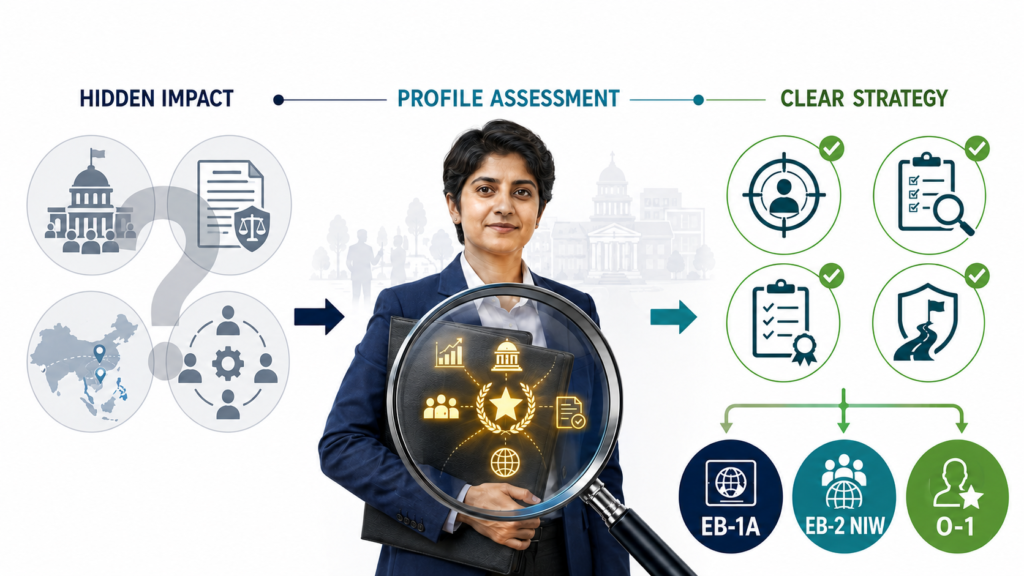
Immignis offers a free profile assessment for professionals who want to understand whether their record may support an EB-1A green card, EB-2 NIW, O-1, or another merit based pathway. The assessment identifies the field niche, evidence gaps, realistic criteria, and the safest path to build recognition honestly.
Which USCIS EB-1A criteria did the final petition activate?
The final Form I-140 petition activated five USCIS EB-1A criteria and then tied them into one final merits narrative.
• Scholarly articles: Focused publications showed authorship in flood modeling, drought prediction, watershed analysis, and climate-hydrology methods relevant to water resilience.
• Original contributions: The petition explained how his modeling work contributed to decision useful flood and drought surveillance, especially where climate extremes affect western U.S. water planning.
• Published material: Media quotations, expert commentary, and podcast visibility placed his expertise in public view and connected his name with climate hydrology and water resilience.
• Judging the work of others: Peer-review assignments showed that journals and professional venues trusted him to evaluate research by other scientists in hydrology and climate risk modeling.
• Memberships: Selective hydrology membership supported the argument that his work met achievement based recognition standards within the field.
The final merits argument did the real work. It showed that his record was not scattered across climate topics anymore. The publications, white paper, media voice, peer review, membership evidence, and independent letters all pointed to one narrow field.
Flood and drought modeling for western U.S. water resilience. For this case, the message was direct. He was not only studying climate patterns. He was helping make water risk information more usable for places that must plan before the next extreme event arrives.
What did EB-1A approval mean for him?
Approved on September 18, 2024, the EB-1A approval turned a regionally framed climate-science record into a visible authority profile.
It gave him a self petition green card path through Form I-140 without employer sponsorship and without PERM labor certification. It also gave him a stronger professional identity beyond immigration. He now had focused authorship, stakeholderfacing thought leadership, media recognition, peer-review activity, selective membership evidence, and independent validation from U.S. water policy experts. The approval was the immigration result. The authority record was the lasting value.
If this sounds like you
You may be a climate scientist whose work is respected inside agencies but not visible online. You may be a hydrologist whose best contribution sits inside collaborative projects. You may be a researcher whose regional expertise has U.S. relevance, but the case has never been framed that way. That does not mean your record is weak. It may mean your record is unfinished.
The safest path is not to invent recognition. The safest path is to build the recognition your real work deserves: focused publications, credible public visibility, policy facing work, peer review, selective memberships, and independent expert validation. Do not build evidence you will need to hide later. Build an EB-1A profile that supports your immigration future and strengthens your professional name.
FAQ
Can a climate hydrology scientist qualify for an EB-1A green card?
Yes. A climate hydrology scientist may qualify for an EB-1A green card if the record shows sustained acclaim and evidence under the USCIS EB-1A criteria. Strong evidence may include focused publications, original modeling contributions, peer review, policy facing work, published material, selective memberships, and independent expert letters.
Can regional hydrology research support a U.S. focused EB-1A case?
Yes, if the petition explains the U.S. relevance clearly. For example, flood and drought modeling developed through regional or international projects can support a U.S. water resilience narrative when the methods, findings, or expertise apply to western U.S. water stress, emergency planning, watershed management, or climate adaptation.
Do policy briefs and white papers help in an EB-1A climate science petition?
They can help when they are credible, field specific, and shared with the right stakeholder audience. In a hydrology case, a white paper for water-management groups can show that the scientist is not only publishing research, but translating it for agencies, associations, and decision makers who face real water risk problems.
What makes flood and drought modeling an original contribution for EB-1A?
The modeling work must be shown as more than routine analysis. The petition should explain the method, the problem it solves, how it improves risk understanding or decision-making, and why independent experts consider the contribution significant in the field.
How can media quotes during flood season support EB-1A?
Media quotes can support the published-material and recognition story when the professional is presented as an expert on a relevant field issue. For climate hydrology, commentary during flood or drought coverage can show public authority if it stays tied to the scientist’s actual expertise and appears in credible outlets.
Do I need U.S. employment to file EB-1A?
EB-1A does not require employer sponsorship or PERM labor certification. A qualified applicant may self-petition with Form I-140. U.S. collaborations, U.S. relevant impact, and future work plans can help explain the field connection, but the core question remains whether the evidence shows extraordinary ability.
Build an EB-1A success story around evidence you can trust
If you work in climate hydrology, water resilience, drought modeling, flood forecasting, environmental data science, or public-sector research, your strongest achievements may already exist. They may simply be scattered, too regional on paper, or invisible outside technical audiences.
Immignis helps professionals build EB-1A profiles through ethical evidence development, field specific positioning, reputable visibility, independent validation, and petition ready storytelling.