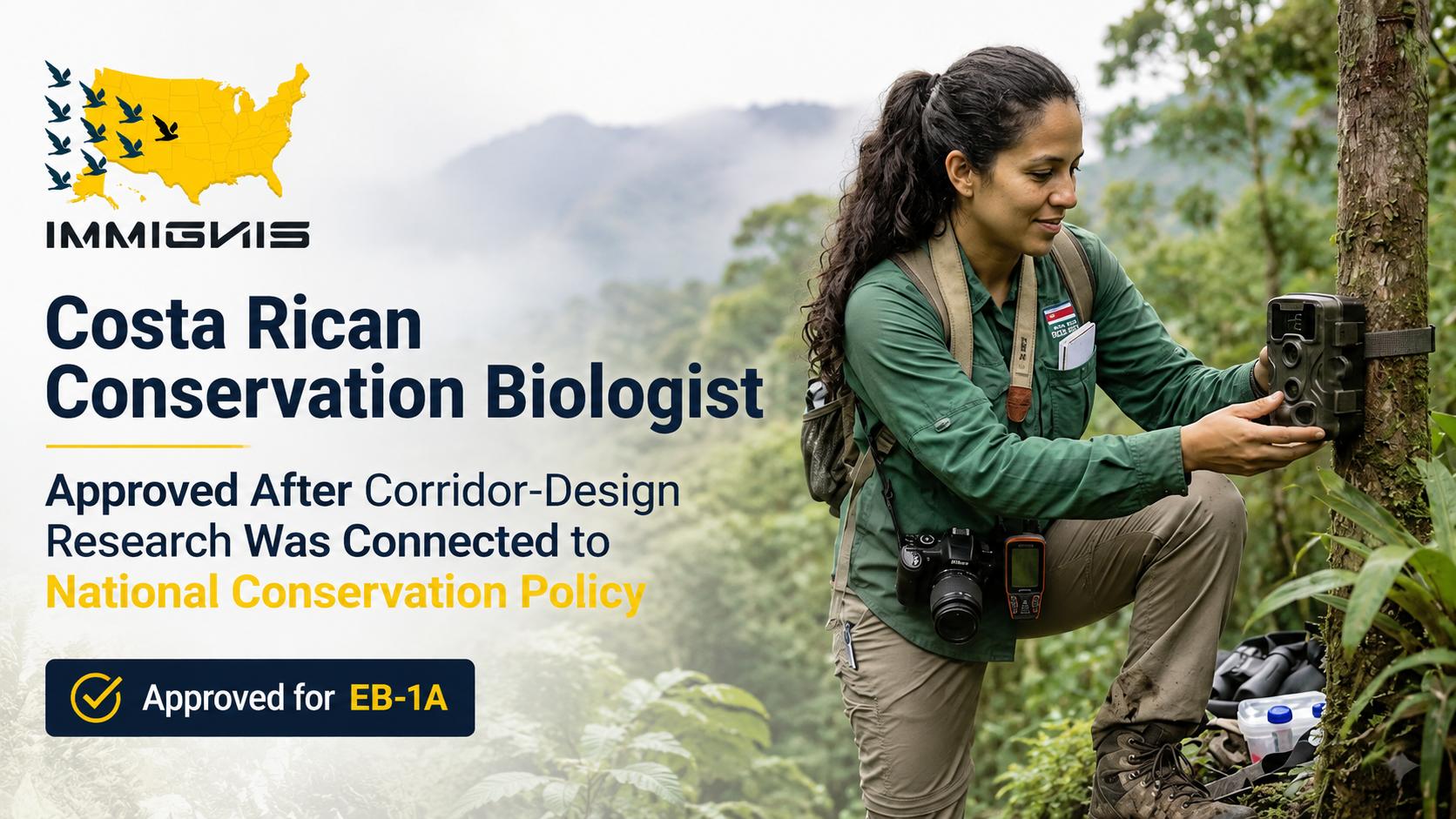
EB-1A Conservation Biologist: How a Costa Rican conservation biologist secured EB-1A approval by turning biological-corridor research, conservation-finance influence, policy citations, publications, media visibility, grant leadership, peer review, and international conservation roles into a petition-ready immigration profile through ethical profile building and immigration-specific profile building.
Key facts at a glance
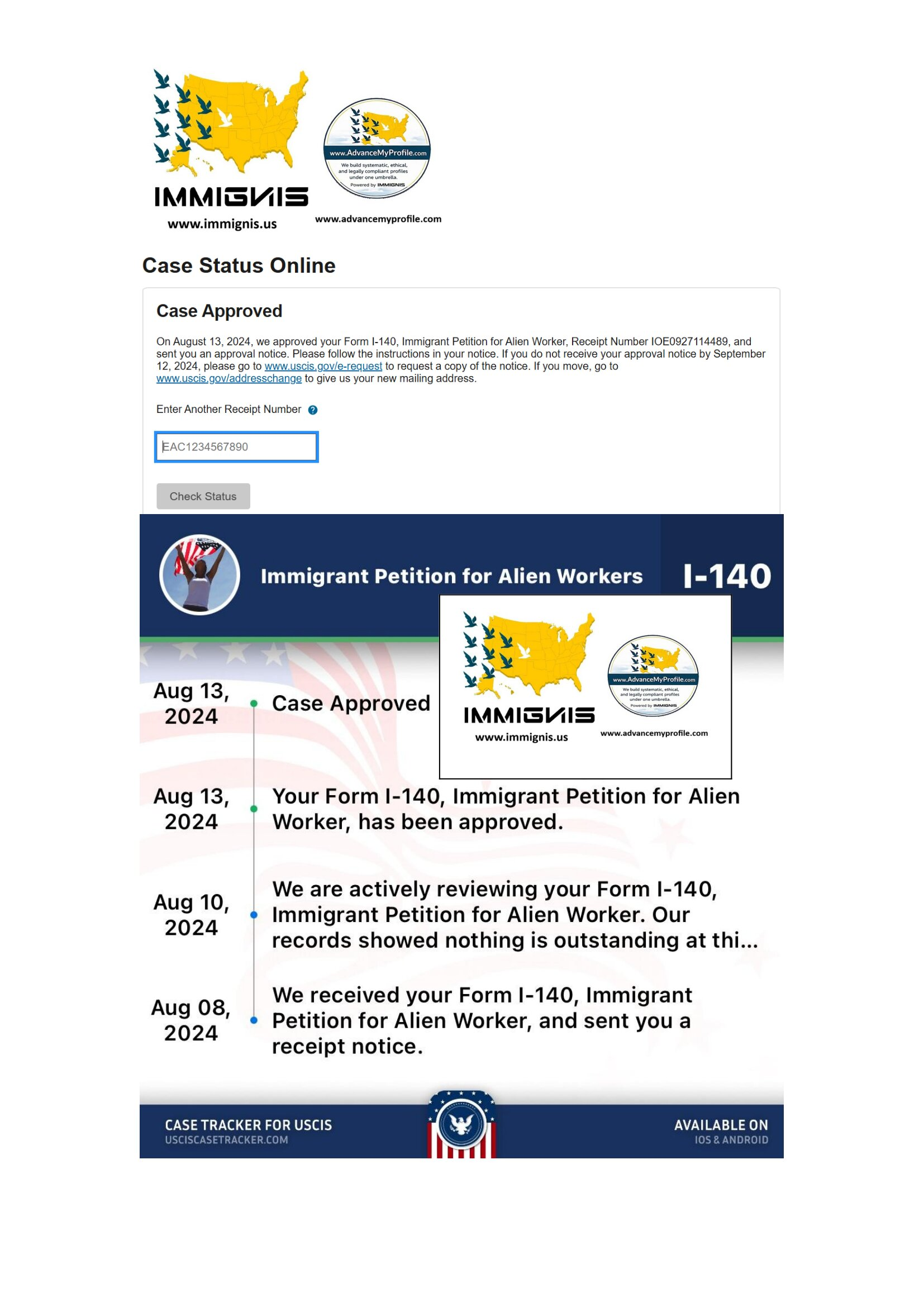
| Petition outcome | Form I-140 approved under EB-1A on August 13, 2024. |
| Professional profile | Costa Rican conservation biologist whose corridor-design research helped shape payment-for-ecosystem-services policy. |
| Field niche | Biological-corridor design and conservation finance. |
| Starting weakness | Policy adopted the science and forgot the scientist. The conservation model was visible, but her individual authorship and field influence were not clearly documented. |
| Profile-building focus | Policy-citation documentation, publication record, international conservation-body roles, documentary and media coverage, grant leadership, peer review, and professional profile building for immigration. |
| EB-1A criteria supported | Original contributions, scholarly articles, published material, judging, and leading role. |
| Central issue | Showing that the petitioner was not only a strong conservation researcher, but a field-shaping scientist whose corridor-design work influenced conservation finance and national environmental policy. |
| Approval lesson | When public policy absorbs scientific work without naming the scientist, immigration-specific profile building must trace the policy back to the person, the publications, the fieldwork, and the independent validators. |
The approval
On August 13, 2024, USCIS approved the Form I-140 petition of a Costa Rican conservation biologist working at the intersection of biological-corridor design and conservation finance.
The approval was significant because the petitioner did not have a simple public recognition record. Her science had influenced conservation policy, payment-for-ecosystem-services thinking, land-connectivity planning, and biodiversity protection, but the public story often centered on the policy, the agency, or the country rather than the scientist behind the fieldwork.
That made the case a strong example of EB-1A profile building and immigration profile building. The petitioner already had important work, but the evidence had to be organized so USCIS could understand how her corridor-design research became part of a broader conservation model.
Immignis and Advance My Profile helped convert the record into a petition-ready EB-1A profile. The strategy focused on policy-citation documentation, publication record, international conservation-body roles, documentary and media coverage, grant leadership, peer review, and ethical profile building that connected the national conservation model back to her individual contributions.
The evidence problem in conservation-policy cases
Conservation-policy cases often create a difficult evidence problem. A scientist may collect field data, design corridors, publish ecological models, guide land-use planning, or influence conservation finance, but once the policy is adopted, the credit usually belongs to the government program, the environmental agency, the donor, or the national brand.
That was the petitioner’s starting weakness. The policy adopted the science and forgot the scientist. Her work helped shape how conservation corridors and payment-for-ecosystem-services planning were understood, but the visible public record did not automatically explain her personal role.
The petition therefore defined the field carefully as biological-corridor design and conservation finance. It did not present the case as general environmental work or ordinary biology. It framed the niche as a specialized field where ecological science, land-connectivity planning, biodiversity protection, and financial incentives intersect.
This precise field definition helped USCIS understand why policy citations, corridor-design documentation, conservation-finance influence, and international conservation roles were relevant signs of extraordinary ability rather than general public-interest work.
Why policy impact had to be traced back to the scientist
Policy influence can be powerful EB-1A evidence, but only when it is traced carefully. USCIS needs more than a claim that a national policy resembles the petitioner’s research. The petition must show where the petitioner’s science appeared, how decision-makers used it, and why the connection matters in the field.
The case therefore focused on policy-citation documentation. This included records showing how the petitioner’s corridor-design research, publications, reports, or fieldwork were cited, relied upon, or incorporated into conservation planning and payment-for-ecosystem-services discussions.
This evidence supported original contributions because it showed that the petitioner’s work moved beyond academic study into practical adoption. It also helped the final merits argument because the record showed influence at the level of conservation systems, not only individual research activity.
As part of immigration-specific profile building, this was the turning point. The case stopped reading like a general environmental career and started reading like a clear record of field-level contribution.
Publication record gave the corridor-design work scholarly weight
The publication record helped show that the petitioner’s conservation work was not only locally useful, but part of a professional and scientific conversation. In EB-1A cases, scholarly articles matter most when they are tied to the core field narrative rather than listed as isolated academic output.
Here, the publications helped explain the biological-corridor models, conservation-finance logic, biodiversity outcomes, and ecosystem-services framework behind the policy influence. They supported the scholarly-articles criterion and strengthened the original-contributions argument.
The petition presented the publication record as evidence of both expertise and transmission. The petitioner was not simply doing private fieldwork. She was producing knowledge that other conservation professionals, policy actors, and environmental institutions could use.
For conservation scientists searching for EB-1A profile building, EB-2 NIW profile building, publication profile building, or professional profile improvement, this case shows why publications should be connected to adoption, policy use, and independent validation.
International conservation-body roles showed recognition beyond one country
International conservation-body roles helped show that the petitioner’s expertise was not confined to Costa Rica. Participation in conservation organizations, technical groups, biodiversity networks, or international policy bodies can be highly valuable when the roles are selective, substantive, and connected to the petitioner’s field niche.
The petition used these roles to show broader field recognition. The petitioner was not merely contributing to one local project. She was engaged in professional spaces where conservation scientists and policy experts discuss corridor design, ecosystem services, biodiversity finance, and practical implementation.
This evidence supported leading role and membership-related arguments while reinforcing the final merits analysis. It showed that other professionals viewed the petitioner as a credible voice in conservation science and policy, not only as a domestic technical contributor.
As part of professional profile building for immigration, these roles helped turn regional policy work into globally legible evidence of expertise.
Documentary and media coverage made the science visible
Documentary and media coverage helped solve a visibility problem. Conservation impact is often visual and public-facing, but the scientist behind that impact can remain unnamed unless the story is structured carefully.
The petition used media coverage to show that the petitioner’s work had public and professional relevance. Documentary references, interviews, environmental reporting, or features on corridor protection and conservation finance helped connect the petitioner’s expertise to issues that the broader field and public already recognized as important.
This evidence supported the published-material criterion and helped USCIS understand the significance of the work without requiring the officer to already know the technical details of biological-corridor design.
For profile building services, media visibility is not about artificial publicity. In a case like this, it is about making real expertise discoverable, searchable, and professionally attributable.
Grant leadership and peer review strengthened authority in the field
Grant leadership added another layer of evidence because it showed that the petitioner was trusted to lead funded conservation work. In scientific and environmental fields, grant responsibility can show independent capacity, institutional confidence, project leadership, and the ability to convert expertise into implemented research or policy activity.
Peer review also helped support the judging criterion. When a conservation scientist reviews manuscripts, proposals, technical materials, or the work of other professionals, it shows that the field trusts that person to evaluate quality and significance.
Together, grant leadership and peer review strengthened the record beyond publications alone. They showed that the petitioner was not only producing research, but also helping shape what research, projects, or technical work should be accepted, funded, or improved.
This combination is important in EB-1A profile building because it helps establish professional authority from multiple directions: leadership, evaluation, scholarship, and recognized field participation.
How profile building changed the case
The case changed once the evidence was organized around the petitioner instead of the conservation model alone. The national policy story was already impressive, but USCIS needed a person-centered record that showed how her work influenced that model.
Immignis and Advance My Profile helped build that bridge. The profile-building process connected policy citations, publications, international roles, media coverage, grant leadership, and peer review into one coherent immigration profile.
This was not about inventing achievements. It was about profile improvement, evidence development, and immigration-specific profile building. The work already existed. The task was to make the scientist visible inside a policy ecosystem that had absorbed her contribution.
For professionals searching online for profile building, immigration profile building, EB-1A profile building, EB-2 NIW profile building, professional profile building, or profile improvement for scientists, this case shows how field influence can be translated into USCIS-readable evidence.
Why this case worked
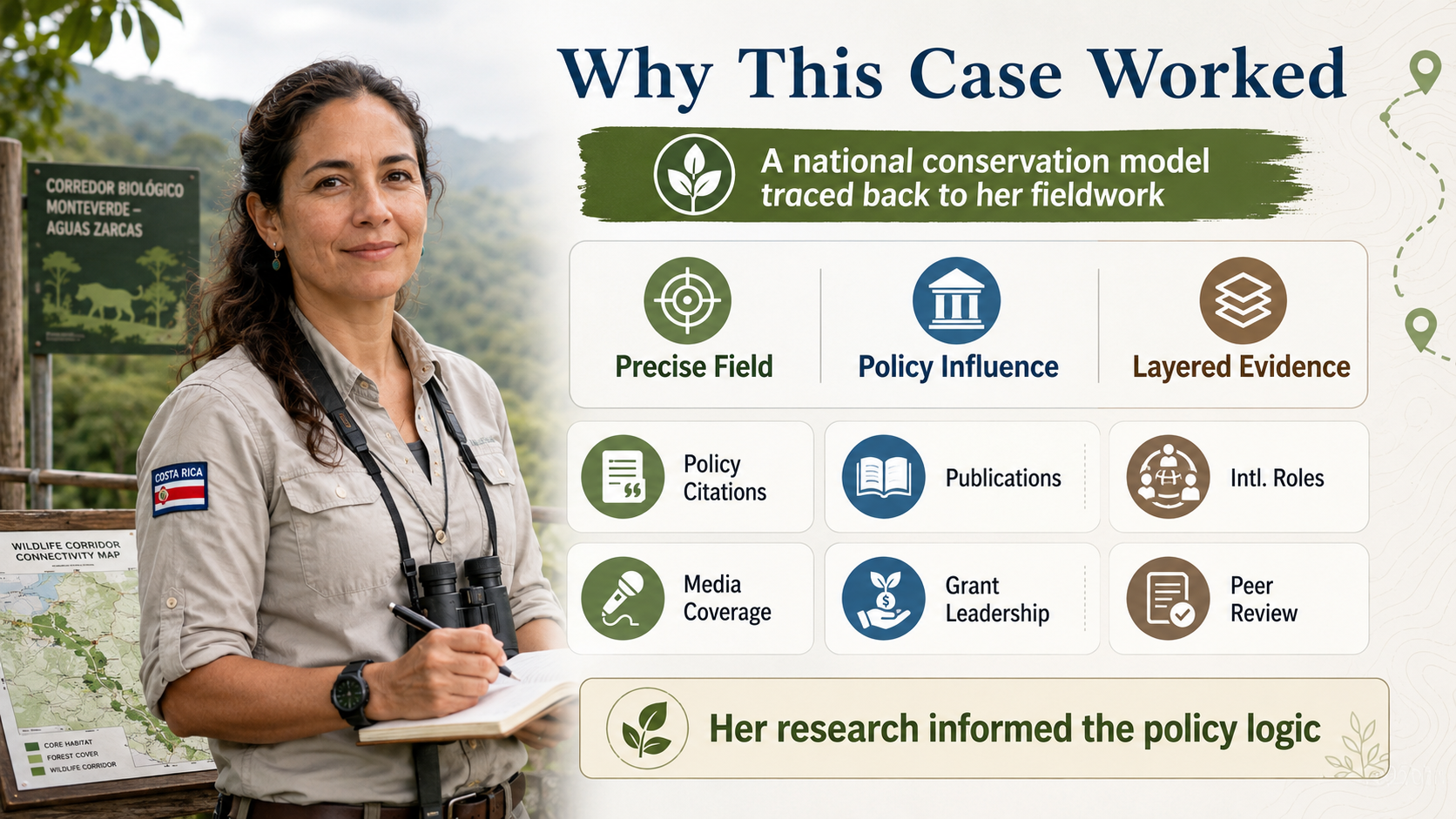
The case worked because it avoided a vague environmental-impact story. It defined a precise field, traced policy influence to the petitioner, and used multiple evidence categories that supported one another.
Policy-citation documentation showed practical adoption. Publications showed scholarly foundation. International conservation roles showed professional recognition. Media coverage showed public relevance. Grant leadership showed project authority. Peer review showed judging and field trust.
Most importantly, the petition turned a national conservation model into a person-centered record. It showed that the petitioner’s fieldwork and research were not merely nearby the policy. They helped inform the policy logic and the conservation-finance approach behind it.
That is why the approval hook was so strong: a country’s conservation model, footnoted back to her fieldwork.
Conclusion
The Costa Rican conservation biologist’s EB-1A approval shows that environmental scientists can build strong extraordinary-ability cases even when their work is absorbed into public policy, national conservation models, or institutional programs.
The petition succeeded because it used ethical profile building to connect policy citations, corridor-design research, publications, conservation-body roles, media coverage, grant leadership, and peer review into a clear immigration profile.
The broader lesson is simple: when policy adopts the science and forgets the scientist, a strong EB-1A strategy must rebuild the connection between the public outcome and the individual whose work made it possible.
Frequently asked questions
Can a conservation biologist qualify for EB-1A?
Yes. A conservation biologist may qualify for EB-1A when the record shows extraordinary ability through original contributions, scholarly publications, policy impact, judging, leading roles, published material, and strong final-merits evidence.
Can policy influence support an EB-1A petition?
Yes. Policy influence can be strong evidence when the petition documents how the petitioner’s work was cited, adopted, or relied upon by decision-makers or conservation institutions.
Do biological-corridor research and conservation-finance work fit EB-1A?
Yes. These fields can support EB-1A when the petition defines the niche clearly and shows that the petitioner’s work influenced the field, policy, or implementation systems.
Can media or documentary coverage help a scientist’s EB-1A case?
Yes. Media and documentary coverage can support published material and professional visibility when it discusses the petitioner, her work, or the significance of the scientific contribution.
Does peer review count as judging for EB-1A?
Yes. Peer review can support the judging criterion because it shows that the petitioner was trusted to evaluate the work of other professionals in the field.
Can Immignis and Advance My Profile help conservation scientists build EB-1A evidence?
Yes. Immignis and Advance My Profile help scientists, researchers, conservation professionals, and policy experts define a niche, document achievements, improve visibility, and build a petition-ready EB-1A or EB-2 NIW profile through ethical profile building and immigration-specific evidence development.
Build an EB-1A record around conservation science, policy influence, and field-level impact
Many scientists already have meaningful policy impact, but their achievements are scattered across publications, policy documents, media coverage, grants, technical roles, peer review, and institutional reports.