EB-1A Cosmetic Chemistry Scientist: How a Bulgarian cosmetic-chemistry scientist secured EB-1A approval by turning industry-embedded rose-oil extraction and natural-cosmetic standardization work into a petition-ready immigration profile built on standard-method authorship, publication strategy, ISO-committee participation, industry-association roles, trade-press features, formulation patents, and ethical profile building.
Key facts at a glance
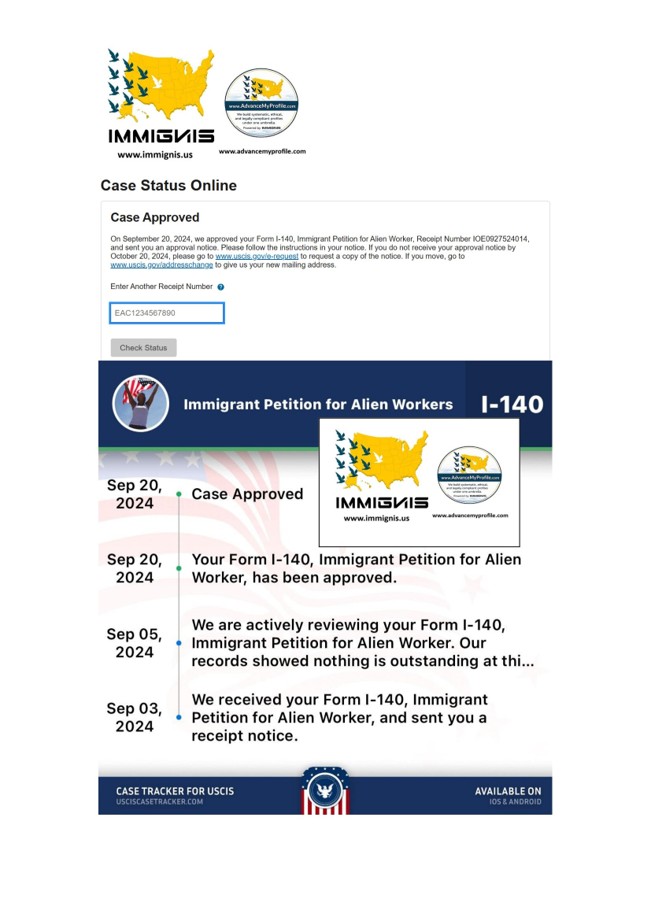
| Petition outcome | Form I-140 approved under EB-1A on September 20, 2024. |
| Professional profile | Bulgarian cosmetic-chemistry scientist whose rose-oil extraction and standardization methods helped anchor a national export industry. |
| Field niche | Essential-oil chemistry and natural-cosmetic standardization. |
| Starting weakness | The strongest work was industry-embedded science with a thin academic footprint, meaning the contribution was visible in standards, products, export quality, and formulations more than in conventional citation metrics. |
| Profile-building focus | Standard-method authorship documentation, publication push, ISO-committee participation, industry-association roles, trade-press features, formulation patents, expert letters, and immigration-specific profile building. |
| EB-1A criteria supported | Original contributions, scholarly articles, membership, judging, and published material. |
| Central issue | Showing that the petitioner was not merely a cosmetic chemist working in a local industry, but a standards-focused scientist whose methods helped define how rose-oil and natural-cosmetic quality were measured, replicated, and commercialized. |
| Approval lesson | Industry-embedded science can support EB-1A when the petition documents method authorship, adoption, standards participation, professional recognition, and a clear field niche through ethical profile building. |
The approval
On September 20, 2024, USCIS approved the Form I-140 petition of a Bulgarian cosmetic-chemistry scientist whose work focused on essential-oil chemistry, rose-oil extraction, and natural-cosmetic standardization.
The approval was important because the petitioner did not present a typical academic-research profile. Her strongest impact was embedded in industry methods, export-quality systems, formulation work, and standardization practices that shaped how rose-oil and natural-cosmetic products were produced, evaluated, and trusted.
That created an evidence challenge. In chemistry fields tied closely to industry, the scientist behind the method may not appear in every public article or corporate profile. The method can become widely used while the author remains hidden behind product labels, association standards, testing protocols, or confidential formulation records.
Immignis and Advance My Profile helped organize the case through ethical profile building, professional profile building, and immigration-specific profile building. The strategy transformed scattered evidence into a structured EB-1A record built around standard-method authorship, publication development, ISO-committee participation, industry-association roles, trade-press features, patents, and expert validation.
The evidence problem in essential-oil chemistry and cosmetic standardization
Essential-oil chemistry sits at the intersection of applied chemistry, agriculture, cosmetics, quality control, export compliance, and consumer-product safety. In Bulgaria, rose oil is not simply a fragrance ingredient. It is a culturally and economically important export product tied to national reputation, supply-chain trust, and technical standardization.
The petitioner faced the core weakness of many applied scientists: the work mattered commercially and technically, but the academic footprint was thin. Industry adoption, formulation quality, extraction consistency, and standard-method use were stronger indicators of impact than citation counts alone.
The petition therefore defined the field carefully as essential-oil chemistry and natural-cosmetic standardization. It did not describe the petitioner as a general cosmetic chemist. It framed her as a scientist working in the technical layer that allows rose-oil-based products to meet quality, authenticity, safety, and market expectations.
That field definition was central to EB-1A profile building. It helped USCIS understand why standard-method authorship, ISO-related participation, industry-association leadership, trade recognition, and formulation patents could all function as serious evidence of extraordinary ability in this applied chemistry niche.
Standard-method authorship became the anchor of original contribution
Standard-method authorship was the strongest narrative pillar of the petition. In many industries, a scientific method becomes important not because it is discussed in the most famous journal, but because laboratories, producers, certifiers, or manufacturers rely on it to measure and reproduce quality.
The profile-building strategy documented how the petitioner contributed to methods for rose-oil extraction, analysis, standardization, formulation reliability, or quality assessment. The goal was to show that the petitioner did not merely follow industry methods. She helped create or refine methods others used.
This supported the original-contributions criterion because the record connected her chemistry work to practical adoption. When a standard method becomes part of how an industry verifies quality, the method itself becomes evidence of significance.
For professionals searching for EB-1A profile building, EB-2 NIW profile building, immigration profile building, profile improvement, or USCIS evidence building, this case shows why method authorship can be powerful. A standard that others follow may be stronger than a paper that few people use.
Publication strategy helped make industry science legible to USCIS
The petitioner needed a publication strategy because industry-embedded science is often documented internally rather than academically. A publication push helped translate the technical work into a public-facing professional record that USCIS could evaluate under the scholarly-articles and published-material criteria.
The publication record did not have to pretend the petitioner was a purely academic scientist. Instead, it explained applied chemistry questions: extraction reliability, natural-cosmetic formulation, essential-oil authentication, stability, quality control, and standardization for export markets.
This made the evidence more legible. USCIS could see that the petitioner had technical knowledge worthy of publication and that her work addressed a real industry problem, not a purely private commercial function.
As part of immigration-specific profile building, publication development helped connect the petitioner’s technical expertise to a recognized record of authorship, thought leadership, and professional communication.
ISO-committee participation and industry-association roles strengthened membership and judging
ISO-committee participation and industry-association roles were important because they showed that the petitioner’s expertise was trusted in settings where standards, quality systems, and field practices are reviewed by other professionals.
For a cosmetic-chemistry scientist, this type of evidence can be stronger than generic professional membership. Standards bodies and industry associations often include people because they understand the technical requirements of the field and can contribute to method development, review, or implementation.
The petition connected these roles to the EB-1A membership and judging criteria where appropriate. Participation in technical committees, standards review, formulation evaluation, quality-method assessment, or industry panels can demonstrate that the field relied on the petitioner’s judgment.
This evidence also supported final merits by showing that the petitioner had standing beyond one employer or one company. Her professional profile extended into the structures that shape essential-oil chemistry and natural-cosmetic standards.
Trade-press features made a specialized field understandable
Trade-press features helped explain why the work mattered outside a narrow laboratory setting. Essential-oil chemistry and natural cosmetics are technical fields, but they are also connected to exports, consumer trust, brand reputation, sustainability, and national industry identity.
The petition used trade-press coverage to show that the petitioner’s work had relevance to the market and to the professional community. Articles, interviews, and features helped convert a technical record into a more visible public-facing profile.
This was useful because immigration officers may not automatically understand why rose-oil standardization matters. The media evidence helped connect the petitioner’s chemistry work to a broader story: a national export industry depends on quality, authenticity, and repeatable methods.
For SEO and profile-building purposes, this also matters. Professional profile building for immigration is not only about collecting technical documents. It is also about making the significance of a niche understandable to human readers, search engines, and AI answer systems.
Formulation patents and expert letters tied innovation to the person
Formulation patents helped document invention and authorship. In applied cosmetic chemistry, patents can be one of the clearest public records showing that a scientist created a protectable formulation, process, method, or technical solution.
The petition used patent documentation to support the original-contributions argument and to show that the petitioner’s work had technical novelty. Patent evidence also helped address the starting weakness: even if the academic footprint was thin, the record still contained public evidence of invention.
Expert letters from cosmetic chemists, essential-oil specialists, standardization professionals, industry leaders, or export-quality stakeholders helped explain why the petitioner’s methods and formulations mattered. The strongest letters focused on specific contributions, industry use, standards relevance, and the petitioner’s personal role.
Together, patents and expert letters helped tie innovation to the person. They made the record less dependent on generalized claims about the rose-oil industry and more focused on the petitioner’s actual scientific authorship.
How Immignis built the petition-ready profile
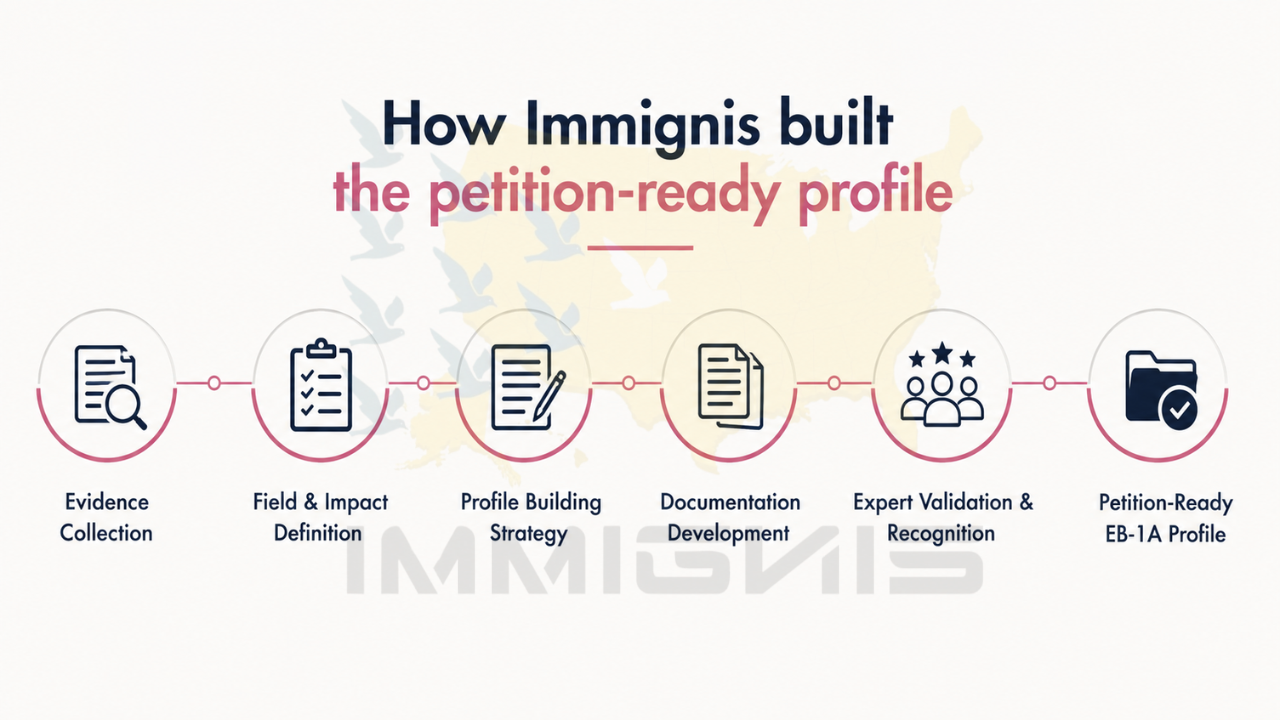
The Immignis and Advance My Profile strategy focused on turning a technical but under-publicized career into a petition-ready immigration profile. The team organized standard-method authorship, publication evidence, ISO participation, association roles, patents, trade-press features, and expert letters into one coherent EB-1A story.
This type of profile building is different from generic publicity. The goal was not to make the petitioner appear broadly famous. The goal was to document field-specific standing in essential-oil chemistry and natural-cosmetic standardization.
The petition used immigration-specific profile building to show why applied science in industry can meet EB-1A criteria when the record is structured correctly. Standards work supported original contributions. Publications supported scholarly articles. Committee roles supported membership and judging. Trade press supported published material and visibility.
The approval hook was simple and persuasive: standards authorship when your method becomes everyone’s method. The petition showed that the petitioner’s value was not only in what she discovered, but in how her methods shaped the way others worked.
Why this case worked
The case worked because the petition did not treat a thin academic footprint as fatal. Instead, it explained that in essential-oil chemistry and cosmetic standardization, real influence often appears through methods, standards, formulations, industry adoption, and technical committees.
The record combined standard-method authorship, publication, patents, association and ISO activity, expert letters, and trade visibility. This gave USCIS multiple ways to understand the petitioner’s standing in the field.
The petition also avoided overclaiming. It did not say that every consumer knew the petitioner’s name. It showed that the professionals, systems, and methods behind rose-oil quality and natural-cosmetic standardization recognized or relied on her work.
Most importantly, the case showed the value of ethical profile building for applied scientists. A record that may look modest through a purely academic lens can become much stronger when industry standards, adoption, and technical authorship are documented correctly.
Conclusion
The Bulgarian cosmetic-chemistry scientist’s EB-1A approval shows that industry-embedded science can support a strong extraordinary-ability petition when the evidence is organized around real technical influence.
Her case succeeded because standard-method authorship, publication development, ISO-committee participation, industry-association roles, trade-press features, patents, and expert letters were brought together into a coherent immigration profile.
The broader lesson is clear: if a scientist’s method becomes part of how an industry works, that achievement should not be hidden inside corporate or association records. With careful profile building, it can become persuasive EB-1A evidence.
Frequently asked questions
Can a cosmetic chemist qualify for EB-1A?
Yes. A cosmetic chemist can qualify for EB-1A when the record shows original contributions, publications, patents, standards participation, professional membership, judging, and evidence that the person has achieved distinction in a defined field niche.
Can essential-oil chemistry support an EB-1A petition?
Yes. Essential-oil chemistry can support EB-1A when the petitioner’s work is documented as technically significant, adopted, published, standardized, or recognized by independent experts and industry bodies.
Do industry standards help an EB-1A case?
Yes. Standards can be powerful EB-1A evidence when the petitioner’s authorship or contribution is documented and when the petition explains why the standard has field-level significance.
Are patents useful for cosmetic-chemistry EB-1A cases?
Yes. Patents can help show technical invention and authorship, especially in industry-embedded science where ordinary academic publication may be limited.
Can trade-press coverage support published-material evidence?
Yes. Trade-press features can help show visibility in the relevant professional community, especially when the coverage discusses the petitioner’s technical methods, products, standards, or industry influence.
Can Immignis and Advance My Profile help applied scientists with immigration profile building?
Yes. Immignis and Advance My Profile help scientists, engineers, healthcare professionals, industry experts, and applied researchers build ethical immigration profiles by defining the field, organizing evidence, documenting impact, improving visibility, and aligning achievements with EB-1A or EB-2 NIW requirements.
Build an EB-1A record around applied chemistry, standards authorship, and industry adoption
Many applied scientists already have strong impact, but their evidence may be buried in patents, standards, association work, technical reports, product documentation, and confidential industry records.
Find out whether your chemistry, cosmetics, essential-oil, natural-products, standards, patent, or applied-science record can be developed into a stronger immigration profile through ethical profile building and USCIS evidence building.