Key facts at a glance:
| Outcome | EB-1A approval for a Ghanaian digital agriculture scientist connected to a Netherlands-based agritech nonprofit. |
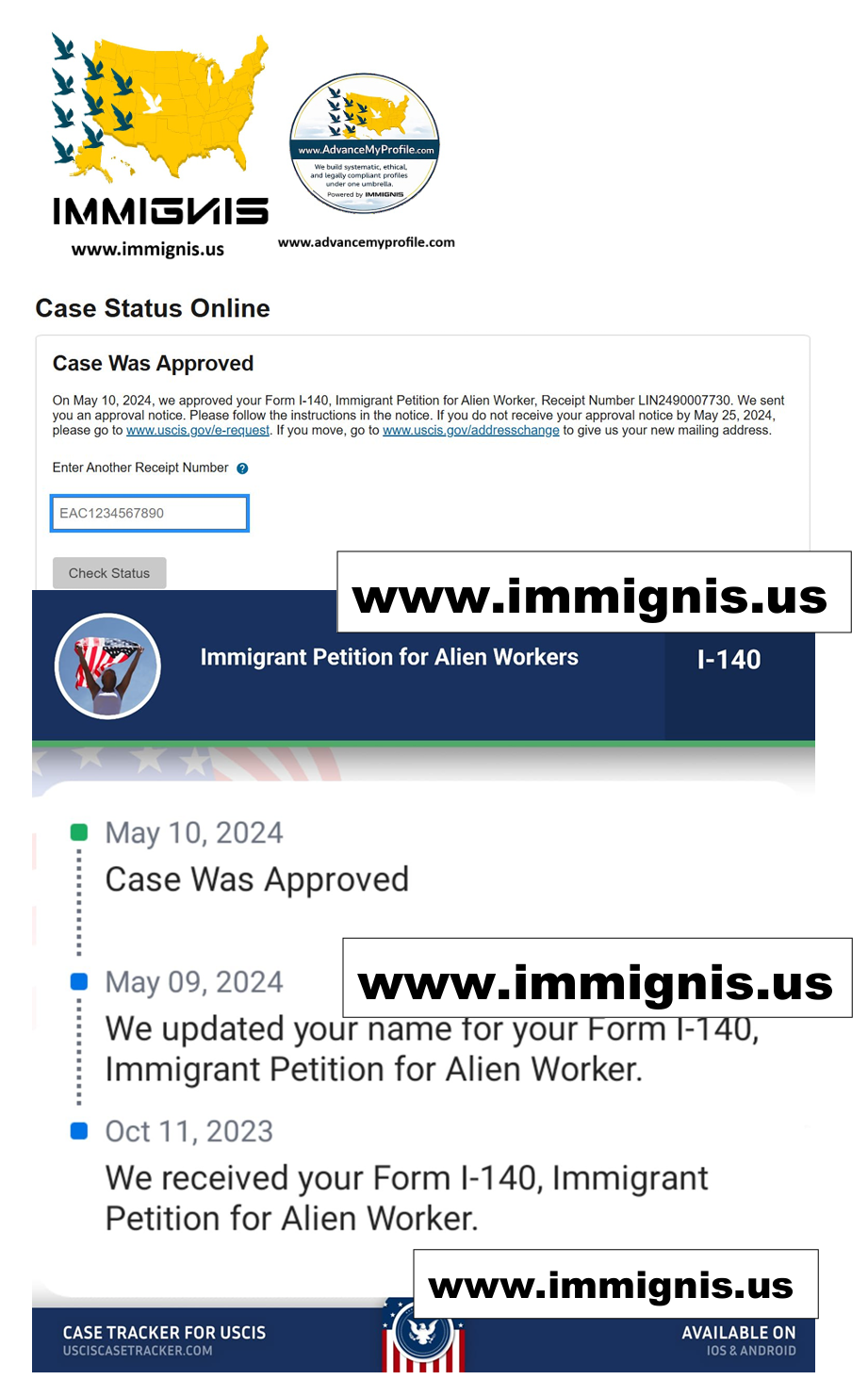
| Approval date | Approved on May 10, 2024. |
| Field niche | AI crop-disease advisory tools for smallholder supply chains. |
| Starting problem | Her field work had strong social impact, but the record lacked EB-1A-grade documentation and independent recognition. |
| Path used | Ethical EB-1A profile building through focused studies, farmer-adoption data, an international development white paper, trade-media coverage, invited panel visibility, professional award recognition, peer-review service, and letters from agronomy and food-security experts. |
| USCIS EB-1A criteria activated | Original contributions, scholarly articles, published material, awards, judging, and leading role. |
When field impact is real but the file is not ready
EB-1A digital agriculture scientist: The first signal was not a headline or a citation graph. It was a farmer looking at a crop that was beginning to fail. A warning on a phone could mean a field visit. A field visit could mean treatment before the disease spread. In smallholder agriculture, the difference between early advice and late advice can be a season’s income.
That was where her work lived. Not in polished immigration language, but in crop disease alerts, farmer advisory workflows, field adoption notes, and food supply decisions that mattered far from any conference stage.
She had built tools that helped smallholder supply chains respond to disease risk. The difficulty was that EB-1A does not approve invisible impact.
Why did a strong digital agriculture profile still look risky?
The risk was not lack of substance. The risk was that the substance was scattered. Her work had social value, technical value, and public interest value. She was connected to AI crop disease advisory tools used in smallholder contexts, where farmers, extension actors, nonprofit partners, and supply chain stakeholders all need information they can act on.
But the original record looked more like a development-impact profile than an EB-1A extraordinary ability profile. Field work was visible to local users. It was not yet visible to USCIS as sustained acclaim in a defined field.
The EB-1A green card is a self-petition immigrant category for people who can show extraordinary ability through sustained national or international acclaim and evidence that they are among the small percentage at the top of their field.
That definition created tension. She knew the farmers were real. The crop-disease risks were real. The supply chain problem was real. What she did not yet have was a record that proved her individual contribution to the field of digital agriculture.
What did Immignis change first?
Immignis did not begin by calling her a global authority. The first step was narrower and more honest.
The team identified the exact field that could carry the case: AI crop-disease advisory tools for smallholder supply chains. This shifted the profile away from broad agritech, general development work, and nonprofit program language. It gave the petition a technical and field-specific center.
That focus mattered because the record had to show more than good intentions. It had to show original work, documented adoption, public recognition, and independent validation from people who understood agronomy, food security, and digital agriculture.
A strong career can fail on paper when the evidence is not organized. A field impact career can fail when USCIS cannot see who did what, why it mattered, and how the work was recognized beyond the organization.
What would USCIS need to see in this agritech case?
USCIS needed to see that this was not only a nonprofit technology project. For this case, the officer would likely care about several specific questions. Was the AI crop disease advisory work connected to the applicant’s own expertise? Did the tools help solve a documented problem in smallholder supply chains? Was there farmer adoption data or implementation evidence? Did independent agronomy or food security experts recognize the significance? Did the public record show field-level authority, not only internal program success?
The final-merits issue was also field-specific. In digital agriculture, social impact alone is not enough for EB-1A. The petition had to show that her work contributed to the methods, evidence, or adoption of AI-based crop-disease advisory systems in a way that others in the field could recognize.
That meant the case needed documentation that translated field impact into EB-1A evidence. Farmer adoption had to become contribution evidence. Technical studies had to become authorship evidence. Trade-media and panel activity had to become public recognition. Peer review had to show that she was trusted to evaluate work by others.
How did Advance My Profile build the authority record?
Advance My Profile, powered by Immignis, built the record around a simple principle: the profile had to grow from her real work.
The team started with a bespoke roadmap. Immigration strategy, agritech subject review, evidence planning, media positioning, and ethics screening were aligned before public work began. The profile was not pushed into unrelated AI topics. It stayed rooted in crop disease advisory, smallholder adoption, and supply chain resilience.
The first build layer was authorship. With domain support, her knowledge was shaped into focused studies on AI crop disease advisory systems, field usability, and smallholder supply chain risk. The studies were designed to show a coherent research identity, not a scattered publication list.
The second layer was adoption evidence. Immignis helped organize farmer adoption data and implementation material into a format that could explain field value without exaggeration. This was important because digital agriculture often succeeds through practical use, not only lab output.
The third layer was thought leadership. An international development white paper was prepared for audiences that care about food security, extension systems, and resilient agricultural supply chains. The white paper helped connect her work to broader development and supply chain conversations.
Public recognition followed. Trade media coverage helped explain the importance of AI crop-disease tools in language that agricultural, technology, and development audiences could understand. The goal was not publicity for its own sake. The goal was to show that independent outlets could recognize her expertise in a defined agritech problem.
An invited panel added another signal. It placed her in a setting where she could speak as a digital agriculture specialist, not only as a program participant. That distinction matters in EB-1A profile building because authority is built when the field starts treating the applicant as a voice worth hearing.
Professional award recognition was pursued where the eligibility rules matched the record. The team did not add decorative awards or irrelevant honors. The award evidence had to fit the field: agriculture, food security, technology for development, or supply chain impact.
Peer review service became a critical turning point. Once her profile had stronger public and scholarly footing, she was positioned to evaluate work connected to digital agriculture, agronomy, food systems, and applied AI. That moved the record from participation to evaluation.
Independent letters gave the case its outside voice. Immignis helped structure letters from agronomy and food security experts who could explain why AI crop disease advisory tools matter for smallholder supply chains and why her contribution belonged in that conversation. The result was not a decorated profile. It was a built profile.
Why did ethics matter in a food security case?
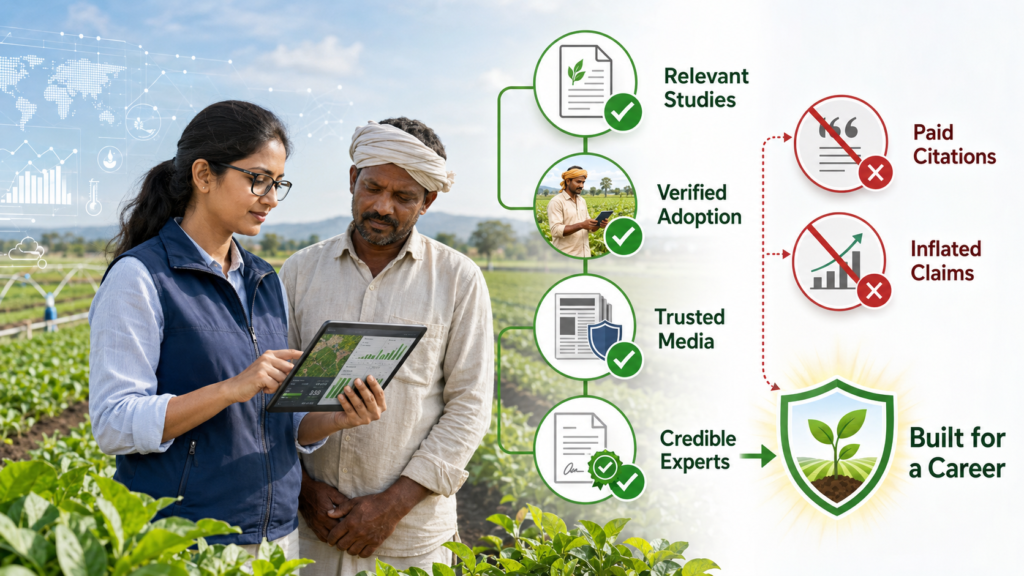
Food security work loses credibility when the evidence is artificial. A digital agriculture scientist cannot rely on weak journals, inflated adoption claims, paid citations, or awards that have nothing to do with agriculture. Those shortcuts may create a busy looking filing, but they can damage the petition and the professional’s name.
Immignis treated the EB-1A record as something she could carry after approval. The studies had to match her field. The farmer adoption evidence had to be explainable. The media had to be reputable. The white paper had to speak to real stakeholders. The letters had to come from people who understood the problem.
That is the difference between profile building and profile decoration. Profile decoration is built for a filing. Profile building is built for a career.
Could your own EB-1A profile be stronger than it looks?
If your strongest work is field based, nonprofit-linked, social impact driven, or hidden inside implementation programs, your issue may be documentation.
Immignis offers a free profile assessment for professionals who want to understand whether their record may support an EB-1A green card, EB-2 NIW, O-1, or another merit based pathway. The assessment identifies the niche, evidence gaps, criteria potential, and realistic profile building path.
Which USCIS EB-1A criteria did the final petition activate?
The final Form I-140 petition activated six USCIS EB-1A criteria and connected them through one field-specific final merits narrative.
• Original contributions: Farmer adoption data, implementation evidence, expert letters, and the digital agriculture record helped show that her work contributed to AI crop disease advisory methods for smallholder supply chains.
• Scholarly articles: Focused studies showed authorship in digital agriculture, crop disease advisory systems, and applied AI for food-supply contexts.
• Published material: Trade media coverage placed her expertise in public view and connected her name with AI-supported crop disease advisory work.
• Awards: Professional award recognition helped show that her work had been considered through field-relevant channels, not unrelated publicity.
• Judging the work of others: Peer review service showed that she was trusted to evaluate work by others in relevant areas of agritech, agronomy, food systems, and applied AI.
• Leading role: Evidence from the nonprofit and project environment helped show that her work contributed to important digital agriculture functions within a mission driven organization.
The final merits argument did the heaviest work. It explained that the evidence was not a collection of disconnected activities. It showed a scientist whose authorship, adoption evidence, public visibility, award recognition, peer review, and independent letters all pointed to one field: AI crop disease advisory tools for smallholder supply chains.
For this case, the central message was clear. She was not only supporting farmers. She was helping document how AI advisory systems could strengthen vulnerable agricultural supply chains.
What did EB-1A approval mean for her?
The EB-1A approval came on May 10, 2024. It gave her a self-petition green card path without employer sponsorship and without PERM labor certification. It also gave her something broader than an immigration result: a public authority record in a field where her work had already mattered.
Before profile building, her achievements lived in field implementation, nonprofit records, and adoption stories. After profile building, she had focused studies, farmer adoption evidence, a development white paper, trade media recognition, panel visibility, award recognition, peer review service, and independent validation from agronomy and food security experts.
The approval was the immigration result. The authority record was the professional asset.
If this sounds like you
You may be an agritech scientist, food security researcher, agricultural AI specialist, development professional, or founder whose work is real but hard to explain on paper. That does not mean your record is weak. It may mean your record is unfinished.
The safest path is not to invent recognition. The safest path is to build the recognition your real work deserves: focused authorship, adoption evidence, credible media, white papers, invited visibility, awards where appropriate, peer review, and independent expert letters.
Do not build evidence you will need to hide later. Build an EB-1A profile that supports your immigration future and strengthens your professional name.
Can a digital agriculture scientist qualify for an EB-1A green card?
Yes. A digital agriculture scientist may qualify for an EB-1A green card if the record shows extraordinary ability through sustained acclaim and evidence under the USCIS EB-1A criteria. Strong evidence may include original contributions, focused studies, farmer adoption data, trade media coverage, awards, judging, leading-role evidence, and independent expert letters.
How can farmer adoption data help an EB-1A petition?
Farmer adoption data can help when it shows that a method, tool, or advisory system moved beyond theory and was used in real agricultural settings. In an agritech EB-1A case, adoption evidence can support original contribution and final merits if it is reliable, clearly tied to the applicant, and explained by independent experts.
What if my work was done through a nonprofit or development organization?
Nonprofit or development work can support EB-1A when the evidence shows individual expertise, field level significance, and recognition beyond internal program activity. The petition should explain the applicant’s own contribution, the technical or scientific value of the work, and the independent recognition surrounding it.
Does trade media coverage matter in an agricultural AI case?
Trade media coverage can matter when it is reputable, relevant, and focused on the applicant’s actual expertise. For agricultural AI, useful coverage may explain crop disease prediction, smallholder advisory systems, supply chain resilience, or food security technology in a way that shows public recognition of the applicant’s role.
Are awards useful for an agritech EB-1A case?
Awards can help when they are legitimate, selective, and connected to the field. A food-security, agritech, development-innovation, or agricultural technology award is more useful than a generic honor with weak standards. USCIS looks at what the award recognizes and how selective it is.
Is EB-1A or EB-2 NIW better for food-security and agritech experts?
EB-1A focuses on extraordinary ability and sustained acclaim, while EB-2 NIW focuses on a proposed endeavor with national importance and whether the applicant is well positioned to advance it. Many agritech and food security professionals may be closer to EB-2 NIW at first, then build toward EB-1A if the record develops stronger recognition, authorship, judging, and field impact.
Build an EB-1A success story around evidence you can trust
If you work in digital agriculture, crop disease advisory systems, agritech AI, food security, agricultural extension, or smallholder supply chains, your strongest achievements may already exist. They may simply be hidden inside field work, program reports, or implementation data.
Immignis helps professionals build EB-1A profiles through ethical evidence development, field specific positioning, reputable visibility, independent validation, and petition ready storytelling.