Key facts at a glance
| Outcome | EB-1A approval for a Filipina disaster nursing systems expert working in a U.S.-based hospital network. |
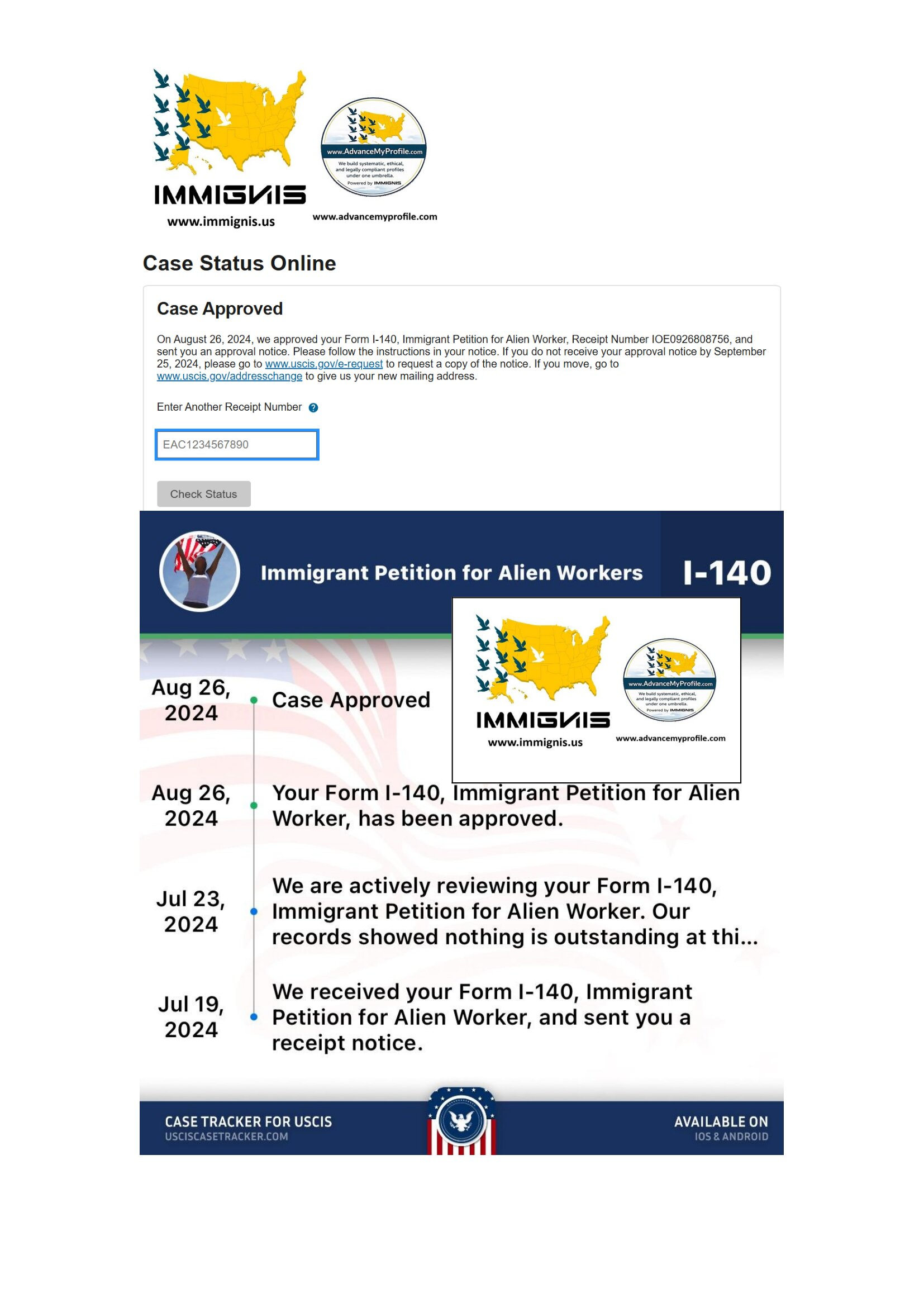
| Approval date | Approved on August 26, 2024. |
| Field niche | Hospital surge staffing and disaster nursing protocols, with a focus on nursing skill mix, role activation, redeployment, handoffs, and continuity during sudden patient surges. |
| Starting problem | Her clinical leadership was respected inside local hospital operations, but the record had limited publications, judging, independent recognition, and evidence showing why her nursing-system methods mattered outside one network. |
| Path used | Ethical EB-1A profile building through disaster-nursing protocol publications, a surge staffing training manual, nursing-media interviews, invited continuing-education sessions, peer review, professional award development, selective membership evidence, protocol adoption documentation, and independent nursing and health-system letters. |
| USCIS EB-1A criteria activated | Scholarly articles, original contributions, published material, awards, judging, and leading or critical role. |
The EB-1A Disaster Nursing Expert knew the staffing board was full of names. She still knew the hospital was not ready.
One nurse had been pulled to a higher-acuity assignment. Another had the right license but no recent disaster-role training. Two available nurses could cover beds, yet neither had been designated to coordinate rapid reassessment if the patient surge accelerated.
The numbers looked adequate. The nursing system did not. She was a Filipina EB-1A Disaster Nursing Expert working in a U.S.-based hospital network. Her specialty was hospital surge staffing and disaster nursing protocols.
Years of practical leadership had taught her to look past headcount. Her EB-1A record, however, mostly showed local roles, internal protocols, and hospital responsibilities.
Her career looked local because the evidence stopped at the hospital door
She had led clinical teams, trained staff, and shaped surge responses under changing staffing pressure. Hospital colleagues knew her judgment, while the wider nursing field had little public material connecting her name to disaster nursing systems.
The specific method was harder to see: matching nursing capability to surge roles, setting activation triggers, planning redeployment, protecting handoffs, and building relief into an extended response.
The EB-1A green card is a self-petition immigrant classification for individuals who can demonstrate extraordinary ability through sustained national or international acclaim and recognized achievements in their field.
Advance My Profile, powered by Immignis, reviewed her record with legal strategists and nursing domain specialists and defined a focused authority niche in hospital surge staffing and disaster nursing protocols.
Her nursing-system question was simple: who can safely do what, and when?
A surge can change patient volume, acuity, unit function, medication workload, transport needs, and demand for rapid reassessment. Redeployed staff may arrive from units with different routines and limited familiarity with emergency roles.
The evidence showed recurring attention to skill mix, role activation, team leadership, redeployment, escalation, handoff continuity, relief planning, and the point at which normal staffing should shift into a surge model.
What did USCIS need to see in a disaster nursing EB-1A case?
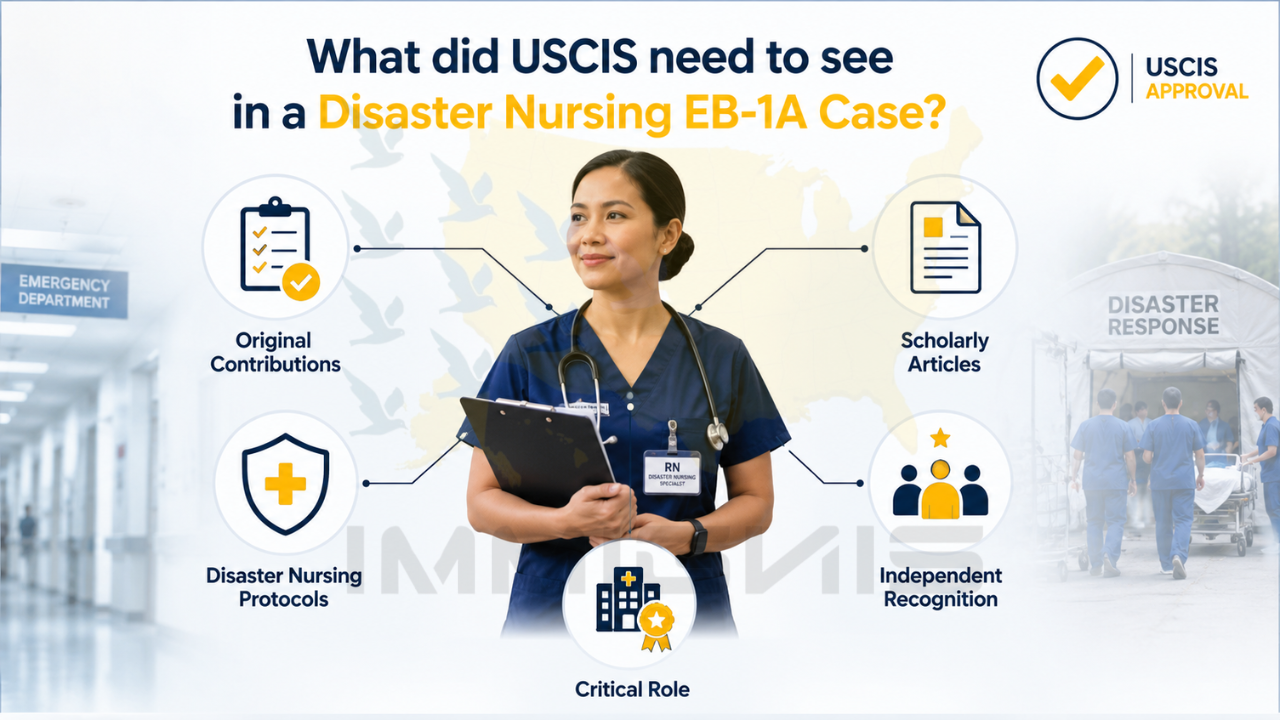
USCIS needed evidence of her individual nursing-system contribution and its significance.
For original contributions, the petition identified her protocol structures, surge staffing methods, training framework, and documented use of the work. Independent experts explained why the methods mattered to disaster readiness and clinical continuity.
Scholarly articles addressed surge nursing, disaster staffing, role activation, and handoffs. Published material required qualifying independent coverage about her or her expertise.
Peer review supported judging when she evaluated other specialists’ nursing work. Leading or critical role required evidence showing why hospital emergency-preparedness work relied on her nursing judgment.
The awards section used documented professional recognition from the final record. New nominations were described accurately and were not treated as wins.
At final merits, the evidence still had to show sustained acclaim and a record consistent with EB-1A extraordinary ability.
The internal protocols were rebuilt around decisions nurses make during a surge
Protocols, role records, training materials, after-action themes, and non-confidential staffing documents were grouped by decision point.
When should surge staffing activate? Which roles require recent competency? Who can be redeployed? What must follow a nurse between units? Who supervises a mixed team, and when is relief required?
The evidence covered activation and role assignment, skill mix and redeployment, and handoffs when teams changed during a prolonged response.
The publications moved disaster nursing from experience to a defined method
With nursing research support, she developed articles on surge staffing, skill mix, role activation, redeployment, and continuity during sudden patient-volume changes.
One paper examined why headcount can misrepresent nursing readiness when competency and role fit are ignored. Another addressed handoff risk when nurses move between units or surge teams form quickly.
Nursing leaders often have their strongest work buried inside staffing plans, training programs, quality files, and emergency protocols. A free EB-1A profile assessment can identify which nursing-system methods are attributable to you and where authorship, judging, awards, speaking, or independent recognition still needs development.
The training manual asked teams to staff roles, not just beds
It organized disaster nursing around activation, role assignment, competency checks, redeployment, team leadership, handoffs, and relief.
A staffing request in the manual began with the clinical functions the surge team needed to perform.
The manual also addressed mixed teams. A redeployed nurse may bring substantial experience while still needing a clear scope, designated leader, and rapid orientation to the surge role.
Training scenarios asked who should fill each function, what information had to move with the assignment, and which change should trigger escalation.
Protocol adoption evidence showed where the nursing method entered hospital practice
Non-confidential records showed where protocol elements, training structures, and surge staffing methods connected to preparedness and nursing operations.
The evidence traced the nursing problem, the method linked to her, her role in development or implementation, and the process affected.
Continuing-education sessions put her protocols in front of practicing nurses
A surge can begin before the full disaster structure activates. A unit receives redeployed nurses from different specialties, and the patient mix changes faster than the staffing roster.
She walked participants through activation triggers, role fit, supervision, handoffs, and relief planning.
Nursing-media interviews focused on why ‘more staff’ can be the wrong answer
She explained that emergency staffing depends on the clinical functions required at each stage. Skill mix, supervision, role clarity, reassessment, and continuity can matter as much as total headcount.
She also discussed repeated redeployment and long responses. A surge plan that ignores handoffs and relief can lose consistency as teams rotate.
Peer review showed that her nursing judgment was being used outside her hospital network
Journals and professional venues invited her to review work in disaster nursing, emergency preparedness, staffing, and nursing leadership.
She assessed study design, staffing claims, protocol logic, clinical relevance, and whether conclusions followed from the evidence.
Selective membership and awards were built from the actual standards
Advance My Profile reviewed selective membership grades in nursing and emergency-preparedness organizations and documented admission or advancement standards based on achievement and expert assessment.
For awards, the petition used genuine professional recognition supported by the final record and documented the awarding body, scope, and available selection basis.
New award nominations supported broader recognition efforts, but a nomination was not described as a prize without a documented result.
Independent nursing and health-system leaders explained why the work mattered
The strongest letters began with the hospital problem: a patient surge can change required nursing functions before staffing systems fully adjust.
Independent experts discussed her publications, training manual, adoption evidence, continuing education, peer review, and non-confidential leadership record.
They explained why skill-based assignment, role activation, redeployment rules, structured handoffs, and relief planning affect nursing continuity during an extended response.
How the USCIS EB-1A criteria came together in this disaster nursing case
Scholarly articles: Focused protocol and nursing-systems publications connected her authorship to surge staffing, skill mix, role activation, redeployment, and continuity during emergency response.
Original contributions: Documented disaster nursing protocols, the surge staffing method, training manual, hospital-use evidence, and independent expert letters explained her individual contribution and its significance.
Published material: Independent nursing and health-care coverage discussed her or her expertise in disaster nursing, surge staffing, and hospital emergency preparedness.
Awards: The final petition used documented professional recognition supported by evidence of the awarding body, scope, and available basis for selection. Nominations were kept separate from actual awards.
Judging the work of others: Peer-review records documented genuine evaluation of nursing and emergency-preparedness work produced by other specialists.
Leading or critical role: Hospital and program evidence showed why significant emergency-preparedness and nursing-operations work relied on her clinical judgment, protocol development, training, and implementation responsibility.
The papers defined the method, the manual turned it into training, and adoption evidence connected it to hospital practice. Continuing education, nursing media, peer review, awards, role evidence, and independent letters showed recognition outside the original local setting.
Approval came on August 26, 2024
The approved EB-1A petition gave her a self-petition immigration path without employer sponsorship or labor certification. The Form I-140 filing established a priority date for the immigrant petition, while later permanent-residence timing can depend on visa availability and the applicant’s next immigration step.
Publications, a training manual, continuing-education teaching, peer review, recognition, and independent health-system relationships left a clearer public record of her disaster nursing expertise.
If your strongest nursing work lives inside protocols and staffing plans
Maybe it is surge staffing, nurse redeployment, handoff design, emergency training, reassessment, or continuity during prolonged operations. Define the problem closely enough that another nurse leader would recognize your method.
Document the protocol and your role. Publish from real nursing questions. Build teaching around defensible scenarios. Use peer review for genuine judging evidence and describe awards and memberships according to their actual standards.
Do not create a nursing profile from staged honors, paid citations, junk journals, invented patient outcomes, or disaster claims unsupported by hospital records. USCIS can examine the full evidence, and nursing credibility follows you long after filing.
FAQ
Can hospital surge staffing protocols support an EB-1A original-contribution claim?
Yes, when the nurse’s individual method can be identified and the evidence shows major significance in the field. Protocol records, training materials, documented use, scholarly publications, role evidence, and independent nursing expert analysis can help explain the contribution.
Why is nursing skill mix important during a hospital surge?
A staffing number does not show which clinical functions the available team can safely perform. Surge planning may need to consider competency, role assignment, supervision, patient acuity, reassessment, handoffs, and relief. The exact staffing model depends on the hospital and emergency.
Can invited nursing continuing-education sessions help an EB-1A case?
They can strengthen the wider recognition record when the invitation comes from an independent professional audience and the teaching subject fits the applicant’s expertise. Speaking is not a separate EB-1A criterion, but it can help document recognition and support the final-merits narrative.
Does nominating a nurse for an award satisfy the EB-1A awards criterion?
No. A nomination is not automatically a qualifying prize or award. The petition should describe the actual result accurately and use the awards criterion only when documented recognition and the relevant evidence support it.
Can peer review count as judging for a disaster nursing expert?
Genuine peer review can support the judging criterion when the nurse evaluates research or professional work produced by other specialists in the same or an allied field. The record should document the invitation and actual review activity.
Does a nurse need a PhD or faculty appointment for EB-1A extraordinary ability?
No specific PhD or faculty appointment is required for EB-1A. A nursing professional may rely on applicable evidence such as original contributions, scholarly authorship, judging, published material, awards, leading or critical roles, and sustained independent recognition. USCIS evaluates the full record.
Build an EB-1A success story around the nursing system you have learned to improve
If you work in disaster nursing, emergency preparedness, nurse staffing, hospital operations, clinical training, or nursing-system design, your strongest contribution may still be hidden inside internal protocols.
Immignis and Advance My Profile help identify a defensible professional niche, document individual methods, build credible field recognition, and prepare an EB-1A record around evidence you can verify and defend professionally.