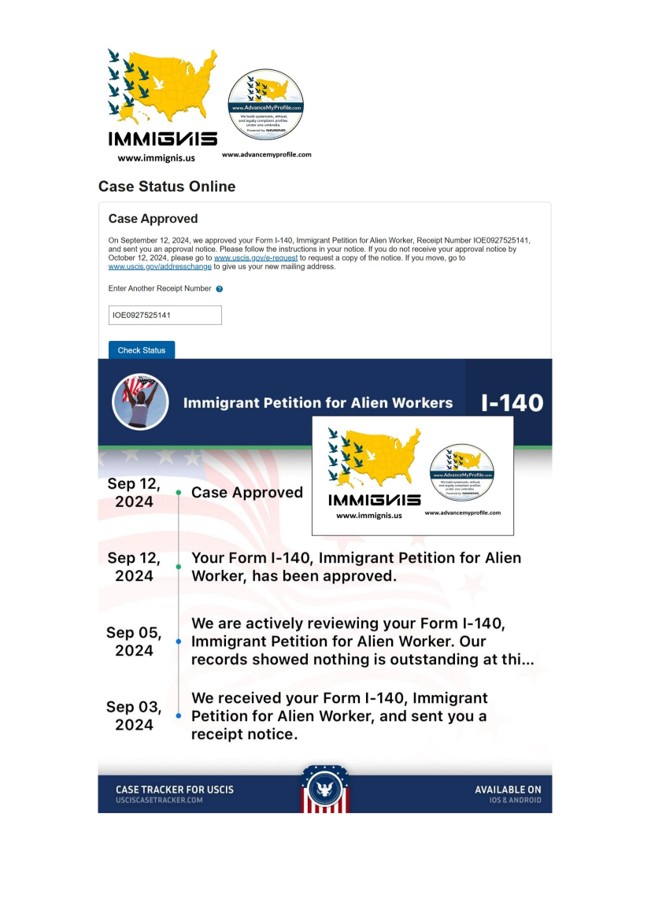
EB-1A for Rehabilitation Specialists explains how a Cambodian rehabilitation physician secured approval by transforming decades of quiet work with prosthetics and physical-therapy programs for landmine survivors into a petition-ready immigration profile built on program-attribution letters, rehabilitation-medicine publication, international disability-organization roles, conference faculty records, training-curriculum authorship, and ethical profile building.
Key facts at a glance
| Petition outcome | Form I-140 approved under EB-1A on September 12, 2024. |
| Professional profile | Cambodian trauma-rehabilitation specialist and rehabilitation physician who built prosthetics and physical-therapy programs for landmine survivors. |
| Field niche | Landmine-injury rehabilitation systems, prosthetics access, and long-term trauma-rehabilitation delivery. |
| Starting weakness | The program was respected in humanitarian circles, but the physician was unnamed in reports and the strongest achievements were buried inside institutional and NGO documentation. |
| Profile-building focus | Program-attribution letters, rehabilitation-medicine publication, international disability-organization roles, conference faculty records, training-curriculum authorship, expert letters, and immigration-specific profile building. |
| EB-1A criteria supported | Original contributions, leading role, scholarly articles, membership, and published material. |
| Central issue | Showing that the petitioner was not merely part of a famous humanitarian rehabilitation program, but a person-centered architect of prosthetics and physical-therapy systems for landmine survivors. |
| Approval lesson | Three decades of quiet humanitarian rehabilitation work can support EB-1A when ethical profile building turns scattered program records into one loud, coherent, and verifiable immigration profile. |
The approval
On September 12, 2024, USCIS approved the Form I-140 petition of a Cambodian trauma-rehabilitation specialist whose work focused on landmine-injury rehabilitation systems, prosthetics access, and physical-therapy programs for survivors of blast injuries.
The approval was important because the petitioner’s strongest achievements did not come from a neatly branded academic career. They came from long-term humanitarian rehabilitation work in a country where landmine injuries created a continuing medical, social, and mobility crisis. The work was respected by people who knew the field, but the public record did not clearly name the physician behind the system.
That made this case a strong example of EB-1A profile building, immigration profile building, and professional profile building for doctors whose work happens inside humanitarian programs rather than conventional hospitals or universities.
Immignis and Advance My Profile helped convert the record into a petition-ready EB-1A profile. The strategy focused on program-attribution letters, rehabilitation-medicine publication, international disability-organization roles, conference faculty records, training-curriculum authorship, expert letters, and careful profile improvement that made decades of quiet work visible to USCIS.
The evidence problem in landmine-injury rehabilitation systems
Landmine-injury rehabilitation is a specialized field where professional impact is often measured through restored mobility, prosthetic access, long-term physical therapy, workforce training, and survivor reintegration rather than through traditional markers such as media fame or large citation counts.
The petitioner’s starting weakness was not a lack of significance. It was a lack of personal attribution. The program was known in humanitarian circles, but the physician’s name did not appear prominently in every report, donor summary, rehabilitation outcome, or institutional document. The evidence existed, but it was attached to programs more than to the person.
The petition therefore defined the field precisely as landmine-injury rehabilitation systems. It did not present the case as ordinary rehabilitation medicine or general public-health service. It framed the work as a specialized combination of prosthetics, physical therapy, trauma recovery, disability inclusion, program architecture, and rehabilitation-capacity building.
That field definition was essential for immigration-specific profile building. It helped USCIS understand why program design, survivor outcomes, training systems, and disability-organization recognition were meaningful indicators of extraordinary ability in this niche.
Why humanitarian rehabilitation work can disappear inside program reports
Many humanitarian rehabilitation professionals face the same problem. Their work may shape systems that serve thousands of patients, train clinical teams, and influence long-term disability care, but the published record often credits the NGO, the donor, the hospital, or the country program rather than the individual physician who built the system.
In this case, the petition could not simply say the rehabilitation program was famous. USCIS needed to know what the petitioner personally created, how the prosthetics and physical-therapy systems functioned, and why respected outside organizations viewed his role as important.
That is where ethical profile building made the difference. The goal was not to exaggerate the record or claim sole ownership of collaborative humanitarian work. The goal was to reconstruct the paper trail so the petitioner’s actual leadership, authorship, and contribution could be seen.
The approval hook followed directly from this strategy: three decades of quiet work assembled into one loud, verifiable record. The work had always mattered. The profile-building process made it adjudicable.
Program-attribution letters made the physician visible
Program-attribution letters became one of the strongest pillars of the petition. In a case where reports often named organizations rather than individuals, letters from program leaders, partners, medical directors, disability organizations, and humanitarian stakeholders helped identify the petitioner’s actual role.
The strongest letters did more than praise compassion or dedication. They explained how the petitioner helped build prosthetics services, strengthen physical-therapy pathways, organize rehabilitation teams, improve survivor access, or shape long-term care models for landmine-injury patients.
This evidence supported both leading role and original contributions. It showed that the petitioner was not merely working within a respected program. He was helping design, sustain, and improve systems that changed how landmine survivors received rehabilitation care.
As part of immigration profile building and USCIS evidence building, these letters converted institutional achievement into person-centered proof. They answered the key question: why this physician, specifically?
Rehabilitation-medicine publication gave the work scholarly structure
Rehabilitation-medicine publication helped give the petitioner’s practical field work a stronger professional and academic structure. In humanitarian medicine, knowledge is often built through daily problem-solving, field protocols, patient patterns, training manuals, and program adjustments before it appears in formal journals.
The petition used publication evidence to show that the petitioner’s work was not only service delivery. It also carried professional knowledge about prosthetic rehabilitation, long-term physical therapy, disability recovery, and care systems for blast-injury survivors.
This supported the scholarly-articles criterion and reinforced the original-contribution argument. It helped USCIS see that the petitioner’s work generated transferable lessons for rehabilitation medicine, not only local patient care.
For healthcare professionals searching for profile building, medical profile building, EB-1A profile building, or EB-2 NIW profile building, this is an important lesson: publication evidence is strongest when it is tied to real clinical methods, field scarcity, and practical adoption.
International disability-organization roles broadened the recognition record
International disability-organization roles helped show that the petitioner’s expertise was recognized beyond one local program. In rehabilitation and prosthetics work, disability organizations often understand field importance better than general media because they know which systems actually improve mobility, independence, and survivor reintegration.
The petition documented roles, engagement, or recognition connected to international disability and rehabilitation organizations. This placed the petitioner inside the professional structure of the field and showed that his experience was valued by organizations focused on disability rights, rehabilitation access, prosthetics systems, and survivor support.
This evidence helped support membership and leading role arguments. It also strengthened the final-merits presentation by showing that the petitioner’s work had relevance beyond his immediate institution or country program.
In professional profile building for immigration, this type of organization-based evidence is useful because it connects humanitarian medical work to the field’s own hierarchy of credibility.
Conference faculty records showed trusted expertise
Conference faculty records helped show that the petitioner was not simply a practitioner with private expertise. He was trusted to teach, present, and share knowledge with others in rehabilitation medicine, disability care, or humanitarian health systems.
In landmine-injury rehabilitation, conference faculty invitations can be especially meaningful because the field is specialized and often built around practical expertise. Professionals are invited to speak when their experience helps others understand patient management, prosthetics delivery, physical-therapy systems, or program design.
The petition tied these invitations directly to the petitioner’s niche. It did not list them as generic speaking engagements. It explained how they reflected recognition of his expertise in landmine-injury rehabilitation systems and survivor-centered care.
This evidence supported leading role and published-material arguments while also helping improve the petitioner’s visibility for immigration purposes. It showed that the field had already treated him as someone worth learning from.
Training-curriculum authorship showed original contribution
Training-curriculum authorship was central because it showed the petitioner’s work could be taught, replicated, and used by others. In rehabilitation systems, curriculum design is not a minor administrative task. It can determine how therapists, prosthetics staff, field workers, and clinical teams deliver consistent care to survivors.
The petition documented curriculum authorship and training materials connected to prosthetics and physical-therapy programs. This helped demonstrate that the petitioner contributed a structured model rather than only individual clinical services.
This evidence was especially useful for original contributions because it showed a method of knowledge transfer. The petitioner was not only treating patients. He was helping create the professional capacity needed to treat many more patients through trained teams and replicable processes.
For immigration-specific profile building, curriculum evidence is powerful because it turns hidden expertise into something concrete: written methods, training pathways, professional standards, and evidence that others relied on the petitioner’s knowledge.
Expert letters mapped three decades of quiet work
Expert letters helped connect the entire record. A non-specialist immigration officer may not immediately understand how landmine-injury rehabilitation works, why prosthetics access is so complex, or why building physical-therapy systems for survivors is more than ordinary clinical service.
The strongest letters explained the field itself. They described the long-term burden of landmine injuries, the importance of prosthetics and rehabilitation systems, the scarcity of high-level expertise, and the petitioner’s specific role in shaping services over many years.
This was not evidence inflation. It was evidence translation. The letters helped USCIS understand why three decades of quiet work could represent extraordinary ability when properly attributed, documented, and placed within the professional hierarchy of humanitarian rehabilitation medicine.
For professionals seeking profile improvement or EB-1A evidence development, this case shows why expert letters must do more than admire the applicant. They must explain the field, the petitioner’s contribution, and the significance of the evidence.
How profile building changed the case
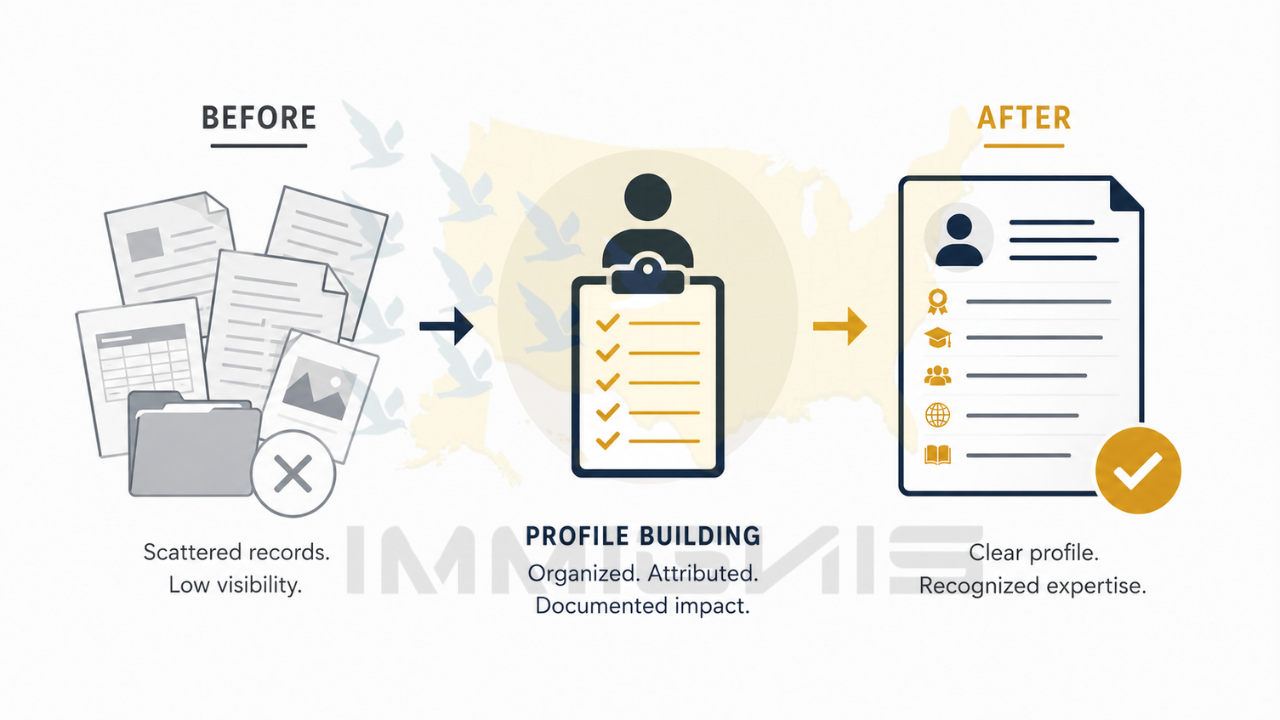
This case shows how profile building can change the way a strong humanitarian medical career is understood. The petitioner already had meaningful professional impact, but the evidence was scattered across reports, program records, partner organizations, training materials, publications, and professional roles.
Immignis and Advance My Profile helped organize the record around the EB-1A criteria that mattered most: original contributions, leading role, scholarly articles, membership, and published material. Each evidence category worked with the others to show the petitioner as a person-centered field contributor rather than an unnamed participant in a famous program.
The profile improvement process also strengthened the petitioner’s broader professional visibility. It supported immigration-specific profile building, professional profile building for immigration, publication profile building, expert validation, and USCIS evidence building without inventing achievements or overstating the role.
For professionals searching online for profile building, immigration profile building, EB-1A profile building, EB-2 NIW profile building, or profile building services for doctors and humanitarian professionals, this case shows how real but under-documented impact can be ethically reconstructed into a strong immigration profile.
Why this case worked
The case worked because it turned a humanitarian record into a legally organized extraordinary-ability record. Program-attribution letters made the individual visible. Rehabilitation-medicine publication gave the work scholarly structure. International disability-organization roles showed field recognition. Conference faculty records demonstrated professional trust. Training-curriculum authorship showed transferable contribution.
The petition also avoided a common mistake. It did not argue that humanitarian suffering alone made the case extraordinary. Instead, it showed how the petitioner responded to that context with specialized medical leadership, system design, training, and original contributions that improved rehabilitation delivery.
Most importantly, the case respected the collaborative nature of humanitarian medicine while still proving individual distinction. It did not erase the program, the organizations, or the teams. It showed the petitioner’s specific role inside them.
That is why the case became a strong example of EB-1A profile building for rehabilitation physicians, humanitarian doctors, disability-care leaders, and medical professionals whose achievements are real but hidden inside institutional narratives.
Conclusion
The Cambodian trauma-rehabilitation specialist’s EB-1A approval shows that quiet humanitarian medical work can support extraordinary ability when the record is documented with discipline and precision.
The petition succeeded by turning landmine-injury rehabilitation systems, prosthetics access, physical-therapy program development, curriculum authorship, publication, organization roles, and independent letters into a clear immigration profile USCIS could evaluate.
The broader lesson is simple: a professional does not need celebrity-style acclaim to show extraordinary ability. In specialized humanitarian medicine, decades of system-building can become powerful EB-1A evidence when ethical profile building makes the contribution visible, verifiable, and tied to the right field criteria.
Frequently asked questions
Can a rehabilitation physician qualify for EB-1A?
Yes. A rehabilitation physician may qualify for EB-1A when the evidence shows extraordinary ability through original contributions, leading roles, scholarly articles, professional recognition, membership, published material, and strong final-merits proof.
Can humanitarian medical work support an EB-1A petition?
Yes. Humanitarian medical work can support EB-1A when it is documented as field-level expertise, system design, original contribution, professional leadership, publication, or recognized influence rather than presented only as charitable service.
Do program-attribution letters help an EB-1A case?
Yes. Program-attribution letters are very helpful when public reports credit organizations instead of individuals. Strong letters identify the petitioner’s specific role, contribution, leadership, and impact.
Can prosthetics and physical-therapy program design count as original contribution?
Yes. Program design can support original contributions when the record shows that the petitioner built or improved methods, systems, training structures, or care pathways that others used or relied upon.
Does curriculum authorship help in an EB-1A profile?
Yes. Training-curriculum authorship can show that the petitioner’s expertise was organized into teachable, transferable knowledge used to train others in the field.
Can Immignis and Advance My Profile help humanitarian physicians build EB-1A evidence?
Yes. Immignis and Advance My Profile help physicians, rehabilitation specialists, humanitarian professionals, and healthcare leaders define a precise niche, document achievements, improve visibility, and build a petition-ready EB-1A or EB-2 NIW profile through ethical profile building and immigration-specific evidence development.
Build an EB-1A record around humanitarian medicine, rehabilitation systems, and verifiable field impact
Many rehabilitation physicians and humanitarian healthcare professionals already have meaningful impact, but the evidence is often scattered across NGO reports, training records, publications, internal documents, program data, and partner letters.