Key facts at a glance
| Outcome | EB-1A approval for a Chinese gene-therapy vector scientist working at a U.S.-based biotech company. |
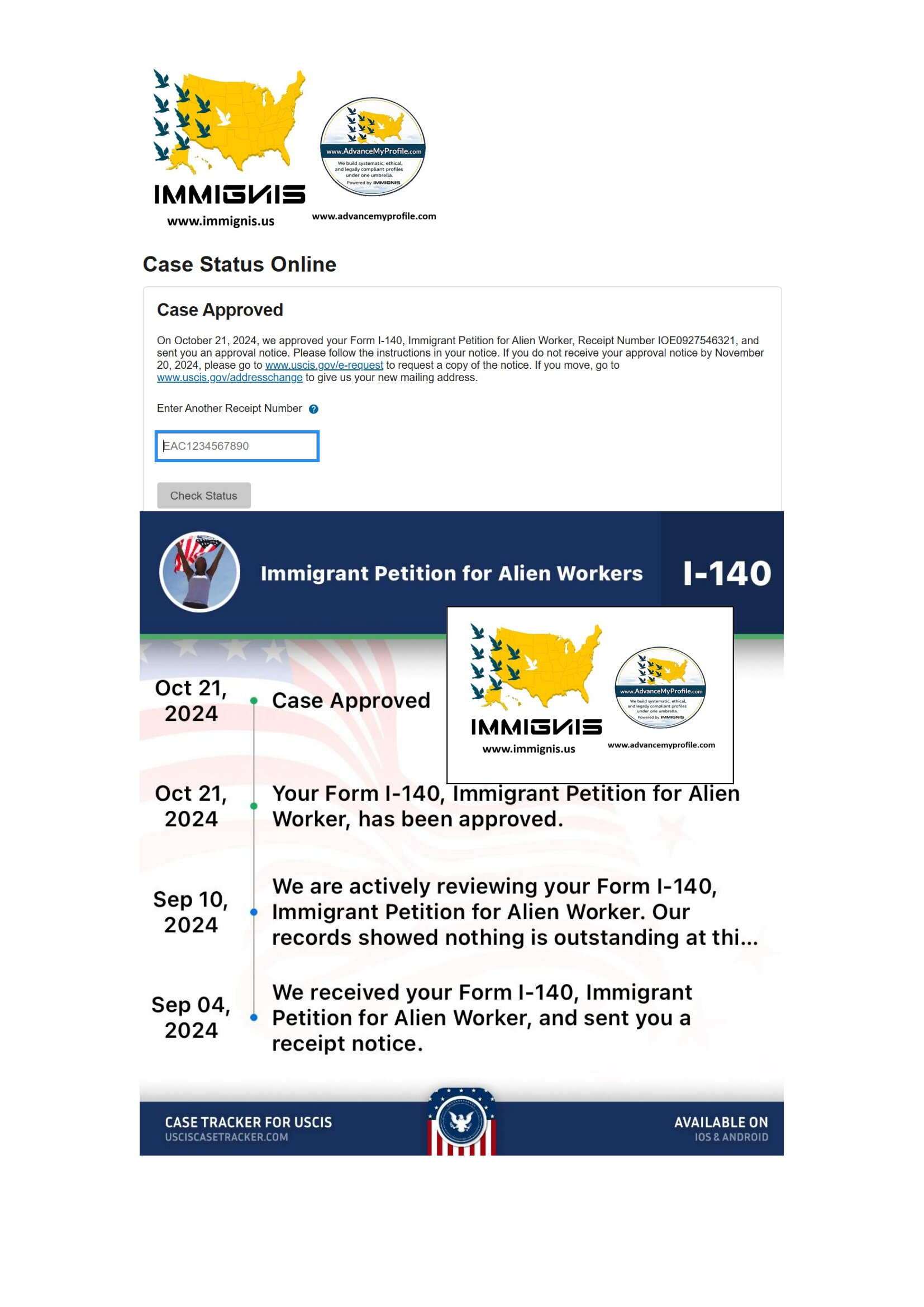
| Approval date | Approved on October 21, 2024. |
| Field niche | AAV vector engineering for rare-disease therapies, with a focus on delivery design, capsid and payload strategy, preclinical validation, and practical use of vector methods in early therapeutic programs. |
| Starting problem | His strongest work was inside confidential biotech programs. The public record did not clearly show his individual contribution, field-level recognition, or practical significance without risking protected company information. |
| Profile-building path | Focused gene-therapy publications, patent filings, safe preclinical adoption documentation, a white paper for rare-disease research networks, peer review, invited talks, media explanations, leading-role evidence, and independent letters from gene-therapy specialists. |
| Evidence presented under the EB-1A criteria | Scholarly articles, original contributions, published material, judging, and leading or critical role. Patent filings supported attribution and the original-contribution record but were not treated as a separate EB-1A criterion. |
USCIS approved his Form I-140 on October 21, 2024.
The case did not turn on a public drug approval, a famous commercial product, or a press release announcing a breakthrough cure. It turned on a quieter question that sits near the center of many gene-therapy programs: how can a therapeutic idea reach the right cells safely and effectively enough to be studied further?
He was a Chinese EB-1A Gene Therapy Scientist working at a U.S.-based biotech company. His work focused on AAV vector engineering for rare-disease therapies. AAV, or adeno-associated virus, is widely used as a delivery platform in gene-therapy research because it can carry genetic material into target cells. But delivery is not a formality. For many rare-disease programs, vector design can affect tissue targeting, expression, dose, manufacturability, immune response, and the strength of preclinical evidence.
His employer understood the value of the work. His immigration record had a different problem. Much of the evidence was locked inside protected research plans, preclinical materials, patent strategy, internal reports, and company-owned development records. The EB-1A petition needed to prove that the scientist, not merely the company, had made original and recognized contributions in a defined field.
A biotech title did not explain the contribution
Before profile building, the record described a strong scientist in a serious company. That was not enough. EB-1A is not approved because a person works in an advanced field or because the employer is developing important therapies. The petition had to show what he had contributed, why that contribution mattered, and how the field recognized his expertise beyond ordinary employment.
The original evidence had several risks. Publications existed, but they did not yet tell one coherent story. Patent materials were useful, but they could not be presented as if a filing alone proved major significance. Internal program records showed responsibility, but many details could not be disclosed. Public recognition was limited, and independent readers could not easily see how his vector-engineering work connected to rare-disease therapeutic development.
Advance My Profile, powered by Immignis, reviewed the case with legal strategists and life-science domain specialists. The first decision was to stop presenting the profile as broad gene-therapy work. The field had to be narrower, clearer, and more defensible: AAV vector engineering for rare-disease therapies.
The real niche was delivery, not the disease label
Rare-disease therapy development can involve small patient populations, limited biological data, difficult outcome measures, and disease mechanisms that may not have many prior therapeutic examples. In that setting, delivery design becomes a technical problem with practical consequences. A vector may need to reach a tissue, carry a constrained payload, support the desired expression profile, and produce preclinical evidence strong enough to justify the next stage of research.
The evidence was reorganized around vector decisions rather than program names. What biological target was the vector meant to reach? Which design choice affected expression or delivery? What preclinical test helped evaluate the concept? What part of the method could be attributed to him? Which evidence could be discussed publicly without revealing confidential company data?
This narrower framing helped the petition avoid two common mistakes. It did not describe him as the inventor of an entire therapy when the record supported a more specific vector-engineering contribution. It also did not reduce his work to routine laboratory support. The petition focused on the technical decisions that made his contribution identifiable.
What USCIS needed to see in an AAV vector EB-1A case
For a gene-therapy scientist, the petition needed more than a list of papers, patents, and job duties. USCIS had to see a record that could support both the regulatory criteria and the final merits determination.
For original contributions, the petition identified vector-engineering methods, patent-linked concepts, preclinical use of his work, and independent expert analysis explaining why those contributions were significant within AAV rare-disease research. Confidential internal importance was not treated as enough by itself.
For scholarly articles, the publications had to do more than prove that he could write scientifically. They had to support the authority niche. The record connected authorship to AAV delivery, vector design, rare-disease therapeutic development, and preclinical evidence.
Published material required independent coverage about him or his expertise, not general articles about gene therapy. Judging required actual evaluation of other scientists’ work, such as peer review of manuscripts or technical submissions. Leading or critical role required company evidence showing that important research activity depended on his scientific judgment, not just that he was employed by a biotech company.
Patent filings helped with attribution. They showed where a technical concept was connected to him. The petition treated them carefully: as evidence supporting original contributions, not as a separate EB-1A category and not as automatic proof of major significance.
The confidential record was made usable without exposing company data
The strongest evidence in many biotech cases is also the evidence that cannot be placed in a public article or an immigration petition without careful review. Protected materials may include vector sequences, construct details, study design, dose assumptions, preclinical endpoints, manufacturing parameters, animal data, therapeutic targets, partner information, or development timelines.
The case did not try to publish those materials. Instead, the record used safe descriptions of the scientific problem, the type of vector-engineering decision, the scientist’s role, and the documented use of his method in preclinical research. Where possible, company letters and non-confidential summaries traced the chain from problem to method to use.
That approach mattered. A vague statement that someone worked on a rare-disease therapy would have done little. A disciplined description of vector-design logic, validation role, and preclinical adoption gave USCIS and independent experts something concrete to evaluate.
The publications gave his work a public scientific language
With domain support, the scientist developed focused publications addressing AAV vector engineering, delivery constraints, tissue targeting, payload limits, expression considerations, and preclinical validation in rare-disease therapy research.
One paper examined how vector-design choices can affect whether a therapeutic concept produces interpretable preclinical evidence. Another addressed why delivery should be evaluated together with payload, tissue biology, and the evidence needed before a rare-disease program can move forward.
The publication strategy did not attempt to recreate the employer’s confidential programs. It used open scientific questions that reflected the expertise he had already built. That distinction made the work credible. The articles were not decorative additions to a resume; they helped the public record explain a real scientific specialty.
Patent filings helped connect technical concepts to the scientist
The file documented patent filings where the available materials identified him as an inventor or connected him to a relevant vector-engineering concept. The petition then explained how those concepts fit within the broader AAV delivery problem.
The strategy was deliberately careful. A patent filing can support inventorship and attribution, but EB-1A still requires evidence of significance and recognition. The petition therefore connected patent evidence to the wider record: publications, preclinical use, expert letters, invited talks, and the role he played in research activity.
For scientists in industry, this is often the difference between a thin patent argument and a persuasive original-contribution argument. The patent shows where a concept can be traced. The rest of the record explains why the concept mattered.
Preclinical adoption evidence showed that the work was not only theoretical
The record also documented, in safe and non-confidential form, how his vector-engineering work entered preclinical research activity. The evidence did not claim clinical success, patient outcomes, or regulatory approval that the record could not prove. It stayed with what the evidence supported: use of the method or concept in early research and development pathways.
This was important because many biotech profiles rely too heavily on promise. The petition did not say that a rare-disease therapy had been proven effective because of one scientist’s work. It showed that his vector-engineering contribution was used in scientific decision-making, study planning, or preclinical evaluation. That made the original-contribution claim more concrete.
Independent gene-therapy experts could then discuss the practical significance of vector design in rare-disease research without needing to see protected company data. Their letters addressed the field problem, the role of AAV delivery, and why the scientist’s documented contributions fit that problem.
The white paper made the delivery problem understandable outside the lab
The scientist also developed a white paper for rare-disease research networks and related stakeholders. Its purpose was not to promote a company program. It explained why delivery remains one of the central technical questions in gene therapy, especially when the disease biology, target tissue, payload, and evidence requirements are difficult.
The white paper organized the subject around vector selection, capsid engineering, payload constraints, tissue targeting, expression, safety questions, preclinical evidence, and the limits of drawing strong conclusions from incomplete models. It gave a broader professional audience a way to understand why vector engineering can shape the future of a rare-disease program before any clinical claim exists.
That public document helped bridge the gap between internal biotech research and wider field recognition. It gave the scientist a non-confidential platform for explaining the type of problem his work addressed.
Invited talks and media explanations expanded recognition without overstating the science
His invited talks focused on the engineering problem behind rare-disease delivery. He discussed why a promising therapeutic idea still depends on whether the vector can reach the right biological setting, produce useful expression, and generate preclinical evidence that scientists can interpret responsibly.
The talks did not disclose protected vector details or company program strategy. They used general scenarios to explain delivery, validation, and the judgment required when a model gives partial evidence rather than a definitive answer.
Media explanations were handled with the same restraint. Instead of presenting gene therapy as a miracle narrative, he explained the delivery challenge: a therapeutic payload is only useful if the delivery system is suited to the disease context, target tissue, and evidence pathway. That public explanation helped make his expertise visible without turning the article into promotional science writing.
Peer review created judging evidence in a specialized field
The petition documented peer-review activity where journals or technical venues asked him to evaluate work by other researchers. That evidence supported the judging criterion because he was not merely attending conferences or reading papers. He was being asked to assess scientific work produced by others.
The reviews required technical judgment: whether vector-design claims were supported, whether experimental logic matched the conclusion, whether delivery or expression evidence was sufficient, and whether authors had overstated findings from preclinical models.
For EB-1A, this type of evidence can be important because it shows that the field used the scientist’s judgment. It is especially useful when much of the applicant’s strongest work is confidential and cannot be fully described in public.
Leading role evidence had to show scientific dependence, not just employment
The leading or critical role evidence focused on the biotech company’s reliance on his vector-engineering judgment. A job title alone would not have been enough. The record identified important research activity, his responsibilities within that activity, and why his decisions mattered to the direction or evaluation of the work.
Company evidence, role documentation, and expert letters helped show that he was not just one member of a large research team performing assigned tasks. His contribution involved scientific decisions about vector strategy, preclinical interpretation, and delivery-related questions that affected program development.
The argument remained disciplined. The petition did not claim that he personally created an entire therapy or controlled every scientific decision. It showed where the record supported a critical contribution in a defined area of gene-therapy development.
How the EB-1A evidence came together
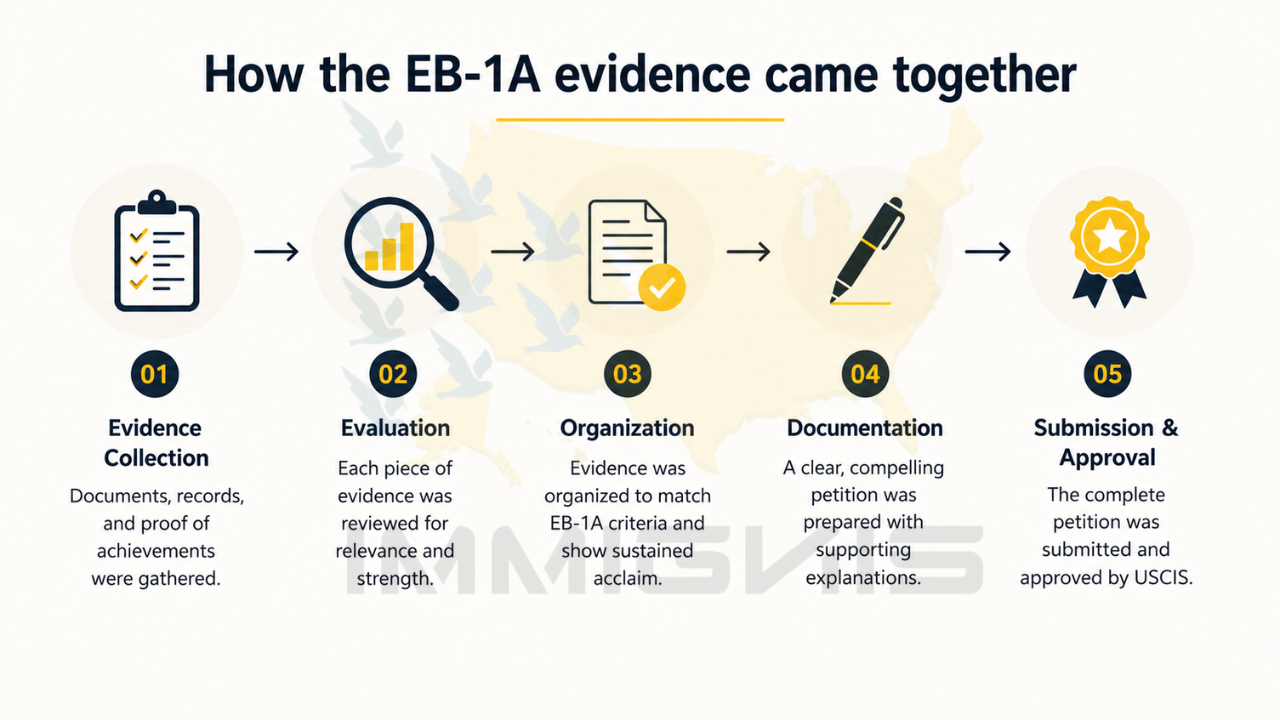
The final record worked because the evidence pointed to the same specialist from different directions.
- Scholarly articles showed focused public authorship in AAV vector engineering and rare-disease delivery questions.
- Original-contribution evidence connected vector methods, patent-linked concepts, preclinical use, and independent expert analysis.
- Published material explained his expertise and the delivery problem for a wider professional audience.
- Judging evidence showed that journals and technical venues trusted him to evaluate other scientists’ work.
- Leading or critical role evidence documented why important biotech research activity relied on his scientific judgment.
- Patent filings supported inventorship and attribution, while the broader record addressed significance.
This was not a case built around one impressive document. It was a case built around consistency. The publications, patent evidence, preclinical adoption, invited talks, peer review, expert letters, and role documentation all described the same professional identity: a scientist whose AAV vector-engineering work contributed to rare-disease therapy research.
Why this approval matters for biotech scientists
Many biotechnology professionals assume that confidential work cannot support EB-1A. The truth is more precise. Confidential work can support a petition when it is documented carefully, described safely, and connected to evidence that USCIS can evaluate. The petition does not need to expose protected company data. It does need to show the applicant’s individual contribution and the significance of that contribution.
This case also shows why a strong biotech resume can still need profile building. Product-development work may be valuable, but EB-1A requires a record of recognized achievement. Publications, patents, peer review, talks, media, adoption evidence, and expert letters must be organized around a clear field niche and a defensible final-merits argument.
For this scientist, the approval came after the record stopped treating gene therapy as a broad label and began explaining a specific technical contribution: AAV vector engineering for rare-disease therapies.
Frequently asked questions
Can confidential biotech work support EB-1A?
Yes, but it must be handled carefully. The petition can use non-confidential summaries, role records, company letters, public patent materials, safe technical descriptions, and independent expert analysis. Protected sequences, internal data, customer information, or proprietary development strategy should not be disclosed unless properly authorized and necessary.
Are patents enough for EB-1A?
No. Patent filings can help show inventorship and connect a technical concept to the applicant, but they do not automatically prove major significance. The stronger argument usually connects patent evidence to practical use, publications, expert letters, adoption, industry recognition, or other evidence showing why the contribution matters.
Does a gene-therapy scientist need an approved therapy to qualify for EB-1A?
No. EB-1A does not require that a scientist’s work has already resulted in an approved product. Preclinical research, platform methods, vector-engineering contributions, and scientific tools can support a petition when the record shows original contribution, significance, recognition, and sustained acclaim. Claims must stay within what the evidence proves.
Can peer review count as judging?
Peer review may support the judging criterion when the applicant actually evaluated the work of other researchers. The evidence should document the review invitation or assignment, the field, and completed review activity where available. Merely being published or attending a conference is not the same as judging.
How should media coverage be used in a scientific EB-1A case?
Media coverage should help explain the applicant’s expertise or work. General articles about gene therapy do not automatically qualify as published material about the applicant. The strongest coverage connects the person to a specific technical area and does not exaggerate scientific or clinical claims.
Build an EB-1A record around the scientific contribution that can be proved
If you work in gene therapy, vector engineering, rare-disease research, preclinical development, biotech platforms, or another confidential life-science environment, your strongest contribution may not appear clearly in your public record. That does not mean the work is unusable. It means the evidence must be organized with care.
Immignis and Advance My Profile help identify a defensible authority niche, document individual contributions, build credible field recognition, and prepare an EB-1A record around evidence that can be verified and explained professionally.