Key facts at a glance
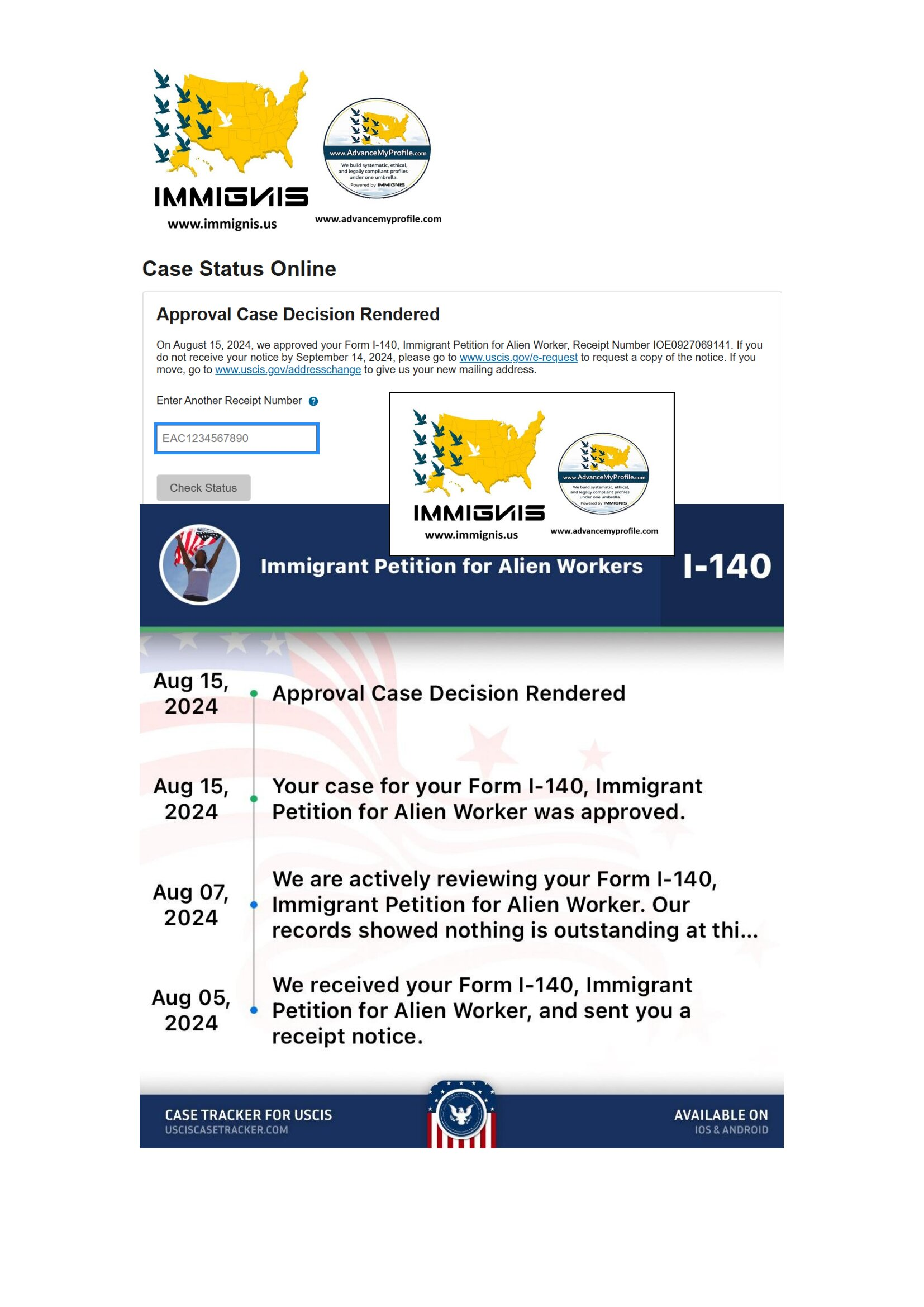
| Outcome | EB-1A approval for an Ethiopian nutrition data scientist working at a U.S. based public-health nonprofit. |
| Approval date | Approved on August 15, 2024. |
| Field niche | AI-assisted nutrition surveillance for maternal and child health, with a focus on undercoverage, delayed reporting, and program-useful nutrition signals. |
| Starting problem | Her work had clear humanitarian value, but the record did not yet separate her individual data science contribution from the nonprofit’s broader maternal and child health mission. |
| Path used | Ethical EB-1A profile building through focused publications, nutrition-dashboard adoption evidence, a global health policy brief, expert commentary, invited panels, peer review, documented award evidence, and independent letters from nutrition epidemiologists. |
| USCIS EB-1A criteria activated | Scholarly articles, original contributions, published material, judging, recognized prizes or awards, and leading or critical role. |
USCIS approved her Form I-140 on August 15, 2024.
Why was the number low?
EB-1A Nutrition Data Scientist: A quiet region on a maternal and child nutrition dashboard may be doing well. It may also have late reports, missing facilities, poor coverage, or a denominator that has changed. The same clean looking chart can lead to very different public health decisions.
She was an Ethiopian data scientist working at a U.S. based public health nonprofit. Her daily work sat between nutrition programs and messy population data. She built analytical methods that helped teams examine maternal and child nutrition information, identify unusual patterns, and decide where the data needed a closer human review.
Humanitarian value was easy to explain. Her individual contribution was harder.
Maternal and child health is a compelling subject, which can create a problem in an extraordinary ability petition. A case may spend pages describing malnutrition, vulnerable communities, or global health needs and still say very little about what the petitioner personally contributed.
The nonprofit’s programs mattered. Nutrition surveillance mattered. The populations served by the work mattered. Yet USCIS had to evaluate her own extraordinary ability in a defined field.
The EB-1A green card is a self-petition immigrant classification for people who can show extraordinary ability, sustained national or international acclaim, and recognition of their achievements in the field.
Advance My Profile, powered by Immignis, reviewed her analytical work with legal strategists and public health and data specialists. The field was narrowed to AI-assisted nutrition surveillance for maternal and child health.
Her AI work flagged nutrition-surveillance signals for human review
The analytical methods used nutrition and program data to flag patterns that deserved attention.
A sudden decline in reporting may reflect a true change in service use. It may also come from delayed submissions. A district can appear to improve when facilities stop reporting. A rise in one indicator may follow seasonality, a program change, or a shift in who was actually measured.
Her models and dashboard logic were designed to help public-health teams examine those questions earlier. The profile described the system as a surveillance and program analytics tool. Clinical diagnosis and treatment remained outside its stated function.
The work belonged to surveillance and program analytics. AI-assisted signals could point analysts toward missingness, unusual changes, geographic undercoverage, or other patterns for review by people responsible for the program.
What did USCIS need to see in this nutrition data science case?
The original contribution argument required her method, the surveillance problem it addressed, her individual role, and evidence showing that public-health teams used or relied on the work. A screenshot carried little weight without that context.
Adoption evidence also needed careful language. Serving several countries or partner programs showed program scale. The petition still had to trace which dashboard functions, analytical methods, or surveillance workflows were linked to her work.
For scholarly authorship, the papers had to be about nutrition surveillance, data quality, undercoverage, and related analytical questions. Published material required independent coverage about her or her expertise. Peer review supported judging when she actually evaluated other researchers’ work.
The awards issue was handled with particular care. The profile-building plan included a field-relevant award nomination. The petition treated the nomination as a professional development step and reserved the awards criterion for documented recognition actually received.
The publications came from problems the dashboard kept revealing
With domain support, she developed focused papers on nutrition-data completeness, undercoverage, delayed reporting, representativeness, and the use of analytical methods to identify unusual changes in maternal and child health datasets.
Each anomaly was treated as a prompt for investigation. The research examined whether an unusual pattern came from a genuine change, missingness, or another data quality issue.
The work also examined how surveillance systems can make uncertainty more visible to the people using the information. This subject was familiar to her because it came from program work. A dashboard can calculate perfectly and still mislead if the underlying reporting pattern has changed.
Dashboard adoption gave the original-contribution evidence somewhere concrete to land
Advance My Profile organized non-confidential records showing where the tool or its analytical functions were introduced, who used the outputs, and how the information entered surveillance review or program discussion.
The evidence stayed at the system and workflow level and excluded identifiable maternal or child data. It also traced the applicant’s own contribution.
Where program teams used dashboard signals to review late reporting, unusual geographic changes, or coverage gaps, the file documented that use without inventing health outcome percentages.
Public-health professionals often have years of useful program work hidden behind the name of a nonprofit, health agency, or international project. A free EB-1A profile assessment can help identify the methods, adoption evidence, judging, authorship, and independent recognition that can be attributed to you.
The policy brief asked a difficult question: who is missing from the data?
It examined how nutrition surveillance can look complete while certain communities, facilities, or reporting periods remain underrepresented. The brief discussed missingness, reporting delays, geographic coverage, and the risk of making resource decisions from a dataset whose gaps are not clearly shown.
AI-assisted analysis appeared in the brief as one tool for finding patterns that may deserve review. Human interpretation remained part of the process.
The brief became a useful professional document because it translated her analytical work into a question understood by program leaders: before acting on a nutrition trend, do we know who the data represents?
Media commentary and invited panels gave her a public voice in nutrition surveillance
The media work focused on nutrition data, surveillance quality, and responsible use of AI in maternal and child health programs. She explained why a model is only as useful as the reporting system around it and why undercoverage can be mistaken for improvement.
Invited panels gave her more time to discuss the practical side of the work. Public-health audiences asked about incomplete data, dashboard adoption, field reporting, and the limits of prediction in humanitarian settings.
The discussions stayed close to her professional experience as a data scientist. Clinical nutrition assessment remained with qualified health professionals.
Peer review and award evidence were developed as separate parts of the record
Journals and technical venues invited her to review research in public-health analytics, nutrition epidemiology, surveillance, and related data science subjects.
The award work followed a separate track. A field relevant nomination was part of profile development, while the petition used actual documented recognition for any awards-criterion claim.
Where recognized prizes or awards were claimed, the file documented the actual recognition, the selection framework available for review, and the relationship between the honor and her nutrition or public-health work.
Independent nutrition epidemiologists explained the surveillance problem in plain scientific terms
The strongest letters treated missing data as a surveillance problem with real interpretive consequences. A polished trend line can still represent a changing population when facility reporting, geographic coverage, or program participation shifts.
How the USCIS EB-1A criteria were supported
Scholarly articles: Focused publications connected her authorship to nutrition surveillance, data completeness, undercoverage, delayed reporting, and AI-assisted analysis of maternal and child health data.
Original contributions: Dashboard adoption evidence, analytical methods, program use documentation, and independent expert letters explained her individual contribution to nutrition surveillance and its applied use.
Published material: Independent public health and data coverage discussed her work or expertise in nutrition analytics, surveillance quality, and responsible AI use in maternal and child health.
Judging the work of others: Peer-review records documented genuine evaluation of research by other specialists in public health, nutrition epidemiology, surveillance, and related data science fields.
Recognized prizes or awards: The petition relied on documented recognition actually received and evidence explaining the field and selection basis of the honor. The nomination activity itself was not treated as receipt of an award.
Leading or critical role: Nonprofit and program evidence showed why significant maternal and child nutrition analytics work relied on her data-science judgment, dashboard methods, and surveillance expertise.
Her papers explained the data problem. The dashboard showed program use. The policy brief addressed undercoverage for public-health audiences. Media and panels created outside visibility. Peer review showed evaluative trust. Award and role evidence documented recognition and responsibility.
Approval came on August 15, 2024
The approved EB-1A petition gave her a self-petition path without employer sponsorship or labor certification. Form I-140 approval is one stage of the employment based immigrant process, and later permanent-residence timing may depend on visa availability and the applicant’s next immigration step.
If your public-health work is meaningful but the evidence belongs to the organization
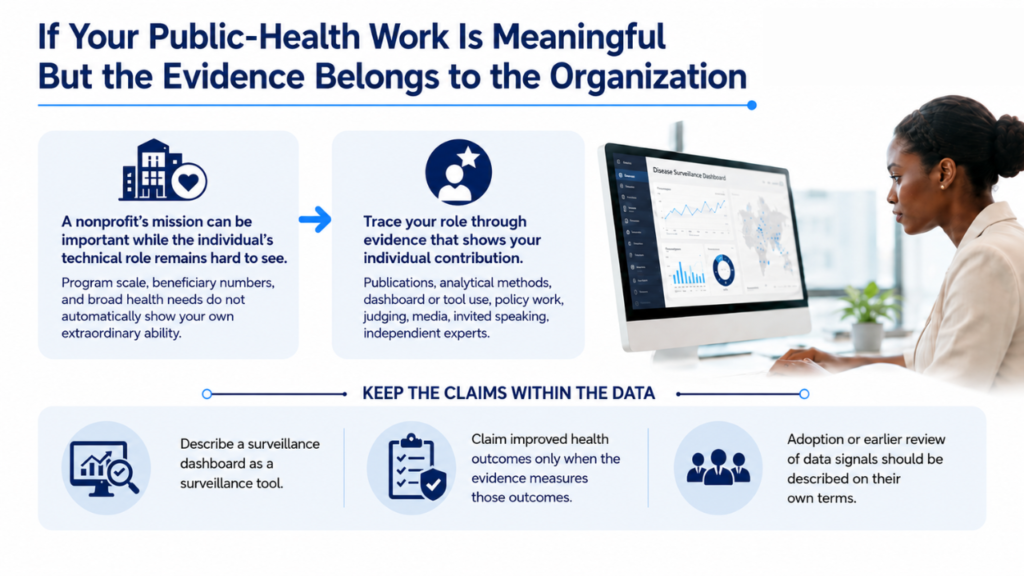
A nonprofit’s mission can be important while the individual’s technical role remains hard to see. Program scale, beneficiary numbers, and broad health needs do not automatically show your own extraordinary ability.
Trace your role through publications, analytical methods, dashboard or tool use, policy work, judging, media, invited speaking, and independent experts who can evaluate the contribution.
Keep the claims within the data. Describe a surveillance dashboard as a surveillance tool. Claim improved health outcomes only when the evidence measures those outcomes; adoption or earlier review of data signals should be described on their own terms.
FAQs
Can a public-health dashboard support an EB-1A original-contribution claim?
Yes, when the applicant’s individual method or technical contribution can be identified and the evidence shows recognized significance. Adoption records, program use documents, method papers, and independent expert analysis can help explain why a dashboard or analytical workflow matters beyond one employer.
Why does missing data matter in maternal and child nutrition surveillance?
Missing or delayed reporting can change the population represented in a dataset and can affect how a trend is interpreted. A low reported number may reflect a true improvement, incomplete facility reporting, undercoverage, or another change in the surveillance process. Analysts need to examine data quality before public-health teams act on the pattern.
Does an award nomination satisfy the EB-1A awards criterion?
A nomination is different from receipt of a prize or award. The EB-1A awards criterion concerns the applicant’s receipt of lesser nationally or internationally recognized prizes or awards for excellence in the field. The petition should document the actual recognition and the evidence supporting its status.
Can peer review count as judging for a nutrition data scientist?
Genuine peer review can support the judging criterion when the applicant evaluates the work of other researchers in the same or an allied field. The record should document the invitation, completed review activity where available, and the relationship between the reviewed work and the applicant’s expertise.
Should a public-health data scientist consider EB-1A or EB-2 NIW?
The categories use different legal standards. EB-1A focuses on extraordinary ability, sustained acclaim, and recognition in the field, while EB-2 NIW examines EB-2 eligibility and a proposed endeavor under the national-interest-waiver framework. The same career may contain evidence relevant to both, but each case should be assessed under its own requirements.
Do I need a degree in nutrition or public health for an EB-1A nutrition analytics case?
No specific nutrition or public-health degree is required by the EB-1A extraordinary ability category. Education may help explain expertise, but the case turns on the extraordinary-ability evidence and the applicant’s recognized work in the defined field. Data scientists can build a nutrition-surveillance case when their actual research, methods, judging, leadership, and recognition support that specialty.
Build an EB-1A success story around the public-health method people actually use
If you work in nutrition surveillance, public-health data science, maternal and child health, epidemiology, health dashboards, or AI-assisted population analytics, your strongest contribution may be buried inside a program or nonprofit.
Immignis and Advance My Profile help identify a defensible niche, document individual methods and adoption, build credible field recognition, and prepare an EB-1A record around evidence that can be verified.
Start with a free EB-1A profile assessment and find out whether your public health data work can be developed into a clearer authority record.