How an EB-1A Offshore Decommissioning Engineer from Azerbaijan secured approval by turning the safe retirement of aging Caspian offshore infrastructure, project-scope documentation, safety-methodology publication, international offshore-engineering roles, trade-press commentary, and immigration-specific profile building into a petition-ready record of extraordinary ability.
Key facts at a glance
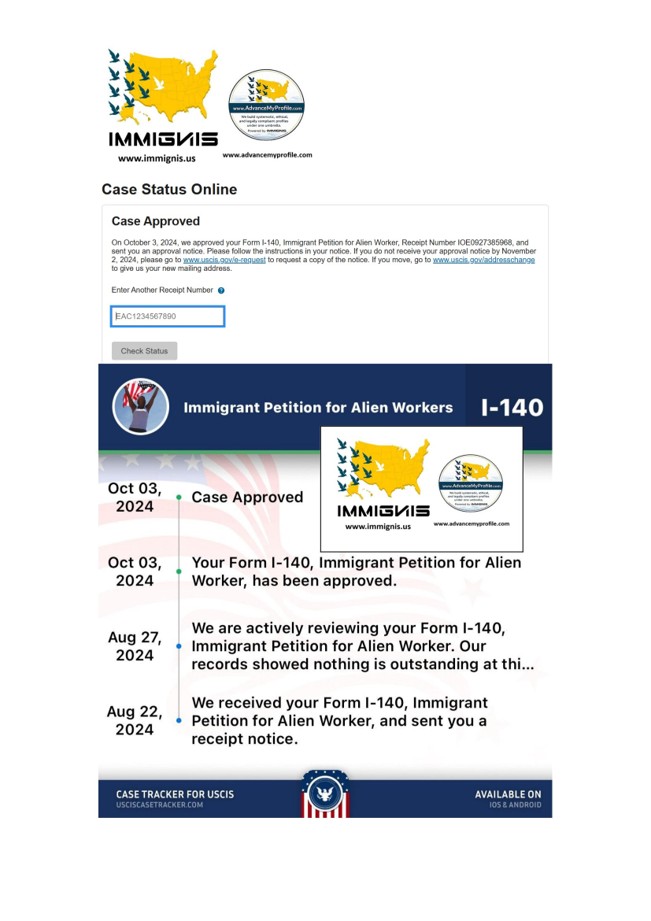
| Petition outcome | Form I-140 approved under EB-1A on October 3, 2024. |
| Professional profile | Azerbaijani offshore-decommissioning engineer managing safe retirement of aging Caspian offshore infrastructure in a technically demanding enclosed-sea environment. |
| Field niche | Offshore oil-platform decommissioning in enclosed seas. |
| Starting weakness | The field was growing quickly, but it had few established acclaim pathways, and much of the strongest evidence was buried in project files, safety procedures, confidential operator records, and internal engineering documentation. |
| Profile-building focus | Project-scope documentation, decommissioning-conference presentations, safety-methodology publication, international offshore-engineering body roles, trade-press commentary, expert letters, and ethical immigration-specific profile building. |
| EB-1A criteria supported | Leading role, original contributions, published material, membership, and scholarly articles. |
| Central issue | Showing that work inside a relatively new and highly technical offshore-decommissioning niche could still prove extraordinary ability even without a familiar award structure or easy public credit. |
| Approval lesson | Emerging infrastructure fields can support EB-1A when profile building translates project leadership, safety methods, industry visibility, technical publication, and independent expert validation into a clear immigration record. |
The approval
On October 3, 2024, USCIS approved the Form I-140 petition of an Azerbaijani offshore-decommissioning engineer whose work focused on retiring aging offshore oil and gas infrastructure in the Caspian region.
The case was not a simple engineering petition. It involved a field that is still becoming visible to the public. Offshore decommissioning requires technical planning, structural risk assessment, environmental controls, lifting and removal strategy, safety systems, marine logistics, regulatory coordination, and long-term liability thinking.
The petitioner’s starting weakness was that the field had no easy acclaim pathway. There were few awards, little public naming of individual engineers, and many of the strongest records were confidential. The work was important, but the paper trail was scattered across project scopes, safety documents, engineering reviews, operator records, and technical teams.
Immignis and Advance My Profile helped build the case through ethical profile building, professional profile building, and immigration-specific profile building. The strategy turned project leadership, technical authorship, conference recognition, professional-society participation, trade commentary, and expert validation into a clear EB-1A record.
Why offshore decommissioning is difficult to explain in an EB-1A petition
Offshore decommissioning is not the same as ordinary offshore operations. It asks engineers to safely retire assets that were built decades earlier, often under design assumptions, regulatory expectations, and environmental standards that have changed. The technical problem is not only how to remove infrastructure. It is how to do it safely, economically, and with controlled environmental risk.
In the petitioner’s field, the Caspian Sea setting added another layer of complexity. Enclosed seas create unique logistical and environmental constraints. Vessel access, weather windows, seabed conditions, legacy materials, pipeline interfaces, and cross-border regulatory sensitivities can all affect how a platform is prepared, isolated, dismantled, or removed.
That technical reality had to be explained in plain immigration language. The petition therefore defined the niche as offshore oil-platform decommissioning in enclosed seas. This helped USCIS understand that the petitioner was not merely a general oil and gas engineer. He worked in a specialized and increasingly important area of infrastructure retirement.
For professionals searching for EB-1A profile building, EB-2 NIW profile building, immigration profile building, profile improvement, or profile building for engineers, this case shows why field definition matters. USCIS must first understand the field before it can understand why the evidence matters.
Project-scope documentation turned confidential work into usable evidence
The strongest evidence in the case came from project-scope documentation. Offshore decommissioning projects are often confidential, but confidentiality does not make evidence impossible. It simply requires careful, disclosure-safe documentation.
The petition used cleared project descriptions, responsibility summaries, technical role explanations, safety-planning records, engineering-scope documents, and letters from people familiar with the petitioner’s work. The goal was to show what the petitioner did without exposing proprietary or sensitive operator information.
This documentation supported the leading-role criterion because it showed that the petitioner held meaningful responsibility within complex decommissioning work. He was not performing routine support. He was helping manage technical decisions that affected safety, execution, environmental risk, and project success.
This is a key part of immigration-specific profile building for engineers. Many engineering professionals have strong evidence, but it lives in internal documents. The task is to convert that material into a format USCIS can review while respecting confidentiality and safety limits.
Safety-methodology publication supported original contributions
Safety methodology became another important pillar of the petition. In decommissioning, original contribution often appears through methods for risk control, sequencing, isolation, dismantling, lifting, material handling, or environmental protection.
The profile-building strategy emphasized publication or authorship of safety-related methods that could be discussed without revealing restricted project details. This helped turn internal engineering judgment into a formal professional contribution.
The argument was straightforward: if the petitioner developed or advanced safety methods that improved how aging offshore assets could be retired, that work had significance beyond one job description. It had value for a growing field where mistakes can have serious consequences.
Scholarly and technical publication also helped USCIS see the petitioner as a knowledge contributor, not only a project employee. For EB-1A, that distinction can be critical.
Decommissioning-conference presentations created field visibility
Conference presentations were used to show that the petitioner’s expertise was recognized by the offshore and decommissioning community. In emerging infrastructure fields, conferences and specialist forums often function as the main venues where professionals exchange methods, standards, and lessons learned.
The petition documented presentations, technical sessions, panel roles, and offshore-engineering events connected to decommissioning, safety, environmental management, or infrastructure retirement. This helped show that the petitioner’s work was not confined to an employer’s internal environment.
These presentations also supported published-material and original-contribution framing because they demonstrated that the petitioner had something technical to share with the field. The petition explained why those platforms mattered and why being invited or accepted to present was evidence of professional standing.
For professional profile building, this kind of field visibility is valuable because it gives a technical career a public footprint. It makes specialized engineering work easier for immigration officers, clients, media, and future collaborators to understand.
Professional-society roles and membership showed standing in a narrow field
Professional-society and offshore-engineering body roles helped address another weakness: the lack of a mature award culture in decommissioning. When a field does not have many awards, membership, committee work, standards activity, and industry-body participation become more important evidence signals.
The petition emphasized international offshore-engineering body roles, specialist memberships, technical working groups, and field-specific professional engagement. This showed that the petitioner was active in the professional community responsible for shaping how decommissioning knowledge is shared.
Membership evidence is strongest when it is selective, merit-based, or tied to expert responsibility. The case therefore focused not merely on belonging to organizations, but on the significance of the roles, the technical relevance of the bodies, and the petitioner’s contribution within them.
This helped build a more complete EB-1A profile. It showed that the petitioner’s expertise was recognized not only through employer trust, but also through professional engagement in the wider offshore-engineering field.
Trade-press commentary connected the case to a growing global need
Trade-press commentary helped make the case more visible and more understandable. Offshore decommissioning can seem niche until it is connected to aging infrastructure, environmental obligations, energy transition planning, and the long-term retirement of oil and gas assets.
The petition used trade coverage, commentary, or technical media where available to show that the petitioner’s area of expertise was part of a broader global issue. The point was not to turn the petitioner into a celebrity. The point was to show that the field itself had public and economic importance.
This was especially useful because the approval hook connected the petitioner’s field to a future U.S. need: the Gulf of Mexico and other offshore regions will continue facing decommissioning demands for decades. The petitioner’s expertise therefore fit into a larger infrastructure and safety narrative.
For SEO and AI search visibility, this is also the kind of story that can attract readers searching for profile building for engineers, EB-1A for oil and gas professionals, EB-2 NIW for energy engineers, offshore engineering immigration profile building, or U.S. immigration options for infrastructure specialists.
How Immignis built the petition-ready record
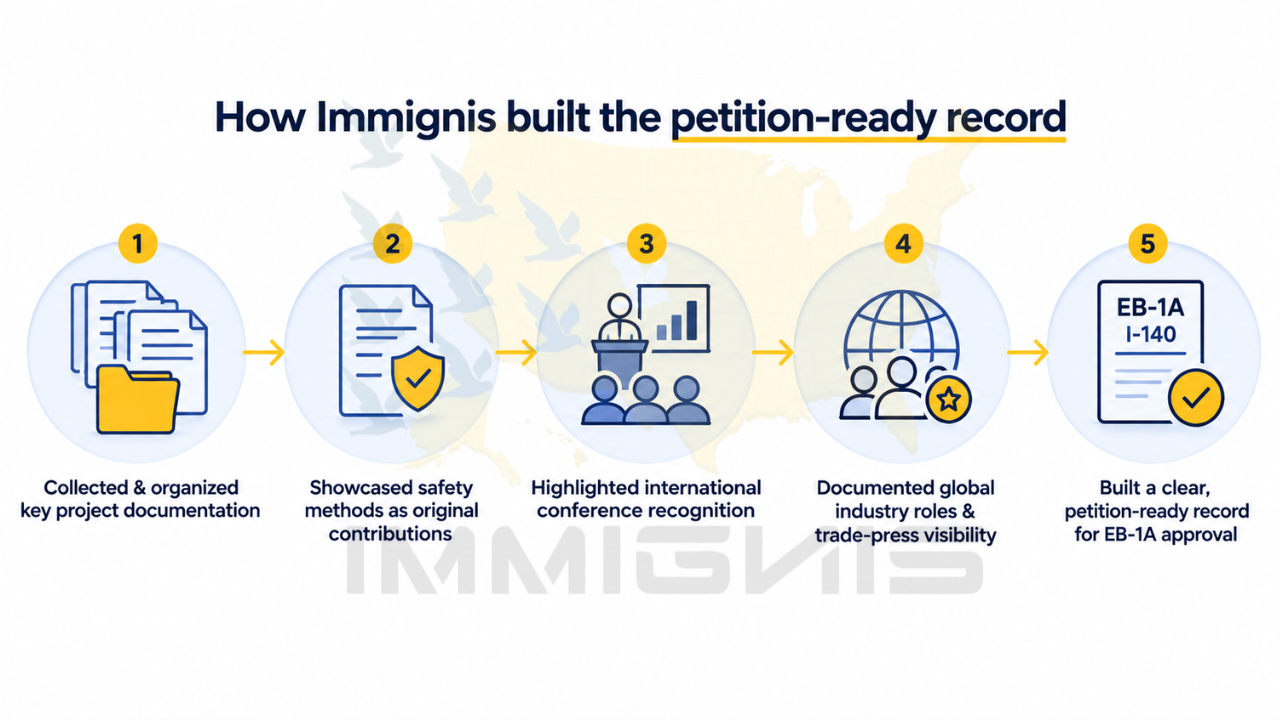
Immignis and Advance My Profile organized the record around the EB-1A criteria most naturally supported by the petitioner’s career: leading role, original contributions, published material, membership, and scholarly articles. The strategy was practical and field-specific.
The case did not rely on generic language about being an experienced engineer. It explained what offshore decommissioning requires, why enclosed-sea conditions matter, why the petitioner’s responsibilities were important, and how the evidence showed distinction in a new but strategically important field.
The profile-building work also focused on making confidential achievement reviewable. That meant using project-scope summaries, cleared evidence, carefully drafted expert letters, technical publication, industry participation, and public-facing visibility that did not compromise client or operator confidentiality.
This is the value of ethical immigration profile building. It does not invent public fame. It builds a lawful, truthful, and organized record from the professional achievements that already exist.
Why this case worked
The case worked because it solved the core evidence problem directly. Offshore decommissioning is important, but individual acclaim is not always publicly visible. The petition therefore built a record around responsibility, technical authorship, safety contribution, professional engagement, and independent validation.
Each evidence category supported the next. Project-scope documentation showed leading responsibility. Safety-methodology publication supported original contribution and scholarly/technical authorship. Conference presentations and trade commentary showed field visibility. Professional-society roles showed standing among peers. Expert letters explained why the field was important and why the petitioner’s work stood out.
Together, these materials made the petitioner’s role understandable to USCIS. The petition did not ask the officer to guess the significance of a decommissioning engineer. It explained the field, defined the niche, and then matched the evidence to that niche.
The broader lesson is that emerging fields can be strong EB-1A fields when the petition builds the right framework. Lack of traditional awards does not mean lack of extraordinary ability. It means the evidence must be translated more carefully.
Conclusion
The Azerbaijani offshore-decommissioning engineer’s EB-1A approval shows that specialized infrastructure-retirement work can support a persuasive extraordinary-ability petition when project leadership, technical methods, professional recognition, and field relevance are documented clearly.
The case succeeded because the petition turned confidential and technical work into a reviewable immigration profile through project-scope evidence, safety-methodology publication, decommissioning-conference visibility, offshore-engineering body roles, trade-press commentary, and expert validation.
The key lesson is simple: in complex engineering fields, the proof may not look like medals or mainstream press. It may look like safe execution, technical responsibility, methods others rely on, and a field that needs the petitioner’s expertise. Good profile building makes that evidence visible.
Frequently asked questions
Can an offshore-decommissioning engineer qualify for EB-1A?
Yes. An offshore-decommissioning engineer can qualify for EB-1A when the evidence shows leading roles, original contributions, technical publications, professional recognition, and field-specific distinction.
Can confidential engineering projects be used in an EB-1A petition?
Yes. Confidential projects can often be used through disclosure-safe summaries, cleared project descriptions, expert letters, role documentation, and non-proprietary evidence that explains the petitioner’s contribution without exposing restricted information.
Do conference presentations help engineering EB-1A cases?
Yes. Technical conference presentations can help show field visibility, professional recognition, and original contribution when the events are relevant and the petitioner’s role is clearly documented.
Can professional-society roles support EB-1A?
Yes. Professional-society roles, technical working groups, committee service, and selective memberships can support EB-1A when they show recognized standing or expert responsibility in the field.
Can an emerging field qualify for EB-1A if there are few awards?
Yes. Emerging fields may have limited award structures. A strong case can rely on leading-role evidence, original technical contributions, publications, professional-body roles, industry recognition, and expert validation.
Can Immignis and Advance My Profile help engineers build stronger immigration profiles?
Yes. Immignis and Advance My Profile help engineers, scientists, energy professionals, AI specialists, healthcare experts, and other technical professionals with ethical profile building, evidence development, professional visibility, and petition-ready EB-1A or EB-2 NIW profile-building strategy.
Build an EB-1A record around technical leadership, safety impact, and field-specific recognition
Many engineers already have strong achievements, but their evidence is often buried inside project files, internal reports, client work, technical systems, and confidential operations. Ethical profile building can turn that scattered record into a clear immigration case strategy.