Key facts at a glance
| Outcome | EB-1A approval for a British sports biomechanics researcher working at a U.S.-based performance institute. |
| Approval date | Final approval shown on September 5, 2024. |
| Field niche | Injury-prevention biomechanics for elite and youth athletes, with a focus on movement loading, landing mechanics, and training-program use. |
| Starting problem | He already had TV, podcast, and media visibility, but the public attention was not clearly tied to his scholarly work, applied biomechanics methods, or individual scientific contribution. |
| Path used | Ethical EB-1A profile building through focused publications, athlete-program adoption evidence, TV and podcast interviews tied to injury-prevention science, invited talks, sports-science award recognition and judging, peer review, a technical book chapter, and independent letters from biomechanics and performance experts. |
| USCIS EB-1A criteria activated | Published material, scholarly articles, original contributions, judging, recognized prizes or awards, and leading or critical role. |
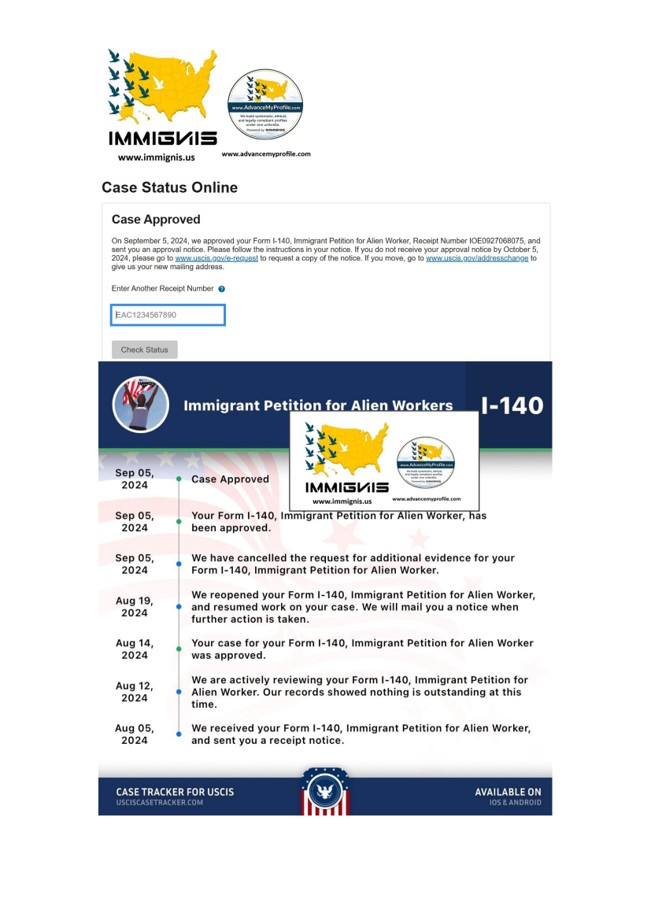
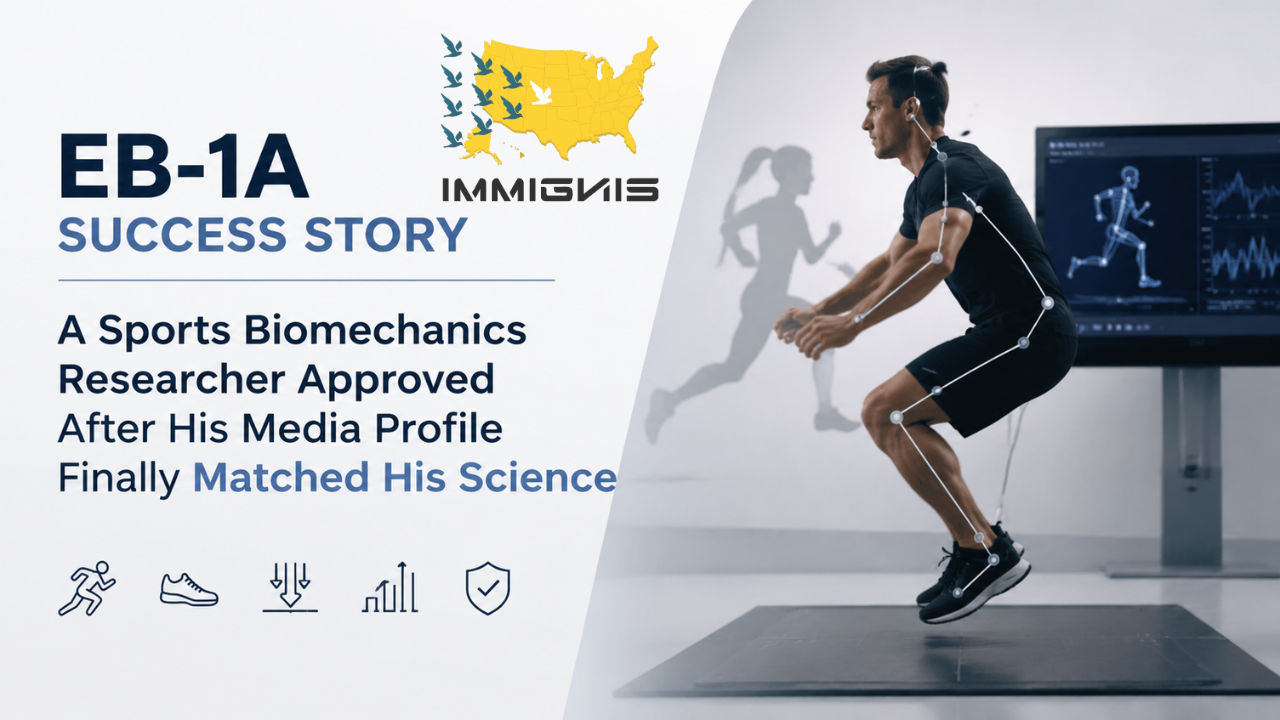
USCIS approved his Form I-140 on September 5, 2024. An EB-1A Sports Biomechanics Researcher, he had appeared on television and podcasts to talk about athletic movement, injury risk, and performance. He could explain why two athletes who complete the same drill may load a knee differently, or why a landing that looks acceptable at full speed can tell a different story when movement is measured carefully.
The problem was that his EB-1A record did not yet connect that public visibility to the science he had spent years developing.
A producer saw an expert who spoke well on camera. Colleagues at a U.S. performance institute saw a biomechanics researcher. USCIS needed one record that showed why those two versions of the same person belonged together.
The athlete on the screen was easier to see than the researcher behind the screen
An athlete can report pain in one place while the movement pattern contributing to the problem appears elsewhere. A force plate can show loading information that a television replay cannot. Youth athletes may be growing, changing strength, and learning movement skills while coaches are also asking them to train harder.
His work dealt with injury-prevention biomechanics in elite and youth athletes. He studied how movement, loading, and training context could be used to identify patterns worth addressing before they became part of a larger injury problem.
The public interviews were useful, but they had grown unevenly. Some coverage described him as a performance expert. Other appearances focused on broad sports stories. His published work and program methods were not always visible beside his name.
That gap mattered for an EB-1A extraordinary ability petition. Media attention can help, but it has to fit the applicant’s field and the underlying evidence. Fame in a general sense is not the same thing as a documented record of sustained acclaim in sports biomechanics.
Advance My Profile narrowed the record to injury-prevention biomechanics
The team reviewed his papers, program work, speaking history, media coverage, athlete-facing methods, and internal performance records with legal strategists and sports science specialists.
That meant the case would stay close to movement loading, landing mechanics, change of direction patterns, training exposure, and the way biomechanics information could be used inside athlete programs.
The distinction was useful because ‘sports performance’ was too broad. It could include nutrition, strength coaching, psychology, conditioning, scouting, or dozens of other subjects.
What USCIS needed to see in this sports biomechanics case
For original contributions, the petition had to identify his own biomechanics methods, program inputs, analytical work, or injury-prevention framework and then show why other professionals considered the work useful. A television appearance could not prove that by itself.
Athlete program adoption evidence was particularly important. The record needed to show where his methods entered a real performance or injury-prevention program, what role he played, and how the work was used. The petition avoided treating every athlete consultation as a field level contribution.
For published material, independent coverage had to discuss him, his work, or his expertise. His own papers belonged under scholarly authorship. Peer review supported judging only where he actually evaluated the work of other researchers.
Award evidence also needed context. The file documented the professional recognition being used, the basis for the honor, and its connection to sports science or injury-prevention work.
The publication plan followed movement problems seen in real athletes
With domain support, focused papers addressed injury-prevention biomechanics, loading patterns, landing mechanics, and the interpretation of movement data in elite and youth settings.
The aim was not to turn every internal observation into a journal article. The publishable topics had to be scientifically defensible and safe to discuss without exposing private athlete information.
One recurring issue was context. The same movement variable can carry different meaning depending on the athlete, the task, fatigue, training phase, and the way the data were collected.
His papers reflected that caution. They showed a researcher who worked with measurement and athlete programs and understood the limits of reducing injury risk to one score.
Program adoption evidence showed where the biomechanics entered practice
A performance institute may involve physicians, physical therapists, strength coaches, athletic trainers, data staff, and sport coaches. A successful program cannot simply be credited to one person.
Advance My Profile organized documents showing the researcher’s specific role in biomechanics assessment and the way his methods informed parts of injury-prevention or athlete monitoring programs.
The record used non-confidential program materials, role evidence, method summaries, and independent descriptions of how the work was applied. It did not identify protected medical information or invent injury-reduction percentages.
Sports scientists often have excellent program work and scattered public recognition, yet very little evidence connects the two. A free EB-1A profile assessment can show whether your research, athlete-program role, media record, judging, and independent recognition form a usable extraordinary-ability case.
Television and podcast work was rebuilt around the science he could defend
Future interviews stayed closer to biomechanics, youth injury prevention, athlete loading, landing and movement assessment, and the limits of simple injury risk claims. On podcasts, he could spend time explaining why screening data has to be interpreted with training history and sport context.
Television required shorter explanations. He learned to describe the same scientific ideas without turning them into guarantees. A movement pattern may justify further assessment or a training adjustment; it does not allow a scientist to predict with certainty that an athlete will be injured.
A book chapter and invited talks gave him room to teach the method
A chapter allowed more space than a media interview to discuss measurement, task selection, athlete context, and the use of biomechanics information in training decisions. It also became part of the authorship record considered with the rest of his scholarly work.
Invited talks were developed for sports-science and performance audiences. He discussed applied biomechanics, youth athlete development, and the practical limits of injury risk screening.
Judging and peer review showed that the field trusted his evaluation
Sports-science award programs invited him to judge work submitted by other professionals and researchers. The petition documented what he evaluated and the nature of the judging role. Attendance, sponsorship, or a ceremonial title would not have been enough.
Peer review added a research based form of judging. Journals and scholarly venues asked him to assess work in biomechanics, sports science, injury prevention, or related subjects.
The award evidence had to survive a sports-science reader, not just an immigration file
Advance My Profile reviewed the professional recognition in his record and documented the basis for the honor used in the petition. The evidence addressed the selection framework, the field of recognition, and the relationship between the award and his sports-science work.
Independent biomechanics letters connected the public expert to the scientific contributor
Immignis developed a referee strategy around biomechanics researchers and performance science leaders who could evaluate his scholarly work and applied methods.
The experts discussed the difficulty of translating movement data into injury-prevention decisions. Force, joint motion, task choice, athlete age, sport demands, and training history can all affect interpretation.
They then addressed his contribution using the publications, program evidence, book chapter, and professional record available to them.
The letters were strongest when they stayed technical. They explained how his methods were used, what question the work addressed, and why injury-prevention professionals paid attention to it.
Advance My Profile prepared evidence-based drafts for expert review. Referees could revise the wording and sign only what they considered accurate.
The letters gave USCIS an independent explanation of the science behind a person who was already publicly visible.
How the USCIS EB-1A criteria were supported
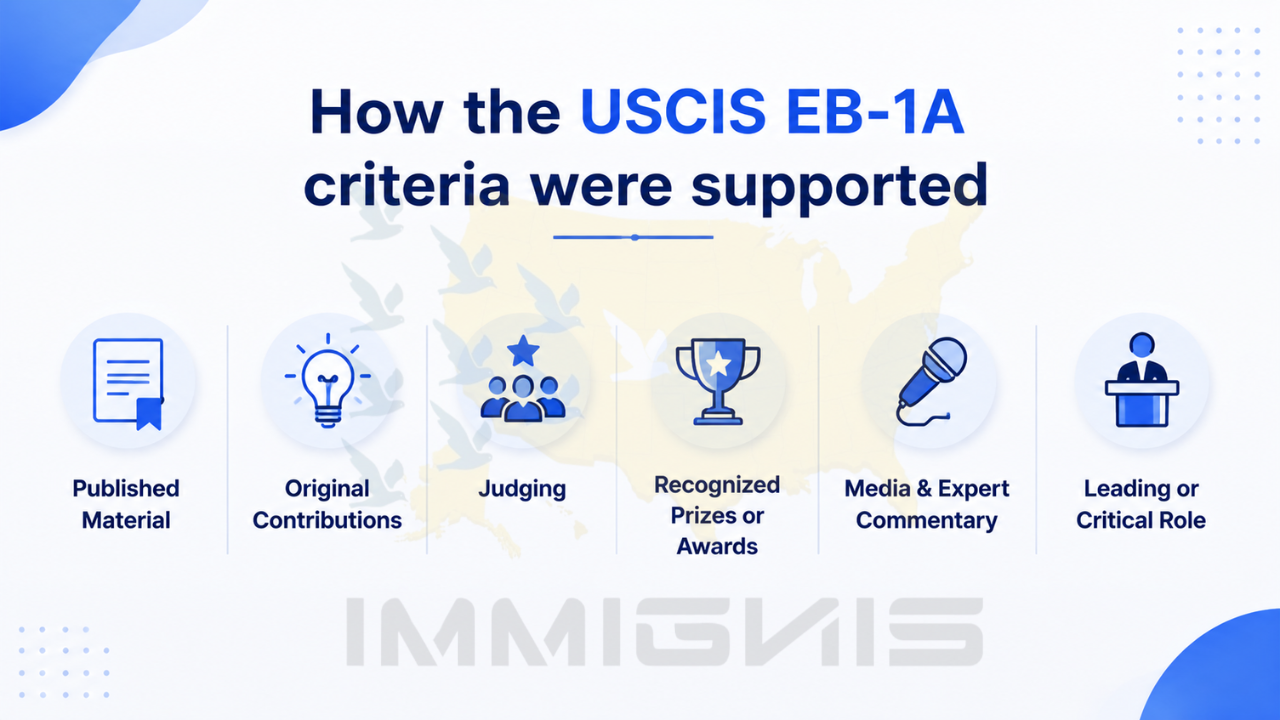
Published material: Independent television, podcast, and media coverage discussed his work or expertise in sports biomechanics, movement loading, and injury prevention.
Scholarly articles: Focused publications connected his authorship to injury-prevention biomechanics, landing mechanics, athlete loading, and the interpretation of movement data.
Original contributions: Athlete-program adoption evidence, documented biomechanics methods, applied use context, and independent expert letters explained his individual contribution and why other professionals used the work.
Judging the work of others: Sports-science award judging and genuine peer-review activity documented his evaluation of work submitted by other professionals and researchers.
Recognized prizes or awards: Field-relevant professional recognition was supported with evidence of the honor, its selection framework, and the connection between the award and his sports-science work.
Leading or critical role: Performance-institute and program evidence showed why significant athlete and injury-prevention work relied on his biomechanics judgment and methods.
If people know your name but cannot explain your scholarly contribution
A television segment, podcast audience, or strong social profile may help show recognition, but USCIS still evaluates the applicant’s extraordinary-ability evidence and the record as a whole.
For researchers and sports scientists, the useful question is whether the media record matches the field shown in the papers, methods, judging, and independent evidence.
Do not chase broader publicity simply because you already have a platform. Build the scholarly and applied record around the problem you actually study, and use public appearances to explain that work accurately.
FAQs
Can TV and podcast interviews help an EB-1A sports scientist?
Yes, when independent coverage is about the applicant or the applicant’s work in the field and the evidence fits the published-material requirements. Media visibility is stronger when it discusses the same expertise shown in the applicant’s scholarly, applied, and independent evidence. General sports commentary may be professionally useful but may add little to a biomechanics case if it is unrelated to the claimed field.
Can an athlete program support an EB-1A original-contribution claim?
It can when the applicant’s individual method or scientific contribution can be identified and the evidence shows recognized significance. Program records, role documentation, non-confidential adoption evidence, and independent expert letters can help explain how the work was used. The petition should separate the applicant’s contribution from the work of the wider coaching, medical, and performance team.
Does biomechanics screening predict which athlete will be injured?
Biomechanics data can help professionals study movement and loading patterns, but a single screening result should not be treated as a guaranteed injury prediction. Athlete age, sport, training exposure, prior injury, task selection, and other factors can affect interpretation. Strong sports-science communication should explain those limits.
Can peer review and sports-science award judging both count as judging for EB-1A?
Both may support the judging criterion when the applicant actually evaluates the work of others. Journal peer review involves assessment of scholarly work, while award judging may involve evaluating professional or scientific submissions. The evidence should document the applicant’s real evaluation role in each activity.
What kind of award evidence matters in an EB-1A sports-science case?
The record should identify the prize or award, the field in which it was granted, the basis for selection, and the evidence showing the applicant received the recognition. A participation certificate, speaking invitation, or nomination should not be presented as an award unless the facts support that characterization.
Do I need to be a professional athlete to qualify for EB-1A in sports biomechanics?
No. A sports biomechanics researcher can pursue EB-1A based on extraordinary ability in the scientific or professional field. Applicable evidence may include original contributions, scholarly authorship, judging, published material, awards, leading or critical roles, and sustained independent recognition. The case should be built around the researcher’s own field and evidence.
Build an EB-1A success story around the sports science behind your public profile
If you work in sports biomechanics, performance science, injury prevention, athlete monitoring, youth sports research, or applied sports technology, media visibility may be only one part of your record.
Immignis and Advance My Profile help connect genuine public recognition with authorship, applied evidence, judging, professional awards, leadership, and independent expert support in the field the client actually practices.
Start with a free EB-1A profile assessment and find out whether your sports-science work can be developed into a clearer, verifiable authority record.