Key facts at a glance:
| Outcome | EB-1A approval for a Mexican aerospace materials engineer working with a Canada based aerospace supplier. |
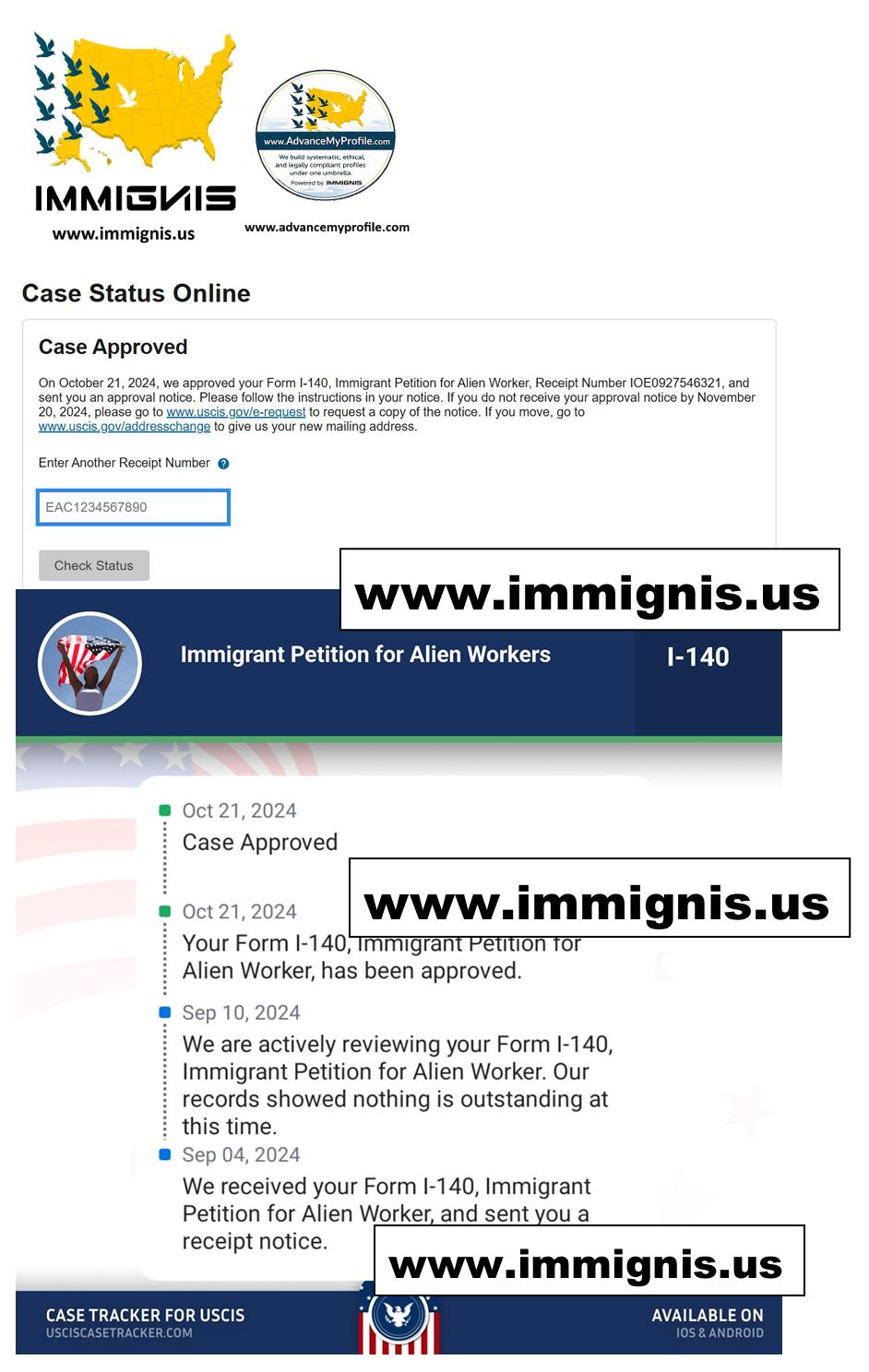
| Approval date | Approved on October 21, 2024. |
| Field niche | Lightweight composite materials for safer electric aircraft structures. |
| Starting problem | His strongest technical work was hidden inside employer projects, supplier documentation, and limited public authorship. |
| Path used | Ethical EB-1A profile building through technical papers, a standards facing aviation materials white paper, conference presentation, patent disclosure, electric aircraft safety media coverage, senior association membership, judging for aerospace student competitions, and independent expert letters. |
| USCIS EB-1A criteria activated | Original contributions, scholarly articles, published material, judging, memberships, and leading or critical role. |
EB-1A success story aerospace materials engineer case shows how hidden composite safety work became an approved petition. He had spent years thinking about weight, stress, heat, fatigue, and failure. Not in theory. In aircraft structures.
Every design decision had consequences. A lighter composite could extend range. A better material interface could improve safety. A stronger validation method could help electric aircraft move from promise to trust.
But when he first looked at his EB-1A record, it did not feel like the work of a recognized aerospace materials expert. It felt like a file full of hidden engineering.
His name was tied to internal projects. His best contribution lived inside supplier documentation, design reviews, test reports, and employer-controlled work. He had helped solve real problems in lightweight composite materials for safer electric aircraft structures, but outside his employer’s circle, there was not enough public evidence.
He had not built a small career. He had built a technical career that almost no immigration officer could see.
EB-1A Success Story Aerospace Materials Engineer: Why the Case Began With Hidden Work
This EB-1A success story began with a common problem in advanced engineering: the work was valuable, but the evidence was buried.
Aerospace materials engineering is rarely simple public work. Engineers often operate inside confidential supplier projects, controlled design programs, testing environments, and long product cycles. The strongest contribution may be known to internal teams, but not visible through publications, media, memberships, judging, or independent recognition.
That was the risk here.
His work touched the future of electric aviation, where composite materials are not decoration. They affect structure, safety, range, certification readiness, and lifecycle performance. For lighter aircraft to become safer aircraft, material decisions must be tested, explained, and trusted. Yet the original record did not show that field level story.
The EB-1A green card is a self petition immigrant category for people who can show extraordinary ability through sustained national or international acclaim and evidence that they are among the small percentage at the top of their field.
That definition sounded too public for him at first. He was not a keynote celebrity. He was not building a personal brand. He was doing technical work inside aerospace supply chains.
But EB-1A extraordinary ability does not require someone to be famous in the general public. It requires a strong, credible, documented record in a defined field. His problem was not lack of expertise. His problem was that his expertise had not yet been built into an adjudicator ready record.
What did Immignis see in the original record?
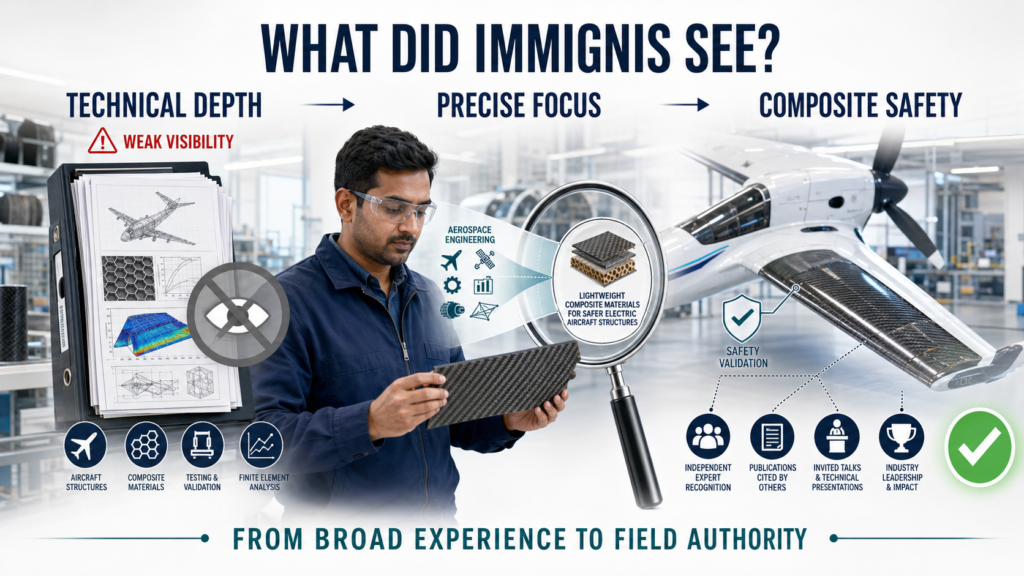
Immignis saw an engineer with real technical depth and a weak visibility structure.
The first assessment did not treat the case as ready simply because he worked in aerospace. A strong employer, senior projects, and difficult technical responsibilities can help, but they do not automatically prove EB-1A level standing.
The original file could have invited a Request for Evidence. An officer could have asked whether his work was only routine supplier engineering, whether the claimed contribution belonged to him personally, whether independent experts recognized his influence, and whether the record showed sustained acclaim outside one employer environment.
Immignis narrowed the case to one precise field: lightweight composite materials for safer electric aircraft structures.
That focus mattered. It moved the case away from broad aerospace engineering and into a specific authority niche. It allowed every later document to connect back to the same theme: composite safety, electric aircraft structures, material validation, and next generation aviation reliability.
What would the USCIS officer need to see?
The officer needed a field level record, not only a technical resume. In EB-1A adjudication, the first step is whether the evidence satisfies at least three regulatory criteria or a comparable evidence route. The second step is the final merits review, where the officer considers whether the full record shows sustained acclaim and top of field standing.
That is where many engineering cases become risky. The documents may show patents, projects, conference activity, or employment history, but the petition may still fail to explain why the person’s work matters beyond a job description. For this aerospace materials engineer, the central question was practical: did his work help advance safer, lighter, more reliable composite structures for electric aircraft?
The answer had to be shown through evidence. Not adjectives.
How did Advance My Profile build his authority record ethically?
The build began with a roadmap. Advance My Profile, powered by Immignis, started with a bespoke profile assessment. The legal strategy team, aerospace materials reviewers, technical writers, media team, and evidence team aligned the case before public facing work began. The goal was not to stretch his profile into unrelated aerospace topics. The goal was to make his real niche visible.
First came positioning. His profile moved from a general “aerospace materials engineer” description to a sharper identity: a specialist in lightweight composite materials for safer electric aircraft structures.
That phrase became the spine of the case. Then came authorship. With domain support, his technical work was shaped into a focused set of papers and technical articles related to composite safety, structural performance, and electric aircraft material challenges. The writing stayed inside his true field. It did not chase unrelated topics for volume.
The goal was coherence.A standards-facing white paper followed. It explained how composite material validation, lightweighting, and failure-risk awareness matter for aviation materials groups and electric aircraft stake holders. This was important because his strongest work was not only scientific. It was practical and safety-facing.
Immignis also helped prepare a patent disclosure where the underlying technical work supported an invention path. The petition did not treat the disclosure as a magic document. It treated it as one part of the original contribution story, connected to the materials problem his work addressed.
Conference visibility added another layer. A technical presentation helped place his work before a relevant aerospace audience. That gave the profile a public professional signal and connected his engineering methods to the field that evaluates them.
Public recognition was built carefully. The media team developed a plain-English explanation of electric-aircraft safety and composite materials for reputable aviation and technology outlets. The story was not exaggerated. It explained why lighter materials must still satisfy safety, durability, and trust requirements in aviation.
This mattered because expert visibility should not sound like advertising. It should show that the professional can explain an important field problem with authority.
Selective membership became another building block. Immignis reviewed senior grade selective association opportunities connected to aerospace, materials engineering, and advanced manufacturing. Where the eligibility rules matched his record, the membership evidence helped show that his work was being recognized through professional standards.
Judging evidence then strengthened the file. He was positioned to judge student aerospace competitions and evaluate emerging engineering work. That changed the record from “he works on aerospace projects” to “the field trusts him to assess the work of others.”
Independent letters completed the outside voice. Immignis did not rely only on employer statements. Letters from aerospace materials experts explained why his work mattered in the context of electric aircraft structures, composite safety, and next generation aviation.
The case was built by legal experts, domain reviewers, media professionals, and an evidence team working from one rule: every claim must be real, relevant, and verifiable.
Why did the ethical approach matter in an aerospace case?
In aerospace, credibility is not optional. A materials engineer cannot build a serious professional record through weak journals, fake awards, paid media, or claims that would collapse under technical review. Aviation is a safety field. If a profile looks artificial, it can hurt the petition and damage the professional’s name.
That is why Immignis treated this EB-1A profile as a career asset, not a one time immigration package.
The publications had to fit the field. The white paper had to speak to real aviation materials concerns. The media coverage had to explain the work without turning it into hype. The membership evidence had to be legitimate. The letters had to be specific. The petition had to separate the engineer’s individual contribution from employer owned projects.
This is the difference between profile building and profile decoration. Profile decoration is evidence added for appearance. It may look busy for one filing, but it can create denial risk and long-term embarrassment.
Profile building is different. It gives the professional a record they can own, explain, and continue using after approval.
Could your own EB-1A profile be stronger than it looks?
If your strongest work is technical, internal, proprietary, or hidden inside an employer, your problem may be documentation.
Immignis offers a free profile assessment for professionals who want to understand whether their record may support an EB-1A green card, EB-2 NIW, O-1, or another merit-based pathway. The assessment identifies the field niche, evidence gaps, realistic criteria, and the honest path forward.
Which USCIS EB-1A criteria did the final petition activate?
The final Form I-140 petition activated six USCIS EB-1A criteria and tied them into one final merits narrative.
- Original contributions: The petition showed how his work in lightweight composite materials supported safer electric aircraft structures. Technical documentation, the patent disclosure, white paper, and expert letters helped explain the significance beyond ordinary supplier engineering.
- Scholarly articles: Technical papers and field-specific articles showed authorship in composite materials, aviation structures, and electric-aircraft safety.
- Published material: Aviation and technology media coverage placed his expertise in public view and connected his name with electric aircraft material safety.
- Judging the work of others: Judging for aerospace student competitions showed that he was trusted to evaluate the work of emerging engineers and technical teams.
- Memberships: Fellow association membership supported recognition within aerospace and materials engineering communities.
- Leading or critical role: Employer and project evidence showed that his work formed part of important composite-material and aircraft-structure functions within a distinguished aerospace supplier environment.
The final merits argument did the heaviest work. It explained that the record was not a pile of disconnected activities. It showed a professional whose technical contribution, public authorship, recognition, judging, memberships, and independent validation all pointed to one field: safer lightweight composite structures for electric aviation.
For this case, the central message was simple. He was not only working on aerospace materials.
He was helping document and advance the material-safety knowledge needed for the next generation of electric aircraft.
What did EB-1A approval mean for him?
The EB-1A approval gave him both mobility and recognition. The approval also changed the professional value of his record. Before profile building, much of his work lived inside employer projects. After profile building, he had a clear niche, focused authorship, a standards-facing white paper, patent disclosure evidence, conference visibility, aviation safety media coverage, senior membership evidence, judging activity, and independent letters from experts.
The approval was the immigration result. The authority record was the professional asset.
If this sounds like you:
You may be an aerospace engineer whose strongest work sits inside supplier projects. You may be a materials scientist, mechanical engineer, EV aviation specialist, or advanced manufacturing expert whose contribution is real but hard to see from the outside.
That does not mean your record is weak. It may mean your record is unfinished.
The safest path is not to invent recognition. The safest path is to build the recognition your real work deserves: focused authorship, credible media, selective memberships, judging, patents or disclosures where appropriate, white papers, independent expert letters, and a final petition narrative that can survive review.
Do not build evidence you will need to hide later.
Build an EB-1A profile that supports your immigration future and strengthens your professional name.
FAQ
Can an aerospace materials engineer qualify for an EB-1A green card?
Yes. An aerospace materials engineer may qualify for an EB-1A green card if the record shows extraordinary ability through sustained acclaim and evidence under the USCIS EB-1A criteria. Strong evidence may include original contributions, technical publications, patents or disclosures, judging, selective memberships, published material, leading role evidence, and independent expert letters.
What if most of my aerospace work is confidential or owned by my employer?
Confidential or employer-owned work can still support an EB-1A petition if it is documented carefully. The record should separate safe, non-confidential evidence from protected technical information. White papers, public technical articles, independent letters, patent documents, conference activity, and role evidence can help make internal work visible without exposing employer secrets.
Does an EB-1A aerospace case require a granted patent?
No. A granted patent can help when it is real and relevant, but EB-1A does not require every engineer to have a patent. Patent disclosures, filed applications, technical adoption evidence, publications, expert letters, and field recognition can also support the original contribution argument when they are tied to genuine significance.
What causes RFE risk in an EB-1A engineering petition?
RFE risk often increases when the petition describes technical work but does not prove field-level significance. USCIS may question whether the work belongs to the applicant personally, whether it is recognized outside the employer, and whether the full record shows sustained acclaim. A strong final-merits narrative connects the evidence instead of leaving the officer to guess.
Is EB-1A better than EB-2 NIW for aerospace engineers?
EB-1A and EB-2 NIW are different pathways. EB-1A focuses on extraordinary ability and sustained acclaim, while EB-2 NIW focuses on a proposed endeavor with national importance and whether the applicant is well positioned to advance it. Some aerospace engineers may start closer to EB-2 NIW and later build toward EB-1A if the recognition record becomes strong enough.
Do I need a U.S. degree for EB-1A?
No specific U.S. degree is required for EB-1A by itself. A degree can help explain technical expertise, but USCIS focuses on evidence of extraordinary ability, such as original contributions, scholarly work, judging, published material, memberships, leading roles, and other recognition. Education supports the story but does not replace acclaim evidence.
Build an EB-1A success story around evidence you can trust
If you work in aerospace materials, composite structures, electric aircraft, advanced manufacturing, or safety critical engineering, your strongest achievements may already exist. They may simply be hidden, scattered, or too internal to help without a strategy.
Immignis helps professionals build EB-1A profiles through ethical evidence development, field specific positioning, reputable visibility, independent validation, and petition ready storytelling.