Key facts at a glance:
| Outcome | EB-1A approval for an Italian biomedical imaging physicist working in a U.K based hospital system. |
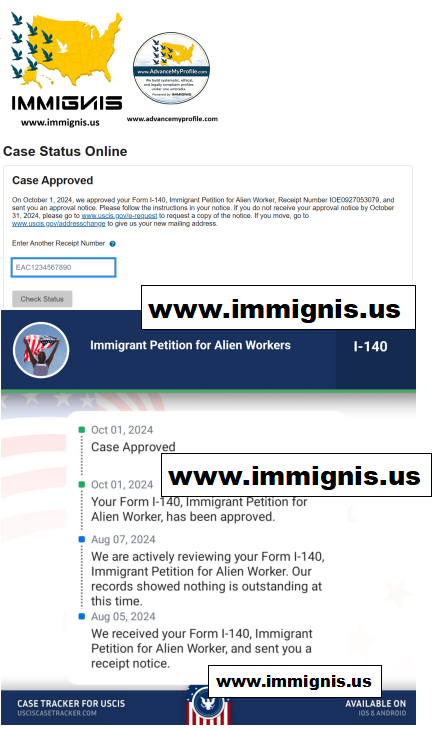
| Approval date | Approved on October 1, 2024. |
| Field niche | Low dose imaging protocols for pediatric diagnostics. |
| Starting problem | His clinical protocol work was valuable, but under recognized outside the hospital. |
| Path used | Ethical EB-1A profile building through first author clinical physics papers, protocol adoption documentation, invited hospital grand rounds, professional society involvement, peer review roles, radiation safety media explanation, and independent imaging physicist letters. |
| USCIS EB-1A criteria activated | Scholarly articles, original contributions, published material, judging, memberships, and leading role. |
Why did a strong clinical imaging career still look risky for EB-1A?
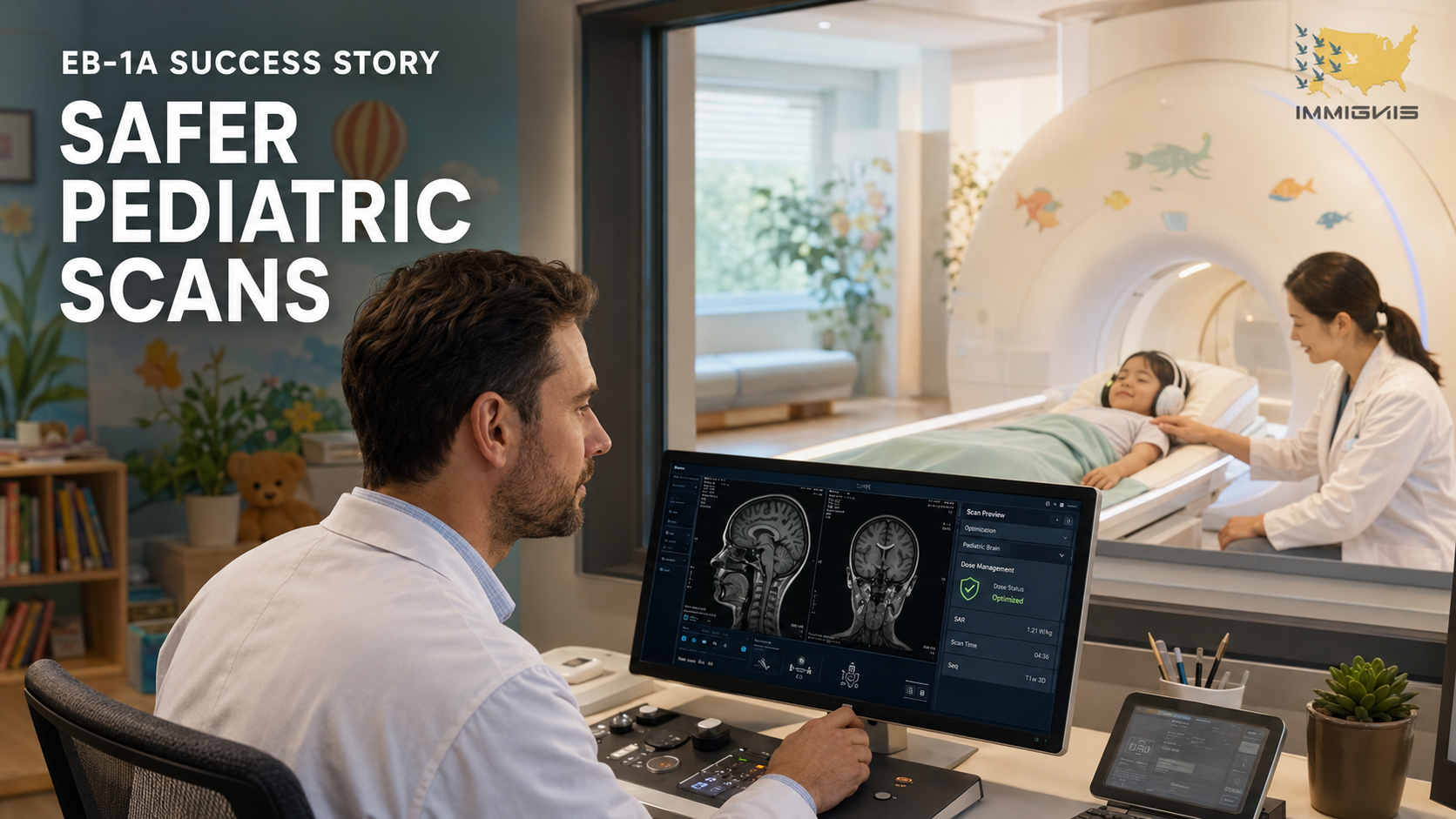
EB-1A success story imaging physicist approved through pediatric scan safety evidence. He spent his working days inside a problem most families never see. A child needs an answer from an imaging study. The clinician needs diagnostic clarity. The physicist watches the protocol, the exposure, the image quality, and the dose.
In pediatric diagnostics, the margin is narrow. Lower the dose too much and the image may lose value. Accept too much dose and the patient carries a burden that careful protocol design could have reduced.
That was the kind of work he did inside a hospital system in the United Kingdom. He helped refine low-dose imaging protocols for children, supported clinical teams, and contributed to safer diagnostic pathways. Yet when his EB-1A record was first reviewed, the public evidence did not match the value of the work.
Hospital colleagues knew the contribution. The protocols existed. The clinical usefulness was real. Outside the hospital, the record looked quiet.
He had not built an ordinary career. He had built a careful one, and careful work is often the hardest to prove.
The EB-1A green card is a self-petition immigrant category for people who can show extraordinary ability through sustained national or international acclaim and evidence that they are among the small percentage at the top of their field.
That standard felt distant at first. He did not see himself as a public figure in medical imaging. He saw himself as the person behind protocols, quality checks, scanner settings, clinical meetings, and patient-safety decisions.
w a coherent professional record: authorship, original contribution, public recognition, peer review, memberships, leading role, and independent validation in one medical-imaging niche.
In this case, the key question was not whether he worked in a hospital. The key question was whether his work had become visible enough to show field level value.
How did Advance My Profile build the authority record ethically?
The build started with a roadmap, not a pile of documents.
Advance My Profile, powered by Immignis, first separated confidential clinical material from evidence that could be safely documented. Patient information stayed protected. Employer sensitive details stayed out. The strategy focused on non-confidential methods, adoption documentation, publication quality analysis, and independent expert interpretation.
First came positioning. His profile moved from a broad biomedical imaging background to a defined authority niche: low-dose imaging protocols for pediatric diagnostics. That niche gave the case medical, technical, and public safety meaning.
Then came authorship. With domain support, his clinical physics knowledge was developed into first author papers focused on pediatric dose optimization, protocol design, diagnostic image quality, and radiation safety decision making. The work stayed inside his real field. It did not chase unrelated topics to look bigger.
Protocol adoption evidence became a major pillar. Immignis helped organize documentation showing how the protocols were used, how they were evaluated, and why the work mattered in a hospital environment. The evidence was written carefully so it could explain impact without exposing protected clinical information.
Invited hospital grand rounds gave the profile a professional teaching signal. This was important because the case was not only about written work. It showed that clinical teams treated him as someone who could explain complex imaging safety issues to physicians, technologists, trainees, and hospital stakeholders.
Professional-society involvement added another layer. Relevant imaging, radiation protection, and clinical physics communities helped place the profile inside a recognized professional field. Membership evidence was used where it reflected credible professional standing.
Peer review roles strengthened the judging criterion. When journals or professional venues asked him to evaluate work by others, the record shifted. He was no longer only someone whose work was reviewed. He was also trusted to review the field’s work.
Media explanation was handled with care. The goal was not celebrity coverage. It was to help the public understand pediatric radiation safety, why low-dose imaging matters, and how physicists support safer diagnostic decisions behind the scenes.
Independent letters completed the outside voice. Immignis worked with the client to secure letters from imaging physicists and medical imaging experts who could explain why the work mattered beyond a single hospital department.
Everything had to be real, relevant, and verifiable. No weak journals. No decorative recognition. No public claims that would embarrass the professional later.
Why did ethics matter so much in a pediatric diagnostics case?
Medical imaging is a trust field. Pediatric imaging is even more sensitive.
A profile built with inflated claims, fake media, or weak publication venues would not only create immigration risk. It could damage professional credibility with clinicians, hospital leaders, physicists, and future collaborators.
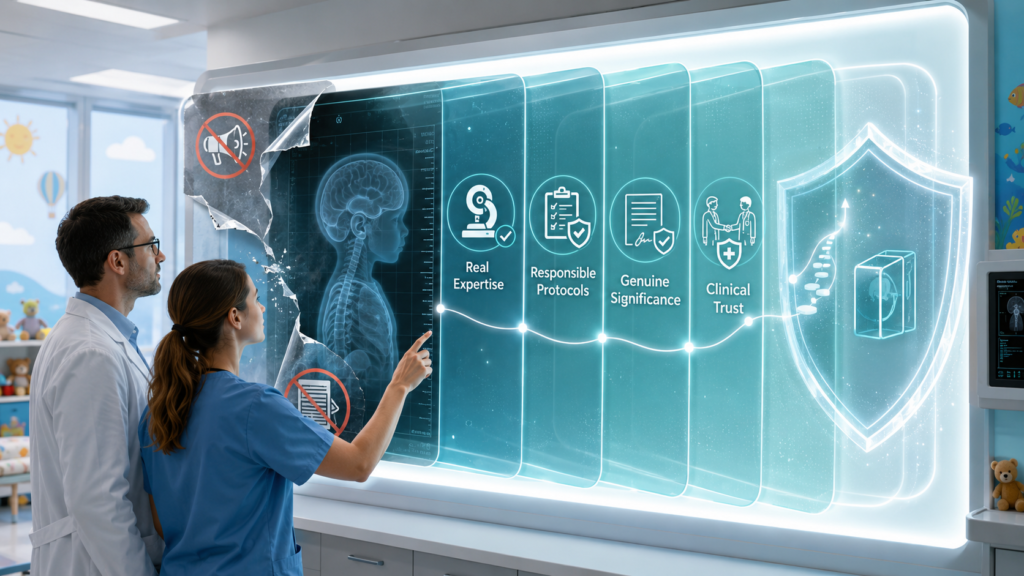
Immignis treated the profile as something the client would carry into his future work. The publications had to match his real expertise. The protocol evidence had to stay clinically responsible. The media explanation had to educate, not exaggerate. The letters had to discuss genuine significance.
That is the difference between profile building and profile decoration. Profile decoration is built for one filing. Profile building creates evidence the professional can continue to own, present, and build upon.
Could your own EB-1A profile be stronger than it looks?
If your strongest work lives inside a hospital, lab, clinical department, device company, or employer system, your issue may be documentation.
Immignis offers a free profile assessment for professionals who want to understand whether their record may support an EB-1A green card, EB-2 NIW, O-1, or another merit based pathway. The assessment identifies the niche, evidence gaps, possible criteria, and the honest path forward.
Which USCIS EB-1A criteria did the final petition activate?
The final Form I-140 petition activated six USCIS EB-1A criteria and tied them into a pediatric imaging final merits narrative.
Scholarly articles: First author clinical physics papers showed authorship in low-dose pediatric imaging, radiation safety methods, and diagnostic protocol design.
Original contributions: Protocol adoption evidence and independent letters explained how his work supported safer pediatric diagnostics and helped show significance beyond routine hospital duties.
Published material: Technical media and public facing radiationsafety coverage placed his expertise in view and connected his name with pediatric imaging safety.
Judging the work of others: Peer review assignments showed that professional venues trusted him to evaluate work in medical imaging, clinical physics, and radiation protection.
Memberships: Professional-society involvement helped show standing inside imaging physics and radiation safety communities.
Leading or critical role: Hospital documentation showed that his protocol work formed part of important pediatric imaging functions within a distinguished clinical environment.
The final merits section did the heaviest work. It showed that these were not disconnected documents. They formed one record around one field: safer low dose imaging protocols for children.
What did EB-1A approval mean for him?
The approval turned careful hospital work into a visible professional record.
Approved on October 1, 2024, the case showed how a biomedical imaging physicist could move from internal clinical contribution to EB-1A approval when the evidence was built around a precise field niche.
The result gave him a self petition green card path through Form I-140 without employer sponsorship and without PERM labor certification.
It also left him with a stronger professional platform. He had a defined niche, authorship, protocol adoption evidence, invited teaching activity, society involvement, peer-review roles, public radiation safety explanation, and independent letters from imaging experts.
The approval was the immigration result. The authority record became the career asset.
If this sounds like you
You may be a biomedical engineer, imaging physicist, medical device specialist, hospital scientist, or clinical technologist whose best work is hidden inside systems other people use every day.
That does not mean your record is weak. It may mean your record is unfinished.
The safest path is to build recognition from real work: focused publications, adoption evidence, professional teaching, peer review, field-specific media, expert letters, and a final petition narrative that explains why the work matters.
Do not build evidence you will need to hide later. Build an EB-1A profile that strengthens your professional name and supports your immigration future.
FAQ
Can a biomedical imaging physicist qualify for an EB-1A green card?
Yes. A biomedical imaging physicist may qualify for an EB-1A green card if the record shows extraordinary ability through sustained acclaim and evidence under the USCIS EB-1A criteria. In a pediatric imaging case, useful evidence can include clinical physics papers, protocol adoption documentation, peer review, professional society involvement, published material, leading role evidence, and independent expert letters.
Can hospital protocol work support EB-1A if it was never commercialized?
Yes, protocol work can support EB-1A when it is documented as an original contribution with field level significance. For low dose pediatric imaging, the petition should explain the applicant’s individual role, the clinical problem addressed, the method used, and why independent experts consider the work important.
How can pediatric imaging work be documented without exposing patient data?
The evidence should use safe, non-confidential documentation. Protocol summaries, adoption descriptions, publications, expert letters, and public educational material can explain the contribution without disclosing patient information, protected health records, or employer-sensitive details.
What makes low dose imaging work different from routine hospital quality improvement?
The difference is proof of individual technical judgment and significance. A strong petition should show that the applicant designed, refined, validated, taught, or influenced protocols in a way that required specialized clinical-physics expertise and gained recognition beyond ordinary assigned duties.
Do peer review and grand rounds help an EB-1A medical imaging petition?
They can help when they are tied to the same field niche. Peer review supports the judging criterion because it shows the applicant was trusted to evaluate other professionals’ work. Grand rounds or invited teaching can support the overall recognition narrative when they show that clinical teams relied on the applicant’s expertise.
Does EB-1A require the applicant to be a physician or radiologist?
No. EB-1A is based on extraordinary ability in a field, not a specific clinical title. Imaging physicists, biomedical engineers, medical device specialists, and other technical experts may qualify if their evidence shows recognized achievement and sustained acclaim in their area of expertise.
Build an EB-1A success story around evidence you can trust
If you work in biomedical imaging, clinical physics, radiation safety, pediatric diagnostics, medical devices, or another technical healthcare field, your strongest achievements may already exist. They may simply be hidden, scattered, or too internal to help without a strategy.
Immignis helps professionals build EB-1A profiles through ethical evidence development, field specific positioning, reputable visibility, independent validation, and petition ready storytelling.