Key facts at a glance:
| Outcome | EB-1A approval for an Argentine quantum chemistry researcher working in a Germany based university lab. |
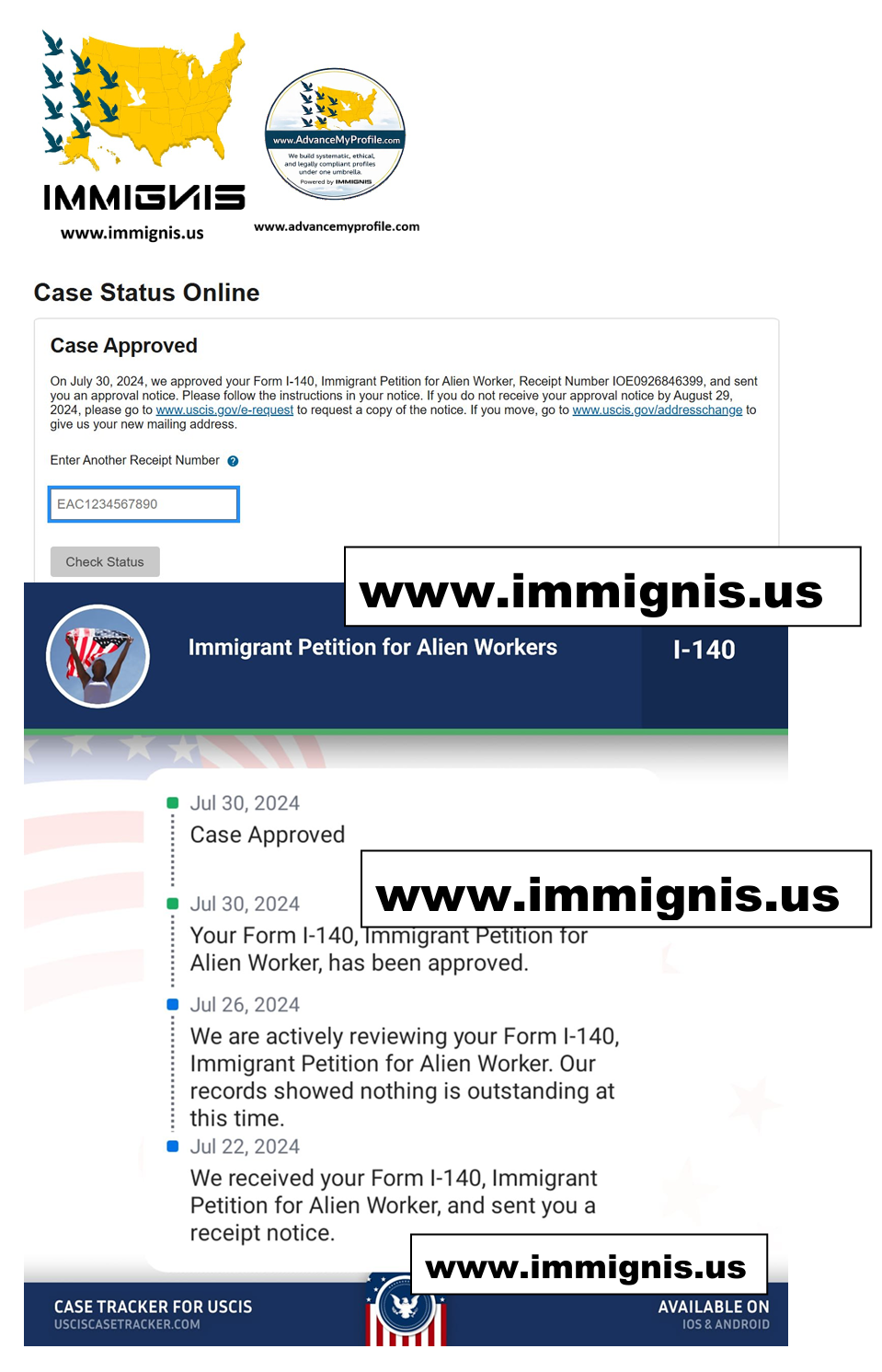
| Approval date | Approved on July 30, 2024. |
| Field niche | Quantum chemistry models for cleaner catalyst discovery. |
| Starting problem | He had publications, but his recognition was scattered across different chemistry topics and did not yet show one clear authority niche. |
| Path used | Ethical EB-1A profile building through focused computational-chemistry papers, citation strategy, invited talks, conference committee service, peer review, a technical book chapter, a policy style clean chemistry brief, selective professional positioning, and independent expert letters. |
| USCIS EB-1A criteria activated | Scholarly articles, original contributions, judging, published material, and memberships. |
He had papers What he did not have was a field narrative.
He already looked productive on a curriculum vitae.
There were publications. There were collaborations. There were technical methods that only a small group of people could properly understand. In a Germany based university lab, he had spent years working on quantum chemistry models that could help researchers discover cleaner catalysts with less trial and error.
But his EB-1A record had a quiet weakness.
The work was spread across different chemistry topics. One paper pointed toward reaction mechanisms. Another moved toward computational modeling. Another connected to materials or catalysis. To a scientist, the pattern made sense. To a USCIS officer, it could look scattered.
He had not built an empty record. He had built a record without one visible center.
Why did this EB-1A success story begin with scattered recognition?
The challenge was not whether he was serious. The challenge was whether the record showed sustained acclaim in one defined field. Quantum chemistry is a technical field, and catalyst simulation is even more specialized. A researcher can spend years building models, refining assumptions, comparing reaction pathways, and improving the way chemists think about catalytic activity. Yet if the evidence is distributed across many topics, the petition can lose force.
The EB-1A green card is a self petition immigrant category for people who can show extraordinary ability through sustained national or international acclaim and evidence that they are among the small percentage at the top of their field. For this researcher, that definition raised a difficult question. Was he recognized as a leading voice in one precise area, or was he simply a strong academic with several chemistry publications?
He had papers. What he did not have was a field narrative. He already looked productive on a curriculum vitae.
There were publications. There were collaborations. There were technical methods that only a small group of people could properly understand. In a Germany-based university lab, he had spent years working on quantum chemistry models that could help researchers discover cleaner catalysts with less trial and error.
But his EB-1A record had a quiet weakness.
The work was spread across different chemistry topics. One paper pointed toward reaction mechanisms. Another moved toward computational modeling. Another connected to materials or catalysis. To a scientist, the pattern made sense. To a USCIS officer, it could look scattered.
He had not built an empty record. He had built a record without one visible center.
Why did this EB-1A success story begin with scattered recognition?
The challenge was not whether he was serious. The challenge was whether the record showed sustained acclaim in one defined field. Quantum chemistry is a technical field, and catalyst simulation is even more specialized. A researcher can spend years building models, refining assumptions, comparing reaction pathways, and improving the way chemists think about catalytic activity. Yet if the evidence is distributed across many topics, the petition can lose force.
The EB-1A green card is a self-petition immigrant category for people who can show extraordinary ability through sustained national or international acclaim and evidence that they are among the small percentage at the top of their field. For this researcher, that definition raised a difficult question. Was he recognized as a leading voice in one precise area, or was he simply a strong academic with several chemistry publications?
That question shaped the entire case.
What did Immignis see in the original record?
Immignis saw a researcher with real substance, but a profile that needed discipline. The first assessment did not treat his existing publications as enough by themselves. Publications are important in an EB-1A research case, but USCIS still asks what those publications prove. Do they show authorship only, or do they show original contribution? Do they reflect a coherent field identity, or do they point in too many directions?
The original record could have attracted a Request for Evidence. An officer could have asked whether the work had significance beyond normal academic productivity, whether the citation pattern truly supported his claimed niche, whether his judging activity showed field trust, and whether independent experts could explain his contribution in plain terms.
Immignis narrowed the case to one field: quantum chemistry models for cleaner catalyst discovery. That narrow positioning changed the petition. His record was no longer presented as general computational chemistry. It became a story about using molecular simulation to support cleaner, more efficient catalyst discovery.
What would USCIS need to see in a computational chemistry EB-1A case?
USCIS needed to see that his work was not just a series of technical papers. For this case, the key issue was whether his quantum chemistry models had become part of a recognizable contribution to clean catalyst research. The officer needed to understand how his modeling work helped address a real chemistry problem: finding or evaluating catalysts in ways that can reduce waste, improve selectivity, or support cleaner chemical processes.
The evidence also had to show that the contribution was his. In university research, credit can become blurred across labs, co-authors, supervisors, and collaborations. The petition had to isolate his role in developing, applying, or advancing the modeling approach.
The final merits issue was especially specific. A pile of papers across chemistry would not be enough. USCIS needed to see a concentrated record: focused publications, citations around the same modeling niche, invited talks in catalysis or computational chemistry, conference committee service, peer review, a book chapter, a clean-chemistry policy brief, and independent letters that all pointed to the same conclusion.
He was not only publishing in chemistry. He was helping shape how cleaner catalysts could be studied through quantum level modeling.
How did Advance My Profile turn scattered work into an authority record?
The build began with a hard reset of the profile. Advance My Profile, powered by Immignis, started with a bespoke assessment. The legal strategy team, computational chemistry reviewers, domain PhD support, content team, and evidence team reviewed the record before deciding what should be built. The goal was not to add random activities. The goal was to make one scientific identity visible.
First came niche positioning. His profile moved from a broad computational chemistry description into a cleaner and stronger identity: a quantum chemistry researcher focused on catalyst simulation for cleaner chemical discovery.
That gave every later document a job.
Then came focused authorship. With domain support, his publication plan was organized around catalyst simulation, reaction modeling, and cleaner chemistry applications. The team did not chase volume. It built continuity. Each new article strengthened the same technical arc and helped later readers associate his name with one research area.
A citation strategy followed. This did not mean artificial citation building. It meant making the work easier for the right readers to find, cite, and connect. Titles, abstracts, keywords, conference visibility, author profiles, and topic alignment were tightened so that the record could grow organically around the catalyst simulation niche.
Invited talks became a public turning point. Instead of being known only through journal articles, he began appearing before relevant audiences as someone who could explain how quantum chemistry models can support cleaner catalyst discovery. Those talks helped move the record from publication history to field recognition.
Conference committee service and peer review added another layer. In EB-1A terms, it matters when a researcher moves from being evaluated to evaluating others. His reviewing work and committee activity helped show that the field trusted his judgment in computational chemistry and catalysis-related research.
The technical book chapter gave the profile weight. It allowed him to explain a slice of the field with depth, not only report isolated results. A book chapter in a relevant scientific context can help show that the researcher is not just participating in the literature, but contributing to how the field is taught, organized, and understood.
Immignis also helped shape a policy style brief for clean-chemistry research networks. This was important because catalyst discovery is not only an academic problem. Cleaner catalysts connect to greener manufacturing, lower energy processes, and chemical innovation with environmental value. The brief translated technical modeling into a language that clean-chemistry stakeholders could understand.
Independent expert letters completed the outside record. The letters were not built around empty praise. They explained the scientific significance of his modeling work, the coherence of his catalyst-simulation niche, and why his contribution mattered beyond his immediate lab. The file became stronger because the story became true in public.
Why did ethical profile building matter in a science case?
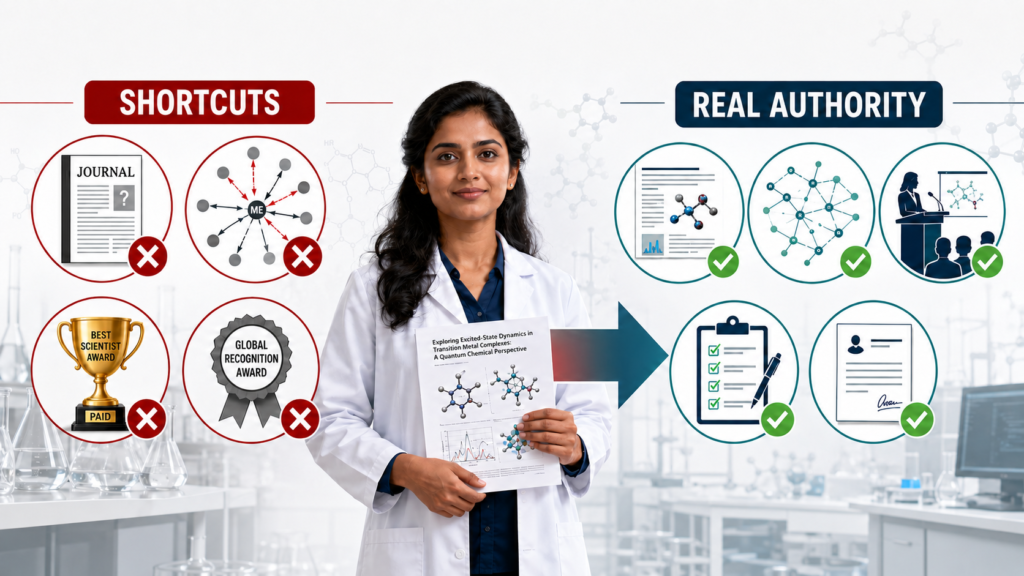
In scientific immigration cases, weak evidence can damage more than the petition.
A researcher cannot afford questionable journals, citation games, paid recognition, or awards that do not belong to the field. Those shortcuts may look attractive for a moment, but they can create a record that a serious scientist would never want a journal editor, future collaborator, university committee, or USCIS officer to examine closely.
Immignis treated the profile as a professional asset. Publications had to fit the niche. Citations had to grow through relevance. Talks had to match the science. Peer review and committee work had to be real. The policy brief had to connect naturally to clean-chemistry research. Letters had to be specific and independent.
That is the difference between building authority and decorating a file. Profile decoration tries to impress quickly. Profile building creates evidence the researcher can own for life.
Could your own EB-1A profile be stronger than it looks?
If your publications are real but scattered, your issue may be positioning. Immignis offers a free profile assessment for researchers, engineers, founders, and specialists who want to understand whether their record may support an EB-1A green card, EB-2 NIW, O-1, or another merit-based pathway. The assessment identifies the field niche, evidence gaps, realistic criteria, and the honest path forward.
Which USCIS EB-1A criteria did the final petition activate?
The final Form I-140 petition activated five USCIS EB-1A criteria and tied them into one final-merits argument.
Scholarly articles: His focused publications in computational chemistry and catalyst simulation showed authorship in the claimed field. The petition did not present the papers as disconnected academic output. It connected them to cleaner catalyst discovery.
Original contributions: The petition explained how his quantum chemistry modeling work supported cleaner catalyst research by helping evaluate reaction pathways, catalytic behavior, and molecular level mechanisms. The book chapter, focused papers, citation evidence, policy style brief, and independent letters supported the significance argument.
Judging the work of others: Peer-review assignments and conference committee service showed that he had been trusted to evaluate scientific work by others in his field.
Published material: Public facing scientific materials, research-network visibility, and the policy style clean chemistry brief helped place his work before audiences outside his immediate lab.
Memberships: Selective or field-relevant professional positioning helped show that his work belonged within recognized chemistry and computational science communities.
The final merits section did the heaviest work. It explained that the record was not a broad chemistry résumé. It was a concentrated authority record in quantum chemistry models for cleaner catalyst discovery.
The approval followed the logic of the evidence. One field. One contribution story. One coherent record.
What did EB-1A approval mean for him?
It gave him a self-petition green card path without employer sponsorship and without PERM labor certification. It also gave him a public scientific identity that made his strongest work easier to understand, cite, and evaluate.
Before profile building, his record looked like a productive researcher spread across several chemistry topics. After profile building, he had a sharper niche, focused publications, a citation strategy, invited talks, conference committee service, peer review, a technical book chapter, a clean chemistry policy brief, and independent expert letters.
The EB-1A approval was the result. The authority record was the asset he kept.
If this sounds like you:
You may be a researcher with publications but no clear field narrative. You may work in computational chemistry, catalysis, materials science, molecular modeling, drug discovery, environmental chemistry, or another technical field where your best contribution is difficult to explain outside expert circles.
That does not mean your record is weak. It may mean your record is unfinished.
The safest path is not to invent recognition. The safest path is to organize your real work around a credible niche, build focused authorship, grow organic citations, pursue real peer review and committee roles, develop serious thought leadership, secure independent expert letters, and present the petition in a way USCIS can understand.
Do not build evidence you will need to hide later.
Build an EB-1A profile that strengthens both your immigration future and your scientific name.
Can a quantum chemistry researcher qualify for an EB-1A green card if their publications are spread across different topics?
Yes. A quantum chemistry researcher may qualify for an EB-1A green card if the record can be organized into a clear field of expertise and supported by evidence of sustained acclaim. When publications are scattered, the strategy should identify the strongest common thread and build the final petition around that focused niche.
How can catalyst simulation work support the original contributions criterion?
Catalyst simulation work can support original contributions when the evidence shows that the researcher’s models, methods, or findings affected how others study or evaluate catalytic systems. Strong support can come from focused publications, citations, technical adoption, a book chapter, policy-facing materials, and independent expert letters explaining the significance.
Do citations alone prove extraordinary ability in computational chemistry?
No. Citations can help, but they rarely carry the whole case by themselves. USCIS looks at the total record, so citations are stronger when they are tied to a coherent research niche, peer review, invited talks, conference roles, memberships, and expert letters.
Why would a policy style clean-chemistry brief help a scientific EB-1A case?
A policy style brief can help when it translates highly technical research into a field facing contribution for clean chemistry, sustainable manufacturing, or research networks. It should not be generic advocacy. It should connect the researcher’s actual expertise to a real scientific or industry problem.
Can work completed in a Germany-based lab support a U.S. EB-1A petition?
Yes. EB-1A can rely on national or international acclaim, and the strongest evidence may come from work performed outside the United States. The petition still needs to show that the applicant intends to continue working in the field and that the record establishes extraordinary ability in that field.
What makes peer review and conference committee service important for researchers?
Peer review and conference committee service show that the field trusts the researcher to evaluate the work of others. In a research EB-1A case, this can be especially valuable because it shows movement from producing scholarship to helping shape quality standards in the field.
Do I need a U.S. degree or U.S. employer for EB-1A?
No specific U.S. degree or U.S. employer is required for EB-1A by itself. EB-1A is a self petition category, so the focus is on evidence of extraordinary ability, sustained acclaim, and continued work in the field.
Build an EB-1A success story around evidence you can trust
If you work in quantum chemistry, computational chemistry, catalysis, clean chemistry, molecular modeling, or another research field where your contribution is strong but scattered, your record may already contain the beginning of an EB-1A success story.
Immignis helps professionals build EB-1A profiles through ethical evidence development, field specific positioning, reputable visibility, independent validation, and petition ready storytelling.