Key facts at a glance
| Outcome | EB-1A approval for a Malaysian physician-innovator working at a U.S.-based digital health company. |
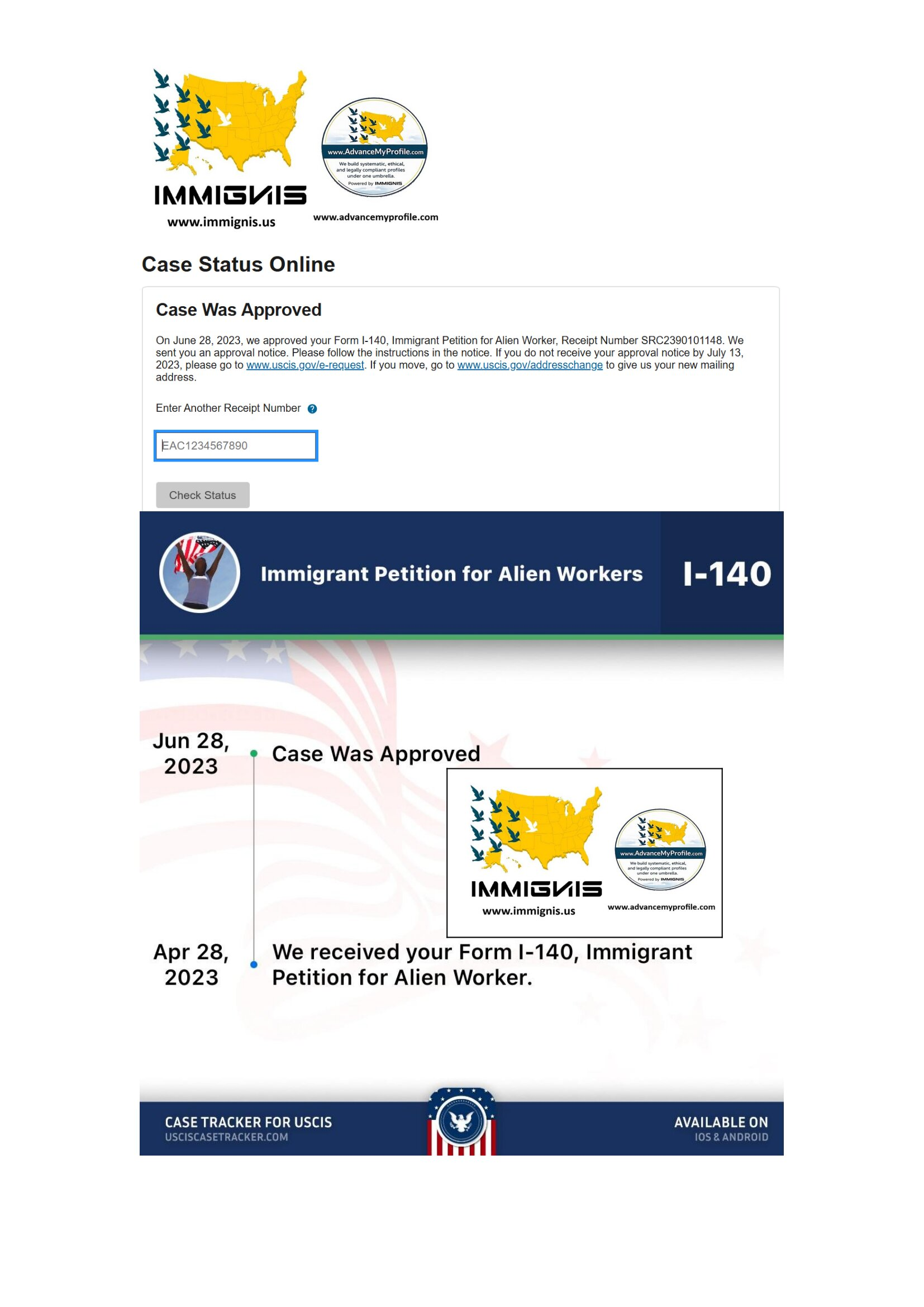
| Approval date | Approved on June 28, 2023. |
| Field niche | Remote chronic-care pathways for rural patients, with a focus on follow-up, escalation, home-generated data, and continuity between virtual encounters. |
| Starting problem | His clinical work had real impact, but the public record was thin. Most evidence lived inside care operations and digital-health programs, with limited authorship, judging, media, or independent recognition. |
| Path used | Ethical EB-1A profile building through an outcomes paper, a clinical pathway handbook, care-pathway adoption evidence, health-media interviews, invited medical webinars, peer review, selective memberships, professional award submission, critical-role documentation, and independent physician and health-system letters. |
| USCIS EB-1A criteria activated | Scholarly articles, original contributions, published material, judging, and leading or critical role. Selective membership and professional award work strengthened the wider recognition record. |
USCIS approved his Form I-140 on June 28, 2023.
His strongest EB-1A story did not begin with a video consultation. It began after the call ended. EB-1A Telehealth Physician cases often highlight how clinical innovation can translate into recognized expertise. A virtual visit could be completed, a care plan could be discussed, and a rural patient could still become difficult to reach before the next clinically important step. The physician kept returning to the gap between a successful encounter and continuous chronic care.
He was a Malaysian physician innovator working at a U.S. based digital health company. His work focused on remote chronic-care pathways for rural patients. The clinical teams understood his contribution. His immigration record did not.
The problem was continuity, not the video screen
It described telehealth programs, clinical oversight, and chronic disease management, but it did not show the clinical method linking his projects.
Chronic care patients may need follow-up, home measurements, medication review, laboratory coordination, referral, or escalation. Distance can make a missed handoff harder to recover.
The EB-1A green card is a self-petition immigrant classification for individuals who can demonstrate extraordinary ability through sustained national or international acclaim and recognized achievements in their field.
Advance My Profile, powered by Immignis, reviewed his clinical work with legal strategists and healthcare domain specialists and defined the field as remote chronic-care pathways for rural patients.
His niche was the clinical pathway between one remote contact and the next
Telehealth was the delivery setting. His contribution centered on pathway design. The evidence showed recurring work on intake, risk grouping, follow-up, home-generated information, medication and symptom review, escalation triggers, referral, and clinical documentation.
The pathway questions were practical: which patient needed follow-up, which home reading required another check, when another clinician should enter the pathway, and what happened after a missed contact.
The petition focused on the clinical methods and pathway decisions linked to him. It did not expose patient records or confidential company workflows.
What did USCIS need to see in a rural telehealth EB-1A case?
A telehealth job title could show experience. The petition needed evidence of his own contribution to chronic-care delivery. For original contributions, the record identified pathway methods, escalation logic, clinical follow-up structures, and documented adoption of his work. Independent physicians and health system leaders then explained why the methods mattered to continuity of care.
Scholarly authorship required a focused outcomes paper tied to remote chronic-care delivery. Published material required independent health media coverage about him or his work. Peer review supported judging when he evaluated research produced by other specialists.
For leading or critical role, the evidence showed where digital health programs relied on his clinical judgment, pathway design, and decisions about how chronic-care workflows should operate. The professional award submission was documented accurately and was not treated as an award win without supporting evidence.
The outcomes paper studied the pathway, not telehealth as a slogan
With clinical and research support, the paper examined remote follow-up through patient engagement, completion of planned clinical steps, escalation, and continuity measures supported by program data. The manuscript stayed with documented evidence and avoided unsupported claims about hospitalizations, lives saved, or clinical improvement.
The clinical pathway handbook turned scattered decisions into a repeatable method
It organized remote chronic-care work around intake, risk review, planned contact, home-generated information, escalation, referral, and closed loop follow-up.
Each section asked a simple question: who owns the next step? A home reading without review is only a data point. A referral without confirmation can become another gap. A missed virtual visit needs a defined response when follow-up is clinically important.
That ownership logic became one of the clearest recurring features of his remote chronic-care method and gave teams a consistent way to document the next clinical responsibility.
Physicians and digital-health leaders often have their strongest work hidden inside care pathways, protocol reviews, and internal operating records. A free EB-1A profile assessment can identify which clinical methods are attributable to you and where authorship, judging, speaking, media, or independent recognition still needs development.
Care-pathway adoption evidence showed that the work moved into practice
Advance My Profile organized non-confidential records showing where pathway elements were used in digital chronic-care programs, tracing the problem, his method, and the workflow element that changed or was adopted.
Program records and role documentation helped show how his clinical decisions entered follow-up, escalation, and continuity processes.
Where the records permitted, the case also traced the path from a clinical concern to an action in the workflow. That sequence helped show use of the method in care delivery and gave independent health system experts a concrete basis for evaluating his contribution.
Health media interviews focused on the patient who disappears between visits
He discussed why rural chronic care depends on follow-up design. A completed video visit can still leave unanswered questions about home readings, medication changes, laboratory work, referrals, and the next contact.
He also discussed technology access, communication failure, and the need to move a patient to local or in-person care when clinically required.
Invited medical webinars let clinicians question the pathway
The sessions followed chronic care scenarios through a remote pathway: a concerning home measurement, a missed follow-up, or local testing needed before the next clinical decision.
These were the points where digital care often becomes a coordination problem. His teaching focused on keeping the clinical question attached to an owner, a timeframe, and a documented next step.
Peer review created judging evidence in telehealth and chronic care
Journals and technical venues invited him to review work in telehealth, digital health, chronic disease management, and care delivery. The reviewed research required him to assess clinical methods, study design, pathway claims, patient follow-up, and whether conclusions followed from the evidence.
Selective memberships were evaluated by the actual admission rules
Advance My Profile reviewed admission and advancement standards for medical, digital-health, and telehealth organizations. The petition relied on membership evidence only where the applicable grade and review process supported a claim of selective professional recognition. Open dues based memberships remained part of the professional background without being stretched into a criterion they did not satisfy.
The award submission was built around documented clinical work
The submission described the chronic care problem, pathway method, the physician’s role, and program use evidence without adding unsupported patient impact claims.
Independent physicians and health system leaders explained why continuity is a clinical contribution
The strongest letters began with the care problem. Chronic disease management depends on repeated decisions over time, and rural patients can face added barriers when follow-up requires travel or fragmented services. They explained why defined processes for home information, follow-up, escalation, and referral matter to continuous digital care.
How the USCIS EB-1A criteria came together in this telehealth case
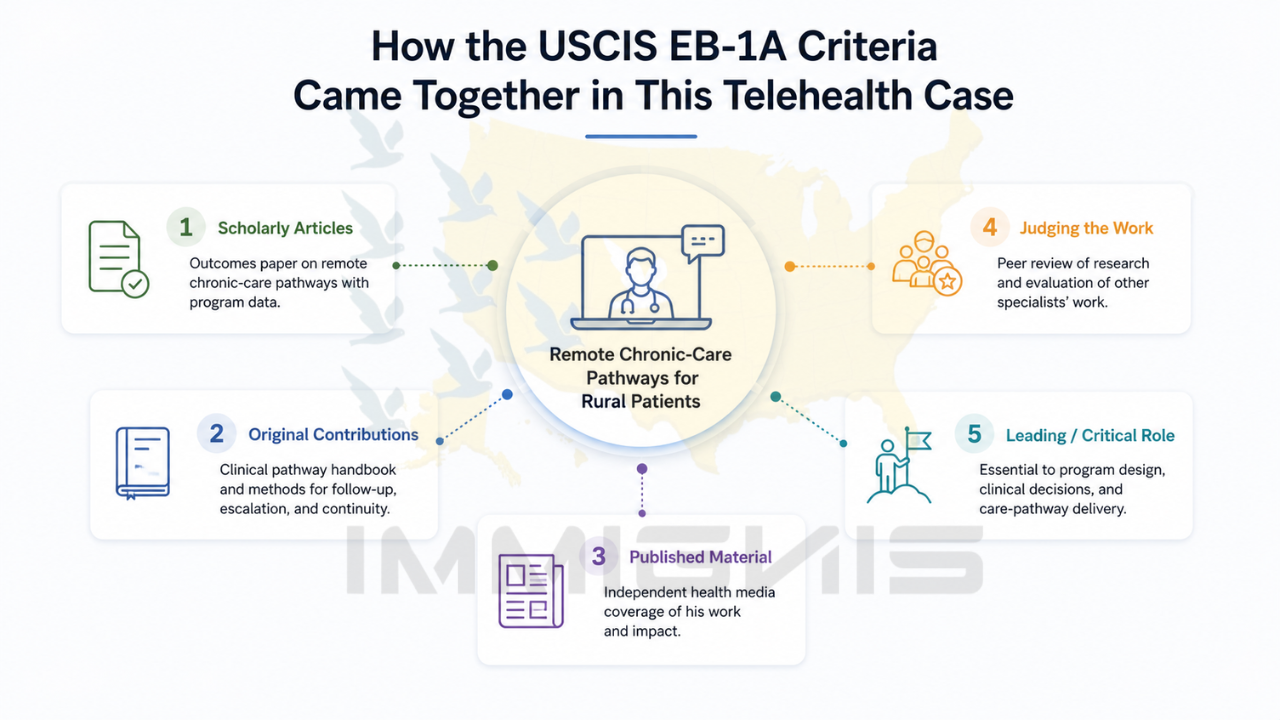
Scholarly articles: The outcomes paper connected his authorship to remote chronic-care continuity, patient follow-up, pathway completion, and rural telehealth delivery.
Original contributions: Clinical pathway methods, the handbook, program adoption evidence, documented follow-up and escalation work, and independent physician letters explained his individual contribution and its significance.
Published material: Independent health media coverage discussed him or his expertise in rural telehealth, chronic-care continuity, and remote care pathways.
Judging the work of others: Peer-review records documented evaluation of research by other specialists in telehealth, digital health, chronic disease management, and allied clinical fields.
Leading or critical role: Company and program evidence showed why significant digital chronic-care work relied on his clinical judgment, pathway design, and review responsibility.
The paper studied continuity, the handbook organized the pathway, adoption evidence showed use, and webinars, media, peer review, role evidence, and expert letters carried the same subject to independent audiences.
Approval came on June 28, 2023
The approved EB-1A petition gave him a self-petition immigration path without employer sponsorship or labor certification.
If your digital health career is described only as telehealth
Maybe your work is medication follow-up, remote monitoring, escalation, referral, patient retention, or chronic care coordination. Define the problem closely enough that another physician would recognize your method.
Document the pathway and decisions attributable to you. Publish from real program questions. Build judging through genuine peer review. Use membership and award evidence according to actual standards and results. Ask independent experts to discuss work they can review.
Do not build a medical profile from fake awards, weak publications, invented outcomes, or patient impact claims unsupported by records. USCIS scrutiny matters, and a physician’s professional credibility matters every day after the immigration case is finished.
FAQs
Can telehealth pathway design support an EB-1A original contribution claim?
Yes, when the physician’s individual method can be identified and the evidence shows major significance in the field. Clinical pathway documents, program adoption evidence, outcomes research, role records, and independent physician analysis can help explain how the work influenced remote care delivery.
What makes a remote chronic-care pathway different from a video visit?
A video visit is one clinical encounter. A chronic-care pathway organizes what happens across time, including follow-up, home-generated information, medication or symptom review, escalation, referrals, and responsibility for the next clinical step. The exact pathway depends on the condition, patient population, and care setting.
Can a clinical pathway handbook help an EB-1A case?
It can strengthen the professional record when it documents the applicant’s real method and connects to evidence of use, adoption, or influence. A handbook written only for immigration has limited value if the underlying clinical work cannot be verified.
Does submitting for a digital-health award satisfy the EB-1A awards criterion?
An award submission is not the same as receiving a qualifying prize or award. USCIS evaluates the actual recognition and the evidence supporting it. Award-development work can still help present a professional contribution to an independent audience, but the petition should describe the result accurately.
Can peer review count as judging for a telehealth physician?
Genuine peer review can support the judging criterion when the physician evaluates research or technical work produced by other specialists in the same or an allied field. The record should document the invitation and review activity, and the subject should fit the physician’s expertise.
Do I need an academic professorship or PhD to pursue EB-1A as a physician innovator?
No specific professorship or PhD is required for EB-1A extraordinary ability. A physician innovator may rely on applicable evidence such as original contributions, scholarly authorship, judging, published material, leading or critical roles, and sustained independent recognition. USCIS evaluates the full record.
Build an EB-1A success story around the care pathway your clinical work has improved
If you work in telehealth, rural medicine, remote patient monitoring, chronic care delivery, digital health, or clinical pathway design, your strongest contribution may still be hidden inside internal care operations. Immignis and Advance My Profile help identify a defensible clinical niche, document individual methods, build credible field recognition, and prepare an EB-1A record around evidence you can verify and defend professionally.