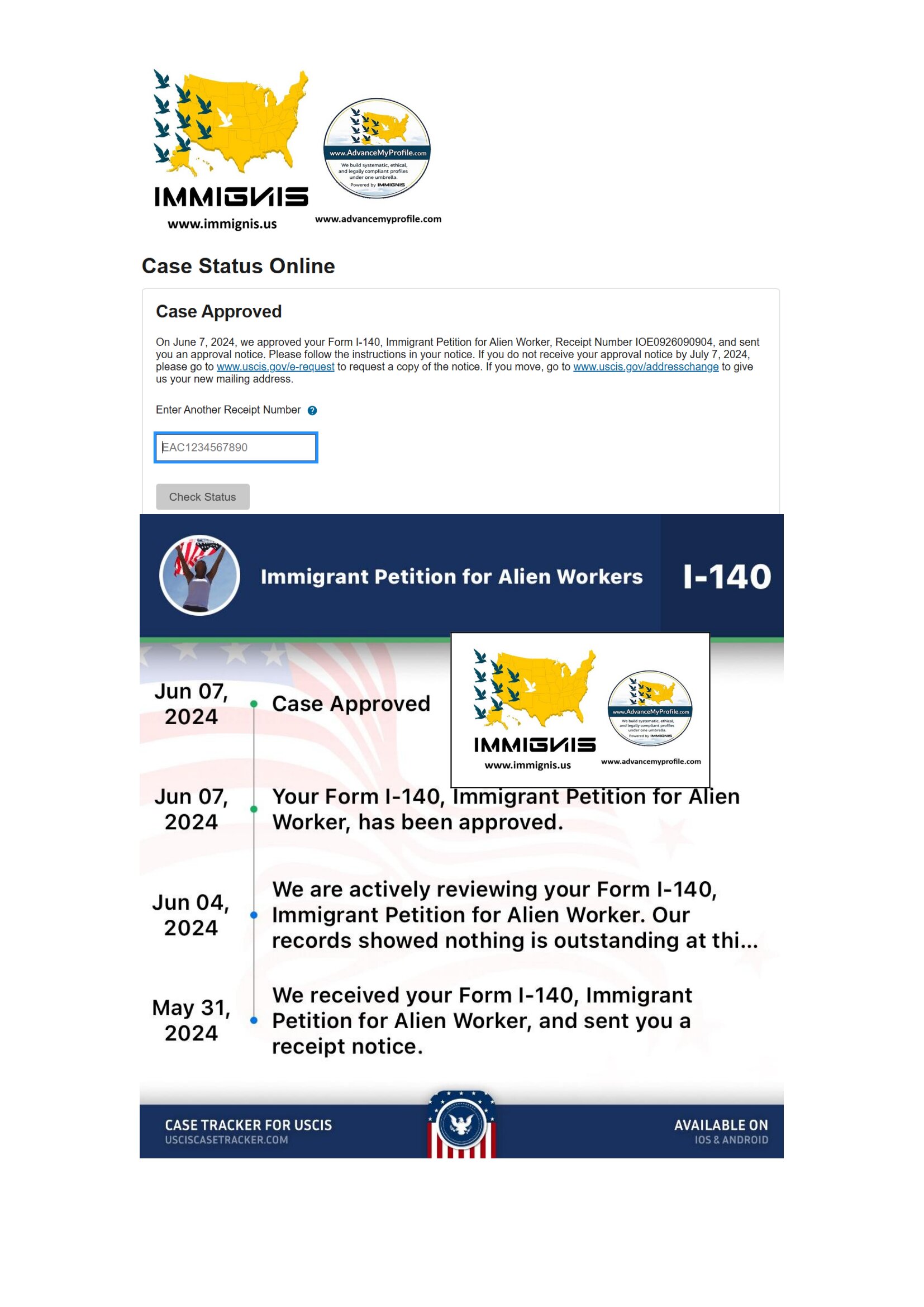
EB-2 NIW climate scientist: working in Germany built a clean, approval-ready NIW record around wildfire and flood prediction, U.S.-specific relevance, independent expert support, and recognition that did not need qualification.
| Nationality / chargeability | Greek |
| Work location | Germany, climate and disaster-risk research institute |
| Profession | Climate scientist focused on predictive wildfire and flood-risk modeling |
| Career stage | Approximately 9 years; senior researcher |
| Pathway | EB-2 National Interest Waiver |
| Starting point | Strong research, but no petition-grade U.S.-facing profile |
| Profile-building period | Approximately 11 months |
| Outcome | EB-2 NIW I-140 approved without a Request for Evidence |
In short: the result came first, and the profile-building explained why it was possible
This case ended with an EB-2 NIW approval without an RFE. The approval was not built on paid publicity, inflated claims, or a crowded file. It was built on a disciplined record showing that the petitioner’s predictive wildfire and flood-risk models addressed a specific U.S. public-safety problem, that her work was being used and recognized by independent audiences, and that her professional identity matched the proposed endeavor from beginning to end.
The profile-building work was important, but it was not the story’s main result. The result was the approval. The profile-building process explains how a climate scientist working outside the United States became visible, credible, and well documented enough for USCIS to evaluate her national-interest contribution.
The national problem: climate risk had become a U.S. public-safety issue
Her work focused on a problem that American communities increasingly face in practical terms: wildfire spread, flood inundation, evacuation timing, land-use planning, insurance exposure, and the cost of disaster response. The United States does not only need climate research in the abstract. It needs usable predictive models that help officials and communities act before emergencies become uncontrollable.
That distinction shaped the petition. The case did not argue only that climate change matters. It argued that predictive wildfire and flood-risk modeling supports concrete public decisions before disaster strikes. That made the national-importance argument easier for an officer to understand and easier for independent experts to support.
The client’s weak starting point: strong science, scattered immigration evidence
When she came to us, her research record was real. She had publications, citations, and a credible scientific profile. But the evidence was not yet organized for U.S. immigration review. Some materials presented her as a broad climate researcher, while the strongest NIW direction required a narrower identity: disaster-risk modeling for wildfire and flood hazards affecting U.S. communities.
This is a common problem for researchers abroad. Their work may be excellent, but USCIS still needs to see why it matters to the United States and why the petitioner is positioned to advance it here. We therefore built the case around one consistent professional identity and one precise endeavor.
The proposed endeavor that gave the case its spine
Proposed endeavor: To develop and apply advanced predictive risk models for wildfire and flood hazards affecting U.S. communities, enabling more effective pre-disaster mitigation, evacuation planning, and land-use decision-making to protect lives and reduce the economic and humanitarian cost of climate-driven disasters on the national scale.
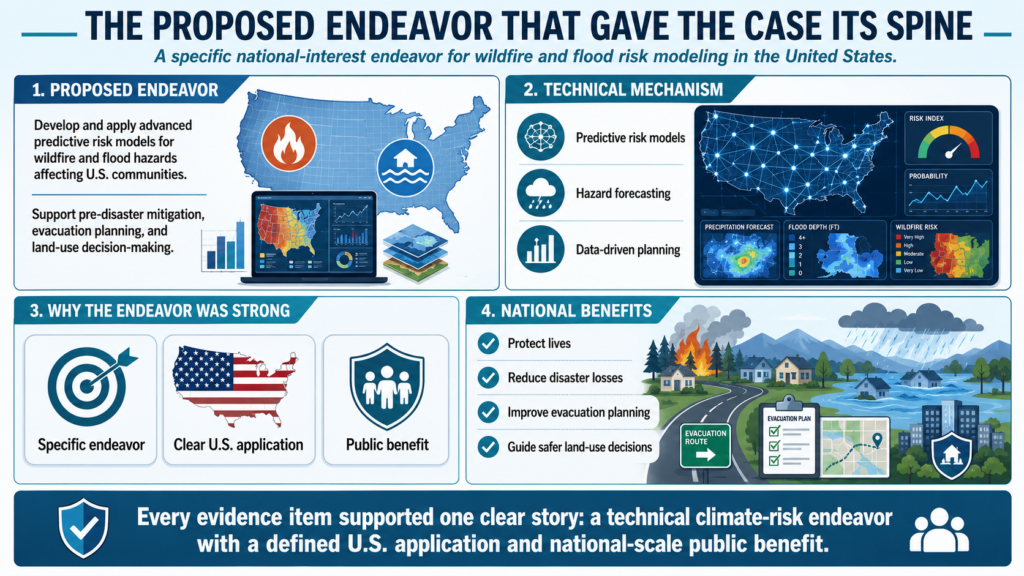
This endeavor was specific enough to avoid sounding like a general climate-change statement. It identified the technical mechanism, the U.S. application, and the public benefit. From that point forward, every evidence item had to support the same story.
What AdvanceMyProfile built: a clean, earned-recognition record
The client chose the harder route: no paid article, no sponsored feature, and no placement that would require explanation. That decision shaped the entire profile-building strategy. We offered options, but she wanted a record she could describe without qualification. We built the case around earned recognition only.
- Public identity: her website, LinkedIn, and researcher profiles were reorganized around wildfire and flood-risk modeling, not broad climate science.
- Focused publications: additional first-author work strengthened the same niche, including U.S.-relevant wildfire, flood, and hazard-modeling contexts.
- U.S.-specific citations: the record emphasized engagement from U.S.-based climate, hydrology, and disaster-risk researchers where available.
- White paper: a policy-facing paper translated predictive-risk modeling into practical planning value for resilience, emergency-management, and climate-adaptation audiences.
- Earned media: her commentary appeared through genuine journalist interest in wildfire and flood-risk questions, not paid placement.
- Podcast recognition: a legitimate climate and environmental-science podcast helped show that others considered her expertise worth presenting publicly.
- Selective recognition: Senior Member status in a relevant scientific body was pursued because it reflected review and professional standing.
- Independent letters: experts connected her methods to U.S. disaster-planning needs, not merely to general climate scholarship.
How each profile-building step supported Dhanasar
The evidence was not collected randomly. It was organized around the three Dhanasar questions.
Substantial merit and national importance
The petition connected wildfire and flood-risk modeling to pre-disaster mitigation, evacuation planning, land-use decisions, and reduced public cost. The white paper, earned commentary, and expert letters helped show that her work belonged in a real public-safety and planning conversation.
Well positioned to advance the endeavor
Her focused publications, citations, earned media, podcast appearance, senior membership, and independent expert letters showed that she was not merely interested in the field. She had already produced and communicated work that other researchers, journalists, and professionals considered useful.
Why the waiver made sense
The filing argued that her work did not fit a single employer’s labor-certification need. It addressed a broader research and public-planning problem: improving the predictive tools communities use before climate-driven disasters occur. That broader value supported the waiver argument.
Filing and approval without RFE |EB-2 NIW climate scientist
The final petition was filed as a clean record: no unnecessary exhibits, no inflated media strategy, and no attempt to turn her into someone outside her field. The cover letter explained the U.S. national-interest value of predictive wildfire and flood-risk models, then walked the officer through the evidence showing that she was positioned to advance that work.
USCIS approved the EB-2 NIW I-140 without a Request for Evidence. Because she was working abroad, the approval established the I-140 foundation and allowed the case to move toward the appropriate consular-processing steps, subject to ordinary post-approval procedures.
What the client gained beyond approval
The approval mattered, but the profile continued to work beyond immigration. Her earned media and podcast appearances remained part of her professional visibility. The white paper helped open conversations with resilience-planning and climate-adaptation audiences. Her role expanded toward more international climate-risk modeling work, and her public identity became clearer to U.S.-aligned research and disaster-risk organizations.
Most importantly, she had a record she could explain simply: the papers were real, the citations were independent, the recognition was earned, the letters were arms-length, and the petition was built around her actual work.
What this case teaches other researchers
- Earned recognition can be stronger than paid placement when the field is already newsworthy and the expert can speak credibly to current public concerns.
- National importance should be specific. “Climate change matters” is too broad; wildfire and flood-risk modeling for mitigation and evacuation planning is concrete.
- Researchers abroad need U.S.-specific relevance. The record must show why the work matters to U.S. communities, institutions, or planning needs.
- White papers should be purposeful and directed to audiences that fit the field, including research networks, policy forums, emergency-management professionals, and climate-adaptation stakeholders.
- A clean profile can be more persuasive than a crowded one. Every exhibit should support the same professional identity and proposed endeavor.
- Ethical profile building does not manufacture expertise. It documents, organizes, and presents real expertise in a form USCIS and outside reviewers can evaluate.
If your research is strong but your public record is scattered, the right question is not how many documents you can add. The right question is whether your evidence proves a specific U.S. national-interest direction and shows that you are positioned to advance it.
Your research record is real, it just needs to be organized around a U.S. national-interest direction. See how Immignis builds clean, earned-recognition NIW cases for researchers abroad.