EB-2 NIW packaging engineer: An approved EB-2 NIW success story built around protective packaging, transit validation, reusable transport systems, and deployment assurance for mission-critical AI data-center and advanced-manufacturing equipment.
| Client profile | Pakistani packaging engineer based in the United States |
| Field | Protective packaging, transit validation, reusable transport systems, and supply-chain integration |
| Education | M.S. Industrial Engineering, MBA in Logistics & Supply Chain Management, and B.E. Chemical Engineering |
| Professional foundation | Packaging engineering for AI data-center liquid-cooling systems, prior packaging development and sustainability roles, and manufacturing experience |
| Proposed endeavor | Design, validate, and implement scalable protective-packaging, transit-validation, and reusable transport systems for mission-critical equipment used in U.S. AI data centers and advanced manufacturing. |
| National-interest theme | Reliable physical deployment of sensitive infrastructure equipment needed for AI data-center and advanced-manufacturing expansion |
| Profile-building focus | Engineering validation, standards-aligned qualification, reusable transport systems, supplier standardization, education, employment record, federal-policy alignment, and measurable impact logic |
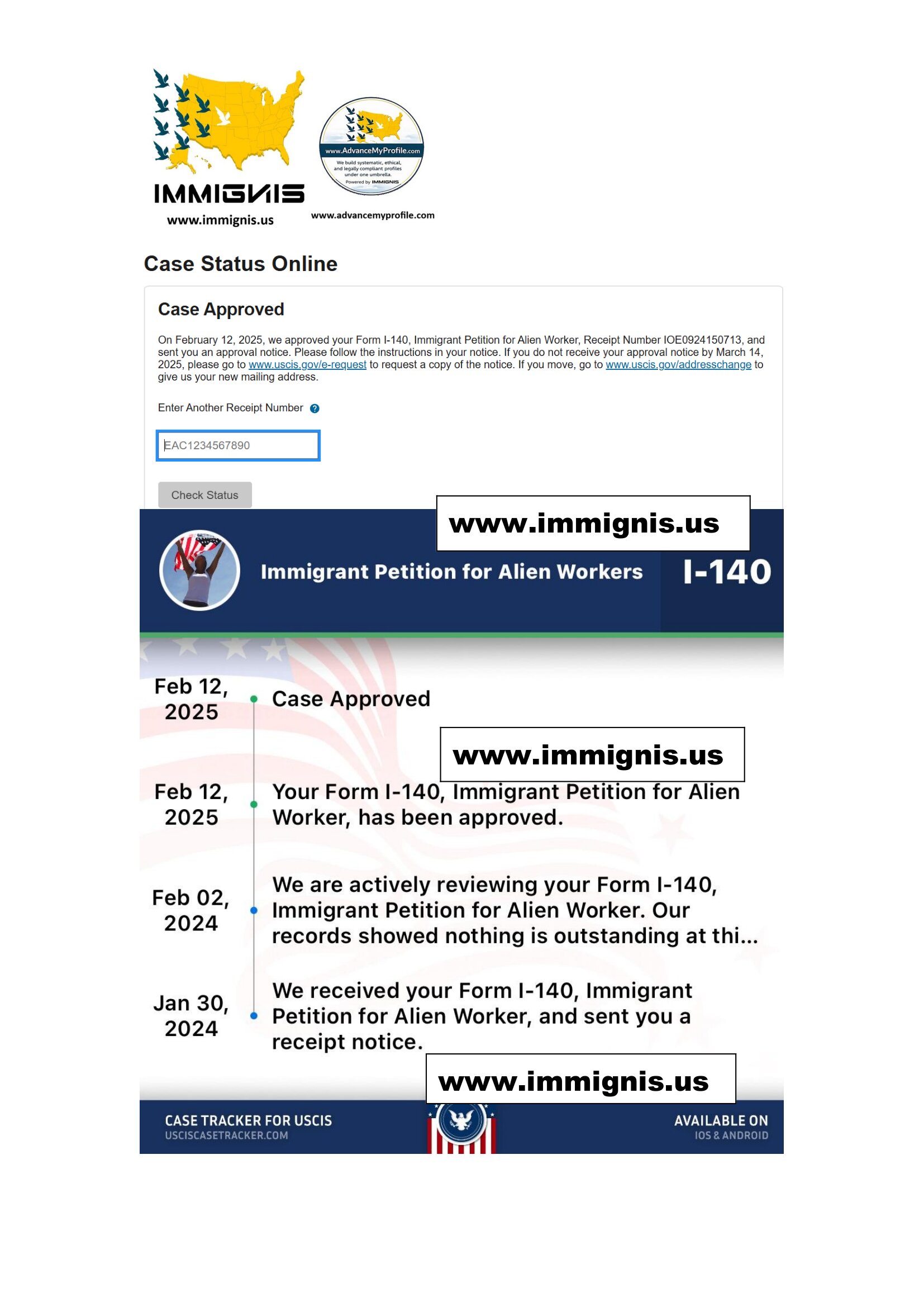
| Outcome | EB-2 NIW I-140 approved |
The Approval Result
This case ended with an EB-2 National Interest Waiver approval for a Pakistani packaging engineer whose record was strongest when it was organized around one precise national problem: the reliable physical deployment of sensitive equipment needed for AI data-center and advanced-manufacturing expansion.
The client did not need to be presented as a general packaging professional. His strongest case came from a more specific technical identity: an applied packaging and supply-chain engineer whose work protects mission-critical equipment before it reaches an installation site. The approval showed that protective packaging can support a national-interest case when it is tied to infrastructure readiness, validation, supply-chain reliability, material efficiency, and measurable deployment impact.
The National Problem: Sensitive Equipment Must Reach AI Infrastructure Intact
AI data centers and advanced-manufacturing facilities depend on sensitive physical equipment. Coolant distribution units, electronics-support hardware, rack-related systems, and precision components must be shipped, stored, staged, and installed without damage. A single transit failure may require inspection, replacement, re-shipment, warranty review, and schedule adjustment. Across large deployment programs, those failures can affect cost, timing, supplier performance, and infrastructure readiness.
The case therefore treated packaging as part of deployment reliability. For mission-critical equipment, packaging is not a shipping accessory. It is the protective assurance layer between manufacturing output and operational installation.
The Proposed Endeavor| EB-2 NIW packaging engineer
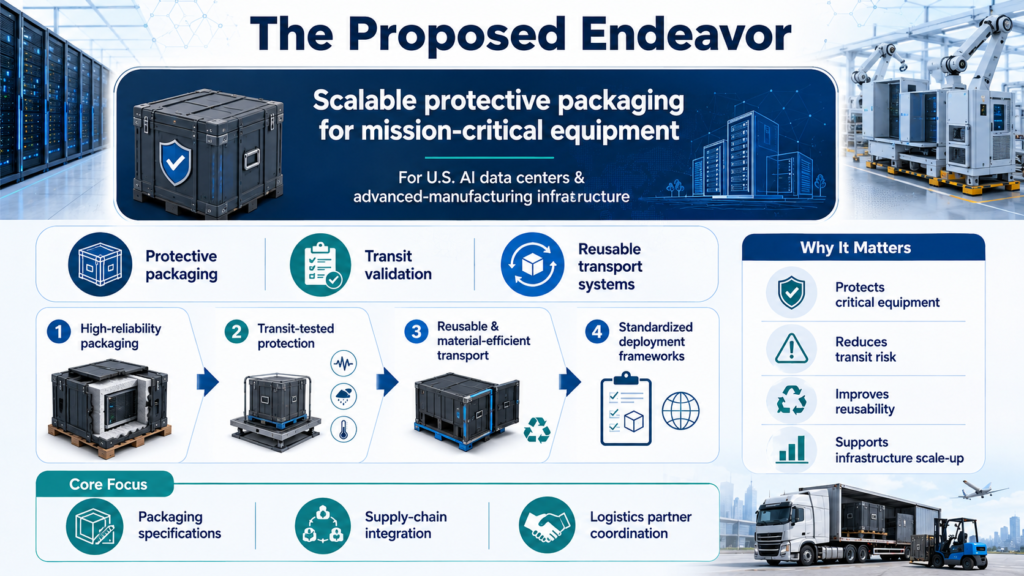
To design, validate, and implement scalable protective-packaging, transit-validation, and reusable transport systems for mission-critical equipment used in U.S. AI data centers and advanced-manufacturing infrastructure.
In practical terms, the endeavor would develop high-reliability packaging and transit-validation methods; advance reusable and materially efficient transport systems; and create standardized packaging specifications and supply-chain integration frameworks for suppliers, logistics partners, and infrastructure deployment programs.
What Made the Profile Stronger
The profile became stronger when the evidence was organized around a deployment-assurance system instead of a conventional packaging role. The four-part structure gave USCIS a clear technical pathway: engineering-based protective packaging, standards-aligned qualification, reusable transport systems, and supplier-level standardization.
This structure allowed the petition to show why the work could extend beyond one employer. Validated designs, qualification records, packaging Bills of Material, handling instructions, labeling requirements, and supplier documentation templates can be transferred across equipment categories and deployment environments. That transferability was essential to the national-importance argument.
How the Evidence Supported Dhanasar
| Dhanasar Element | How the story was built |
| Prong 1: Substantial merit and national importance | The case connected protective packaging and transit assurance to AI infrastructure expansion, advanced manufacturing, supply-chain resilience, material efficiency, and reliable deployment of mission-critical equipment. |
| Prong 2: Well positioned | The petitioner’s education and work history supported the endeavor: industrial engineering, logistics and supply-chain management, chemical engineering, packaging validation, transit testing, IQ/OQ/PQ documentation, supplier coordination, and current work with liquid-cooling systems for U.S. AI data-center environments. |
| Prong 3: Benefit of waiving job offer/labor certification | The strategy emphasized that the proposed work is transferable across suppliers, product categories, and deployment programs and is therefore better suited to a self-directed national-interest pathway than a narrow employer-specific role. |
The Profile-Building Work
The approved record was built around a practical evidence architecture. The technical pillar showed that packaging should be designed and tested against shock, vibration, compression, moisture, temperature exposure, and rough handling. The standards pillar connected the work to recognized transit-testing and qualification principles such as ISTA, ASTM D4169, and IQ/OQ/PQ-style documentation where appropriate.
The sustainability pillar showed that reusable transport systems can reduce one-way packaging waste only when they preserve validated protection over repeated use. The standardization pillar showed how validated packaging designs become supplier-facing instructions, Bills of Material, handling controls, and documentation templates that can improve repeatability across distributed manufacturing and deployment networks.
Filing and Approval
The final petition was filed as an evidence architecture, not as a general resume package. The proposed endeavor explained the national deployment-readiness problem. The education record showed the technical foundation. The packaging validation and supply-chain work showed practical experience. The standards, sustainability, and supplier-standardization evidence connected the work to measurable industrial value.
USCIS approved the EB-2 NIW I-140. The approval confirmed that a packaging-engineering case can succeed when the record shows how the work supports mission-critical infrastructure deployment, advanced manufacturing readiness, and national industrial capacity.
What the Client Gained Beyond Approval
The approval was the immigration result, but the profile-building process also gave the client a clearer professional identity. His work could now be explained as a focused contribution to AI infrastructure deployment assurance, not as a general packaging or logistics background.
That clarity made the profile stronger for professional conversations with AI data-center operators, liquid-cooling hardware teams, advanced-manufacturing suppliers, logistics partners, and infrastructure-deployment stakeholders. The same evidence that supported the petition also made his expertise easier for the market to understand.
What This Case Teaches
- Packaging can be nationally important when it protects mission-critical infrastructure equipment whose damage or delay affects broader deployment programs.
- For applied engineers, the strongest NIW story often comes from a system-level method: validation, documentation, standardization, supplier integration, and measurable outcomes.
- Reusable packaging evidence is strongest when sustainability is paired with verified protective performance.
- A packaging engineer can have a national-interest profile when the work is connected to sensitive infrastructure deployment, not merely routine shipping.
- Ethical profile building documents real expertise. It does not manufacture a false profile or invent evidence the record cannot support.
If your work appears operational or employer-specific, the first question is whether it can be connected to a broader national problem, a transferable technical method, and measurable public or industrial impact. Start with a free, honest assessment so the evidence can be reviewed before a petition is filed.
Even operational expertise like packaging engineering can become a national-interest case when it protects mission-critical infrastructure. See how Immignis builds that connection.