Key facts at a glance:
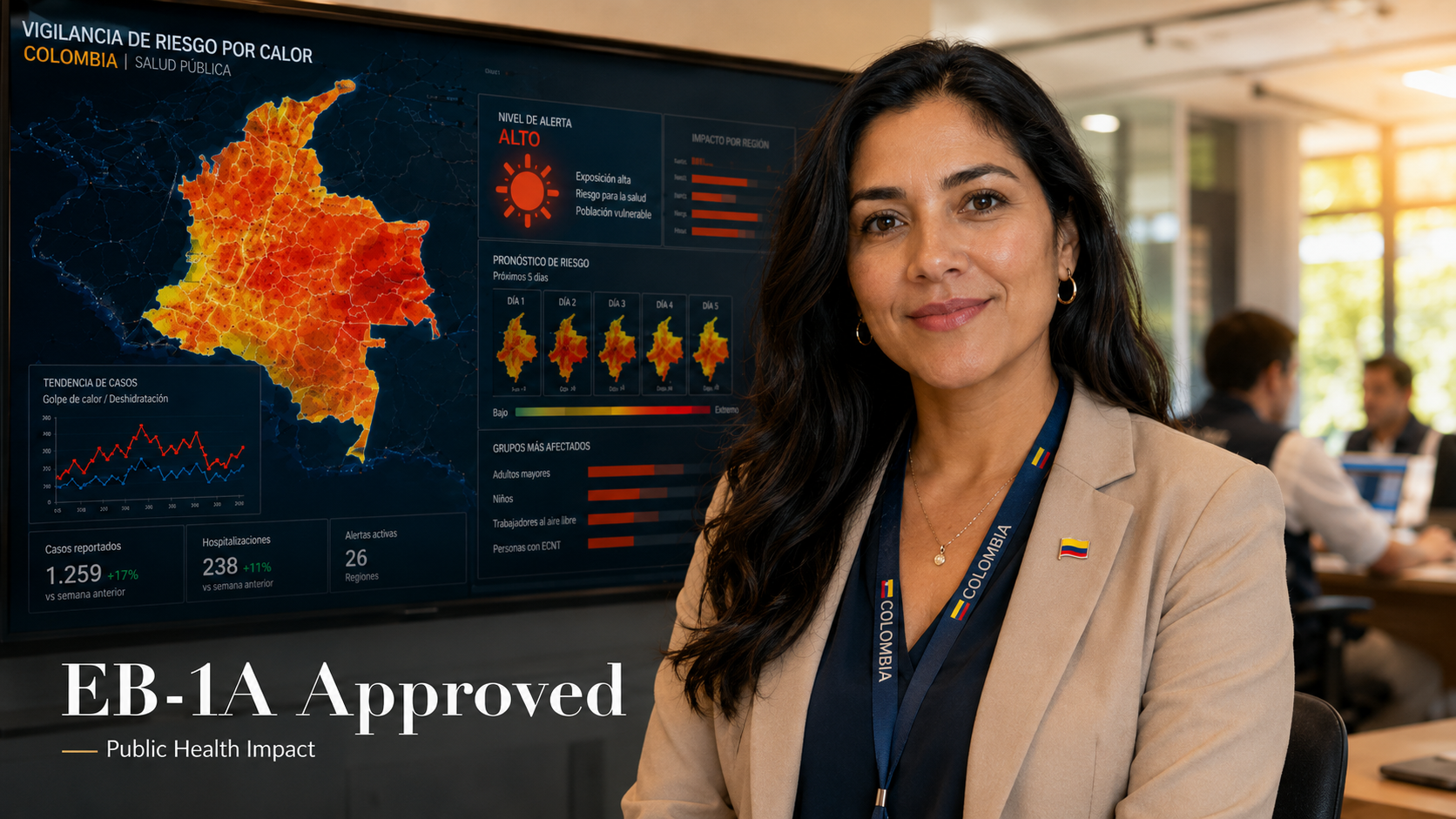
| Outcome | EB-1A approval for a Colombian public health epidemiologist working with a U.S based state health agency. |
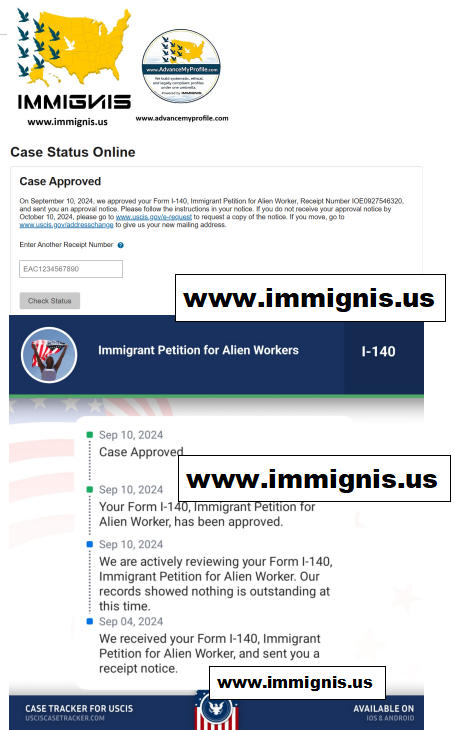
| Approval date | Approved on September 10, 2024. |
| Field niche | Predictive surveillance for heat related illness in vulnerable communities. |
| Starting problem | Her public sector work had strong impact, but few traditional academic signals and limited independent visibility. |
| Path used | Ethical EB-1A profile building through first author studies, a policy impact brief, data dashboard adoption evidence, expert commentary during heatwave coverage, invited webinar, peer-review assignments, conference visibility, and independent letters from epidemiologists and emergency preparedness officials. |
| USCIS EB-1A criteria activated | Original contributions, scholarly articles, published material, judging, and leading role. |
How an EB-1A Public Health Epidemiologist Built a Strong Approval Case
The dashboard was quiet at first. Then the weather changed. Heat advisories moved across the state. Older adults, outdoor workers, children, people without reliable cooling, and medically vulnerable residents became harder to protect. Emergency teams needed more than yesterday’s numbers. They needed an early signal. Her work helped build that signal.
She was a Colombian public health epidemiologist working inside a U.S. based state health agency, using predictive surveillance to identify heat-related illness risk before vulnerable communities were overwhelmed. The work mattered. It helped public health teams see risk sooner, prepare outreach, and make better decisions during dangerous heat events.
But when she looked at her EB-1A record, the evidence did not match the impact. The work was public health. The credit was not public enough.
Why did public health impact still look risky for EB-1A?
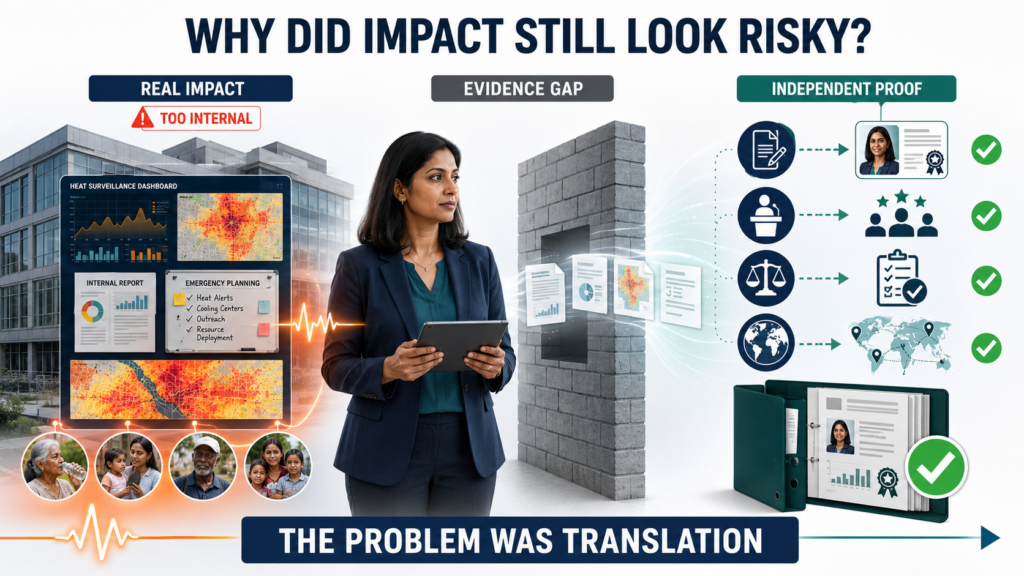
The risk was not whether the work mattered. The risk was whether the record could prove that her individual contribution mattered beyond the agency that employed her.
Public sector epidemiologists often face this problem. Their strongest achievements are tied to dashboards, surveillance reports, emergency planning meetings, internal modeling work, and agency deliverables. The impact can be real, but the public record may not show authorship, recognition, judging, or independent validation.
That was her starting point. She had contributed to predictive surveillance for heat related illness in vulnerable communities, but the evidence looked too internal. Some work was agency owned. Some results were shared through public health operations, not scholarly publication. Some recognition existed in practice, but not in a form USCIS could easily weigh.
The EB-1A green card is a self petition immigrant category for people who can show extraordinary ability through sustained national or international acclaim and evidence that they are among the small percentage at the top of their field.
That standard felt intimidating because she did not see herself as a public figure. She saw herself as someone building tools for people most likely to be harmed by heat. Her problem was not talent. Her problem was translation.
What did Immignis see in the original record?
Immignis saw a public health expert with a field impact story that had not yet been built into an EB-1A record.
The first assessment did not treat the case as automatically ready. That honesty mattered. A government role, a meaningful mission, and strong operational work do not automatically prove EB-1A extraordinary ability. The petition needed independent evidence, focused authorship, and a clear final merits theory.
The original file could have invited a Request for Evidence. An officer could have asked whether the work was routine agency analysis, whether the dashboard reflected her own contribution, whether the impact reached beyond one office, and whether the record showed sustained acclaim in predictive public-health surveillance.
Immignis narrowed the case to one precise field: predictive surveillance for heat related illness in vulnerable communities.
That focus changed the petition. It gave every later activity a center: heat health analytics, vulnerable population risk, emergency preparedness, data-dashboard adoption, and public health decision support.
What would USCIS need to see in this public health analytics case?
USCIS needed to see that the case was not only about a state employee doing a state job.
The evidence had to show that she helped develop or advance a predictive surveillance approach that public health professionals could recognize as significant. It had to connect her work to heat related illness prevention, vulnerable community protection, and emergency preparedness. It also had to show that outside experts viewed her contribution as more than ordinary epidemiology.
For this profile, the final merits issue was case specific. The officer would need to understand why heat related illness surveillance is not a routine reporting task when it uses predictive modeling, dashboard adoption, targeted risk interpretation, and decision support for communities with unequal exposure to extreme heat.
The petition also had to answer attribution. In public health, many outputs carry agency names. Immignis needed to show what she personally designed, authored, analyzed, coordinated, or advanced. Without that, the strongest evidence could have looked like institutional impact instead of individual acclaim.
The answer had to come from documents that fit the field: first author studies, a policy impact brief shared with public health associations, expert commentary during heatwave coverage, an invited webinar, peer-review assignments, data dashboard adoption evidence, and independent letters from epidemiologists and emergency preparedness officials.
How did Advance My Profile build her authority record ethically?
The build began with a roadmap that respected the field. Advance My Profile, powered by Immignis, started with a bespoke assessment. Immigration strategy, public health domain review, evidence planning, and privacy screening were aligned before any public activity began. The team did not push her into unrelated data science topics. The entire plan stayed inside her true public-health specialism.
First came positioning. Her profile moved from a broad “public health epidemiologist” identity to a focused authority niche: predictive heat health surveillance for vulnerable communities. That niche was specific enough for USCIS, useful enough for public-health readers, and honest to her real work.
Next came authorship. With domain support, her applied knowledge was shaped into first-author studies and technical public health articles. The work addressed the questions her field cared about: how to identify heat related illness risk earlier, how to turn surveillance data into actionable warnings, and how dashboards can help emergency preparedness teams focus limited resources.
The publication strategy was not built for volume. It was built for coherence. Then came the policy impact brief. Immignis helped prepare a field facing brief that explained the surveillance problem, the vulnerable population risk, and the practical value of predictive tools during heat events. The brief was shared with relevant public health associations and stakeholder audiences where the work could be understood by people who manage similar risks.
Data dashboard adoption evidence became a central piece. The team helped document how the dashboard and related analytics were used in a public health environment without exposing sensitive data or overstating results. This mattered because a dashboard is not automatically an original contribution. The petition had to explain the problem it solved, the users it served, and the public health decisions it supported.
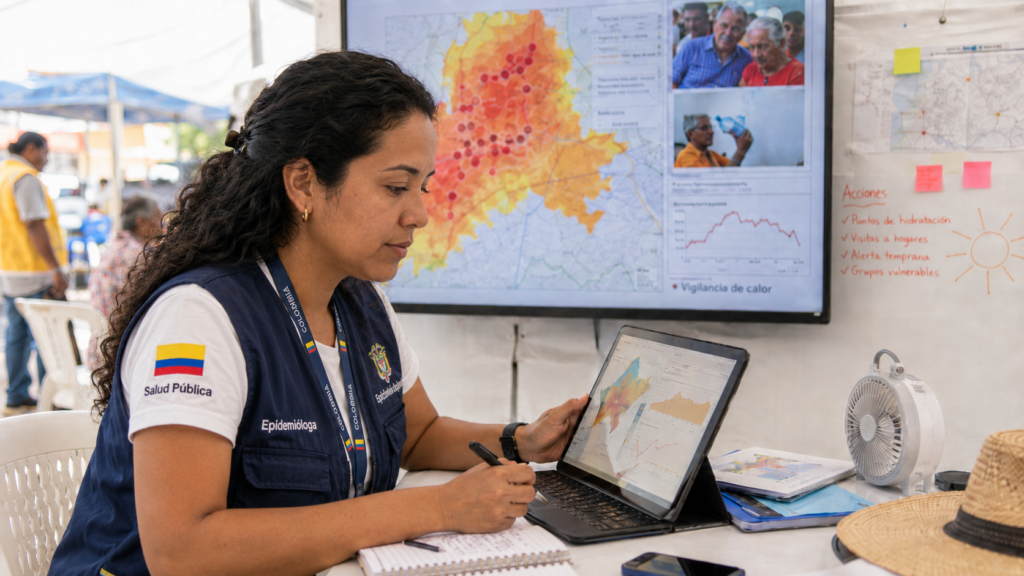
Public visibility followed during heatwave coverage. She began appearing as an expert voice on heat related illness, surveillance, and vulnerable communities. The commentary stayed close to her expertise. It did not turn her into a generic climate commentator. It positioned her as someone who understood how heat risk becomes a public health emergency.
An invited webinar gave the record another layer. It allowed her to teach the field, not only work inside an agency. That distinction mattered because EB-1A evidence becomes stronger when the professional is asked to explain methods to others.
Peer-review assignments then shifted the profile from participant to evaluator. Reviewing work in public health, epidemiology, or health analytics showed that the field trusted her judgment. For an EB-1A case, that is not cosmetic. It directly supports the judging criterion and strengthens the final-merits story.
Conference and association visibility helped reinforce the same message. Her work was no longer only a local agency output. It became part of a broader discussion about heat preparedness, climate sensitive health surveillance, and protecting vulnerable communities.
Independent letters completed the outside voice. Immignis did not rely only on workplace supervisors. Letters from epidemiologists and emergency preparedness officials explained why her surveillance work had practical significance and why her contribution was important in the field she claimed.
The case was built by legal experts, domain reviewers, content professionals, media support, and an evidence team working from one rule: every claim must be real, relevant, and verifiable.
Why did the ethical approach matter in a public health case?
Public health depends on trust. A profile built with weak journals, paid citations, fake awards, or exaggerated impact would have been especially damaging in this field. Public health professionals work with communities, agencies, data, and risk communication. If the record looks artificial, it can harm both the petition and the person’s professional credibility.
Immignis treated the EB-1A profile as a long term authority record. Publications had to fit the public health niche. Media commentary had to be responsible. The policy impact brief had to be useful, not decorative. Dashboard evidence had to be privacy safe. Letters had to explain real contribution.
This is the difference between profile building and profile decoration. Profile decoration creates a busy file. Profile building creates a professional identity that the client can keep using after approval.
Could your own EB-1A profile be stronger than it looks?
If your strongest work is inside a public agency, nonprofit, hospital system, research center, or employer-owned project, your issue may be documentation.
Immignis offers a free profile assessment for professionals who want to understand whether their record may support an EB-1A green card, EB-2 NIW, O-1, or another merit based pathway. The assessment identifies the field niche, evidence gaps, realistic criteria, and the honest path forward.
Which USCIS EB-1A criteria did the final petition activate?
The final Form I-140 petition activated five USCIS EB-1A criteria and tied them into one final merits narrative.
Original contributions: The petition showed how her predictive surveillance work supported earlier recognition of heat related illness risk in vulnerable communities. The dashboard adoption evidence, policy impact brief, and independent letters helped explain why the work mattered beyond routine agency reporting.
Scholarly articles: First author studies and technical public health articles showed authorship in predictive surveillance, heat health analytics, and applied epidemiology.
Published material: Expert commentary during heatwave coverage placed her expertise in public view and connected her name with heat-related illness surveillance and vulnerable community protection.
Judging the work of others: Peer-review assignments showed that journals or professional venues trusted her to evaluate work by other public health and epidemiology professionals.
Leading or critical role: Agency and project evidence showed that she played an important role in public health analytics and surveillance functions within a distinguished state health environment.
The final merits argument did the heaviest work. It showed that the record was not a set of unrelated activities. It showed sustained recognition in one field where timing, data quality, and community risk matter.
For this case, the central message was clear: she was not only tracking heat illness. She was helping make predictive public health surveillance more useful for communities that needed earlier warning.
What did EB-1A approval mean for her?
The approval gave her a self-petition green card path without employer sponsorship and without PERM labor certification. It also gave public shape to work that had once lived inside agency systems and emergency preparedness workflows.
The profile continued to matter after approval. She had first-author work, a defined heat health surveillance niche, policy impact writing, dashboard adoption evidence, public expert commentary, webinar visibility, peer review activity, and independent validation from public health and emergency preparedness experts.
The approval was the immigration result. The authority record was the professional asset.
If this sounds like you
You may be a public health professional whose best work sits inside agency reports, dashboards, surveillance tools, or emergency response systems. You may be an epidemiologist, health data scientist, climate health researcher, emergency preparedness specialist, or policy analyst whose contribution is real but hard to see from the outside.
That does not mean your record is weak. It may mean your record is unfinished.
The safest path is not to invent recognition. The safest path is to build the recognition your real work deserves: focused authorship, policy impact writing, credible media, peer review, webinars, conference visibility, adoption evidence, independent expert letters, and a petition narrative that can survive review.
Do not build evidence you will need to hide later. Build an EB-1A profile that supports your immigration future and strengthens your professional name.
Can a public health epidemiologist qualify for an EB-1A green card?
Yes. A public health epidemiologist may qualify for an EB-1A green card if the record shows extraordinary ability through sustained acclaim and evidence under the USCIS EB-1A criteria. Strong evidence can include original contributions, first author studies, policy impact work, published material, peer review, leading role evidence, and independent expert letters.
What if my public-health work was done inside a government agency?
Agency based work can support an EB-1A petition if the record shows the applicant’s individual contribution and field-level significance. The key is to separate the person’s role from the agency’s general mission. Adoption evidence, authorship, expert letters, public commentary, and policy facing materials can help make the work visible.
What creates RFE risk in a public health EB-1A petition?
RFE risk often increases when the petition describes public service but does not prove personal acclaim. USCIS may question whether the impact belongs to the applicant, whether the work is recognized outside the employer, and whether the evidence shows top level standing. A strong final-merits narrative connects public health impact to specific criteria and independent validation.
Can policy briefs and dashboards help an EB-1A case?
Yes, when they are credible and tied to the applicant’s real contribution. A policy brief can show thought leadership, and dashboard adoption evidence can help demonstrate practical significance. These materials are strongest when supported by publications, independent letters, peer review, and field facing recognition.
Is EB-1A better than EB-2 NIW for public-health professionals?
EB-1A and EB-2 NIW are different pathways. EB-1A focuses on extraordinary ability and sustained acclaim, while EB-2 NIW focuses on a nationally important proposed endeavor and whether the applicant is well positioned to advance it. Some public health professionals may begin closer to EB-2 NIW and later build toward EB-1A if the recognition record becomes stronger.
Do I need a PhD or U.S. degree for EB-1A?
No specific degree is required for EB-1A by itself. A degree can help explain expertise, but USCIS focuses on evidence of extraordinary ability, such as original contributions, scholarly work, judging, published material, leading roles, awards, memberships, and other recognition. Education supports the story but does not replace acclaim evidence.
Build an EB-1A success story around evidence you can trust
If you work in public health analytics, epidemiology, climate-health surveillance, emergency preparedness, health data science, or another advanced field, your strongest achievements may already exist. They may simply be hidden, scattered, or too internal to help without a strategy.
Immignis helps professionals build EB-1A profiles through ethical evidence development, field-specific positioning, reputable visibility, independent validation, and petition-ready storytelling.