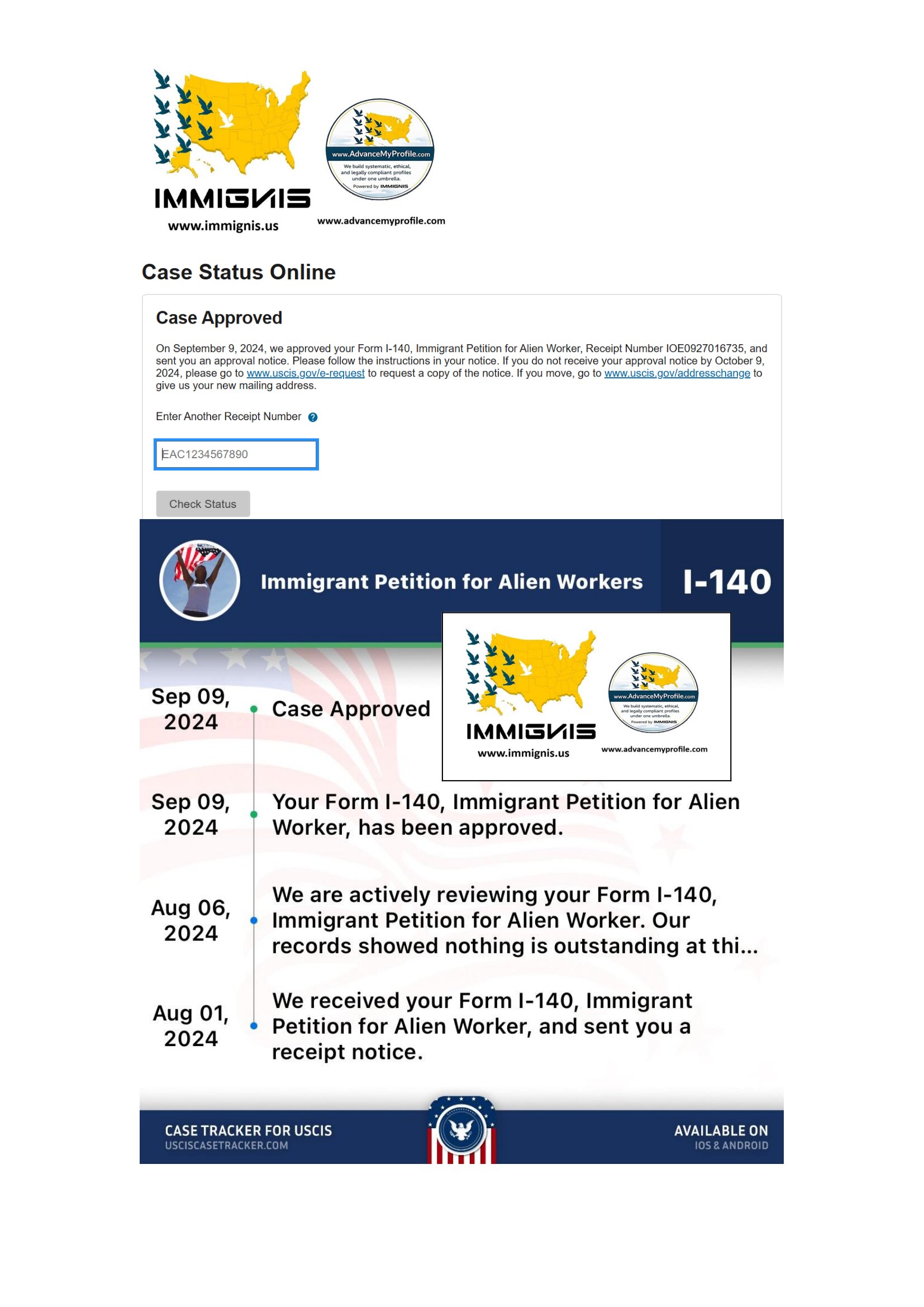
A biomedical equipment specialist with hands-on experience across hospital environments in the UAE, Pakistan, and beyond – approved for an EB-2 NIW on a three-part proposed endeavor the U.S. healthcare system genuinely needs.
In short: A biomedical equipment specialist with a Bachelor’s degree in Biomedical Engineering and progressive field
experience across hospital and clinical environments was approved for an EB-2 National Interest Waiver as a self-
petitioner. No U.S. employer. No doctoral degree. The case was approved under Matter of Dhanasar on a three-part
proposed endeavor: developing an Integrated Point-of-Care Diagnostic Platform, establishing a Rapid Diagnostic Lab
Network across U.S. healthcare facilities, and expanding U.S. biomedical equipment exports to the Middle East.
The petitioner’s name has been withheld for privacy. Profession, field, and outcome are real.
The Problem He Saw Every Day
When a hospital runs out of time to diagnose a patient, the machine is rarely the issue. The issue is the system around it, samples traveling to a central lab, hours of waiting, results arriving too late to change what happens next. Strokes, sepsis, cardiac events: conditions where every hour is a measurable variable in whether someone recovers.
He had seen this up close, many times. As a biomedical equipment specialist working across hospital environments in the UAE and Pakistan, his EB-2 NIW job was to install, service, and maintain the diagnostic instruments that hospitals depend on. Chemistry analyzers, immunoassay systems, hematology instruments, patient monitors, ventilators, he understood not just how these machines work, but where they fail, and why the workflows around them slow everything down.
That practical EB-2 NIW knowledge, built over 14 of direct clinical fieldwork, became the foundation of his EB-2 NIW petition.
What He Proposed
His proposed endeavor had three parts, each building on the last.
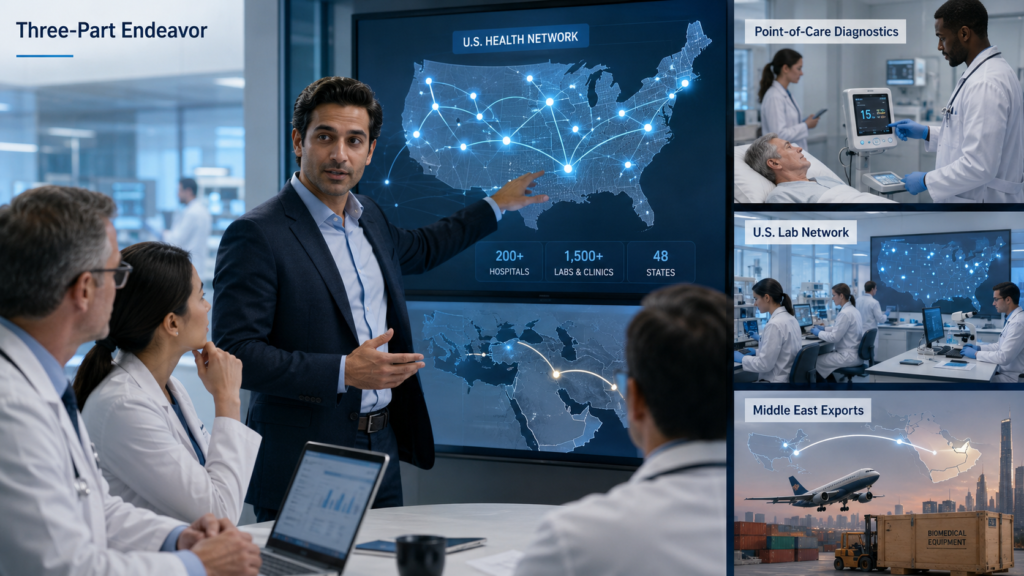
First: develop an Integrated Point-of-Care Diagnostic Platform – a system that lets healthcare providers run accurate diagnostic tests directly at the patient’s location, without sending samples to a central laboratory. The goal is faster results, earlier treatment decisions, and better outcomes, particularly in emergencies.
Second: establish a Rapid Diagnostic Lab Network by partnering with existing hospitals, clinics, and diagnostic centers across the U.S. Rather than building new facilities from scratch, the model works within existing healthcare infrastructure — lowering barriers to adoption and accelerating rollout.
Third: expand U.S. biomedical equipment exports to the Middle East. U.S. medical device exports to the region declined approximately 10% in 2023 as regional manufacturers and competitors gained ground. His established industry relationships in the Gulf gave him a practical path to reversing that trend.
A service engineer knows where the gaps are. Not from a paper, but from standing at the machine while a hospital
waits for a result.
Why the Numbers Backed the Case
The national importance argument did not require any stretching. The U.S. point-of-care diagnostics market is projected to reach $22.3 billion by 2026. Globally, the POC diagnostics sector was valued at $44.24 billion in 2023 and is growing at over 6% annually. The demand is driven by exactly the problem he identified: the healthcare system needs faster, decentralized testing, and it needs it now.
COVID-19 made that need explicit. The CDC’s pandemic preparedness reporting specifically highlighted point-of-care technologies as the mechanism that could have accelerated early containment. The FDA’s Digital Diagnostics program, NIBIB’s Point-of-Care Technology Research Network (POCTRN), and NIH’s RADx initiative all name rapid diagnostic development as a federal priority. His proposed endeavor lined up directly with each of them.
The scale of disease that POC diagnostics addresses in the U.S. is not abstract. Over 37 million Americans live with diabetes. Nearly 92 million have cardiovascular disease. Around 795,000 strokes and 805,000 heart attacks occur each year. For all of these conditions, faster diagnosis changes outcomes. That is what the proposed platform was designed to accelerate.
On the export side, the Middle East medical device market is expected to reach $22.8 billion by 2025. His existing professional network in the Gulf meant he was not pitching a theoretical business opportunity, he was describing a market he already operated in.
What Made His Background Credible
The EB-2 NIW Dhanasar test’s second prong asks whether the applicant is actually positioned to advance the EB-2 NIW proposed endeavor. His answer was concrete.
He had installed and commissioned a Siemens Total Lab Automation system, coordinated directly with a team of international service engineers to deploy an automated microbiology specimen processing instrument at a medical institute, and worked on-site for a month at the French Medical Institute in Afghanistan, installing a Chemistry and Immunoassay Analyzer and training hospital staff until they could operate it independently. These are not entries on a certification list. They are projects with real outcomes at real institutions.
He also contributed directly to the Joint Commission International (JCI) accreditation of Al Dhaid Hospital, one of the most rigorous healthcare quality certifications in the world. He received a formal Certificate of Appreciation for his role in it. That is independent, third-party recognition of his contribution to institutional healthcare standards.
His certifications covered a wide range of diagnostic and clinical equipment: Siemens chemistry and immunoassay analyzers, Nihon Kohden ECG and defibrillator systems, Philips patient monitors, AeonMed ventilators, hematology analyzers, and blood gas analysis systems, among others. The breadth of that experience across instrument categories was directly relevant to a platform in his EB-2 NIW case that needs to work across diagnostic contexts.
What the Petition Covered
This was a direct petition. His experience was already there. The work was in framing it correctly, connecting what he had done to what USCIS evaluates under Dhanasar.
– Proposed endeavor drafted in full across all three components, each tied to documented U.S. government priorities: ARPA-H, BARDA, POCTRN, RADx, Executive Orders on biotechnology and diagnostic infrastructure.
– National importance built from specifics: market projections, disease prevalence statistics, CDC and FDA program alignment, and the documented diagnostic capacity gaps COVID-19 exposed.
– Well-positioned argument built from his actual project history: the Siemens lab automation installation, the Afghanistan deployment, the JCI accreditation contribution, and his breadth of certified instrument experience.
– Letters of recommendation, evidence dossier, and the I-140 prepared and filed as a self-petition.
The three-part structure of the endeavor was also an asset in the petition. It showed progression: develop a platform, build a network around it, then take it to export markets. Each part supported the others, and each addressed a documented gap in a different dimension of the national interest argument.
The Outcome
Approved.
A biomedical equipment specialist with a bachelor’s degree, no doctoral credentials, no published academic research, and no U.S. employer on the petition. The case was approved because the proposed endeavor was specific, credible, and aligned with documented national needs and because years of hands-on fieldwork in hospital diagnostic environments gave him genuine standing to advance it.
Researchers describe what a technology could do. Service engineers know what happens when it is actually used. Both
matter. USCIS is looking for the second kind of evidence too.
For Biomedical Technicians and Equipment Specialists
If your career has been built on the clinical side of biomedical engineering (installation, service, maintenance, deployment) rather than on research or publications, the NIW is not automatically out of reach. The question is whether your proposed endeavor addresses a genuine national need and whether your background gives you a credible basis for advancing it.
Field experience with real diagnostic equipment, at real hospitals, producing real outcomes, is evidence. It just needs to be written as evidence.
Questions Biomedical Professionals Ask Us
Can a biomedical equipment specialist or service engineer qualify for an EB-2 NIW?
Yes. The NIW does not require academic research or publications. What it requires is a proposed endeavor of substantial merit and national importance, and evidence that you are positioned to advance it. A service engineer who has spent years deploying and commissioning diagnostic equipment at hospitals has practical knowledge that directly supports both of those requirements.
Is a point-of-care diagnostics platform a strong basis for a national interest waiver?
It can be. Point-of-care diagnostics is a documented U.S. government priority, supported by NIH’s RADx initiative, NIBIB’s POCTRN, FDA’s Digital Diagnostics program, and multiple executive orders. The key is specificity. A vague plan to “improve diagnostics” is weak. A detailed, phased proposed endeavor tied to specific documented gaps (with a credible technical background behind it) is something USCIS can evaluate.
Can a three-part proposed endeavor work for an NIW, or is simpler better?
A multi-part endeavor can be very effective when each part is specific and the parts connect logically. In this case, the three components (platform development, a national diagnostic lab network, and Middle East exports) each addressed a distinct documented need and each was supported by the petitioner’s actual experience. The structure showed depth and a clear execution path, which strengthens the well-positioned argument.
Does experience in UAE or Middle Eastern hospitals count toward a U.S. national interest argument?
It counts when it demonstrates skills and knowledge directly applicable to the proposed U.S. endeavor. Installing Siemens lab automation systems, commissioning diagnostic instruments at international hospitals, and contributing to JCI accreditation all demonstrate technical and operational competency that transfers directly to U.S. hospital environments. The geography of past work is secondary to its relevance to what the petitioner intends to do in the U.S.
If you work in biomedical engineering on the technical, clinical, or service side and want to understand whether your background could support an NIW, start with an honest assessment. Immignis offers a free profile review with no commitment.
Free assessment: immignis.us/contact-us