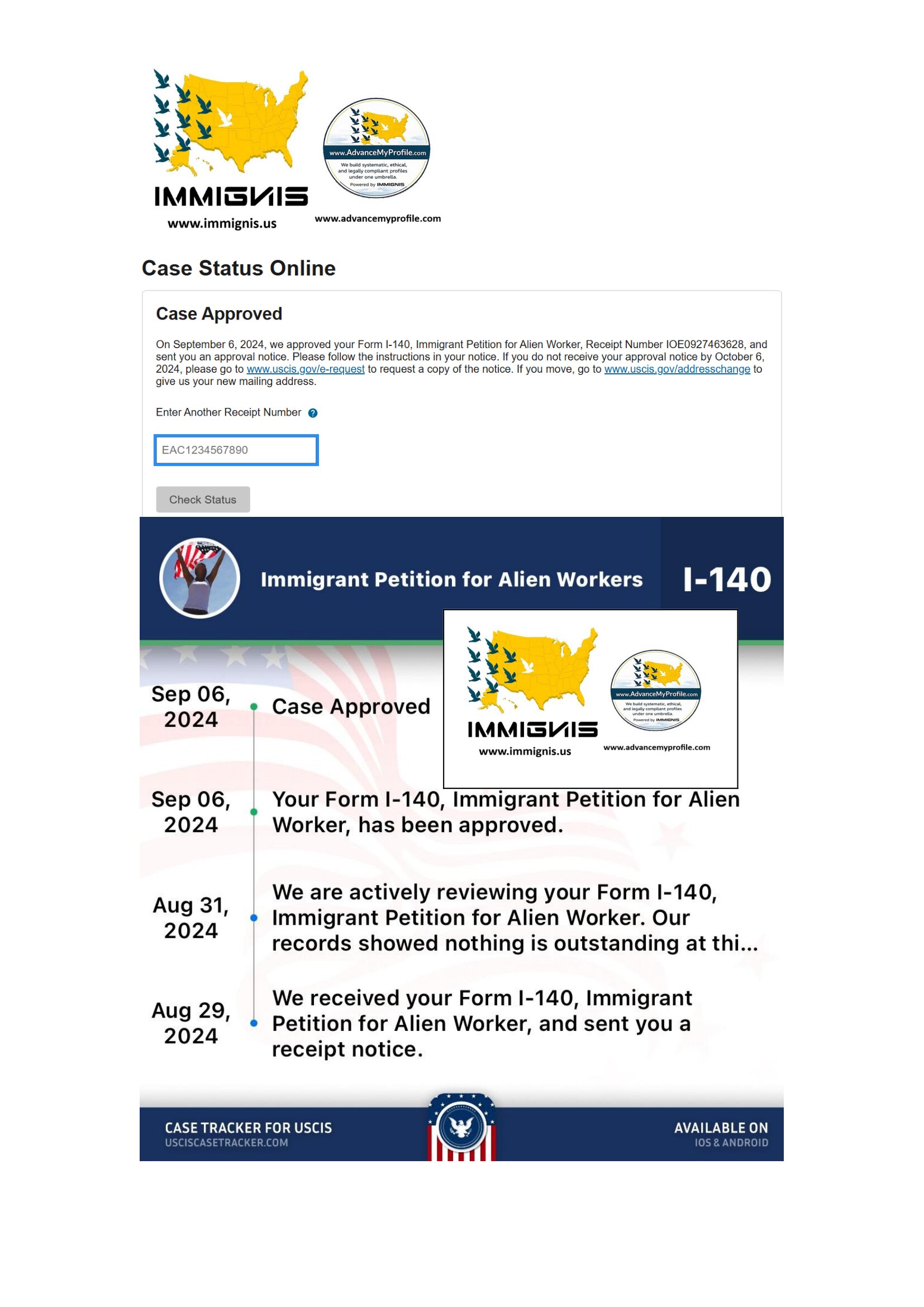
Nine years inside a financial regulator enforcing market laws. A PhD studying how money laundering actually moves through capital markets. A startup teaching ordinary people to protect themselves. USCIS approved it as a single, coherent national interest case.
In short: A financial industry expert with 11 years of experience including 9 years at a national financial securities
regulator and a PhD in Management Sciences (Finance) specializing in financial crimes and AML/CFT was approved
for an EB-2 NIW as a self-petitioner. No U.S. employer. The proposed endeavor covered three
areas: fighting financial crimes in U.S. markets, public education on financial fraud, and research contributing to
U.S. global influence. Approved under Matter of Dhanasar with an academic publication record, regulatory
enforcement experience, and an active social enterprise.
The petitioner’s name has been withheld for privacy. Profession, field, academic record, and outcome are real.
Most Financial Crime in the U.S. Goes Unpunished. Not Because the Laws Are Weak.
Annual losses from white-collar crimes in the United States run somewhere between $426 billion and $1.7 trillion. That range is not a data error, it reflects how much of the activity never gets detected, reported, or prosecuted. The FTC reported that American consumers lost $8.8 billion to fraud in 2022, up from $5.8 billion the year before. In March 2022, the International Narcotics Control Strategy Report classified the United States as a “Major Money Laundering Country.” The U.S. Treasury Secretary said publicly that the U.S. may be one of the most attractive destinations on earth for concealing and laundering ill-gotten gains.
The gap is not in legislation. The Biden administration issued its first-ever government-wide AML/CFT National Priorities. The White House designated fighting corruption as a core national security interest. The Treasury produced new National Risk Assessments. The policy framework exists. What is harder to find is the specific combination of people who understand how financial crime actually works from inside the enforcement process and can translate that into usable knowledge for markets, institutions, and the public.
This is the story of one of those people, and how an unusual three-part professional profile became an approved EB-2 NIW.
Three Lanes. One Career.
Most NIW cases rest on a single strong credential. This one had three, and they reinforced each other in a way that was unusual and genuinely hard for USCIS to dismiss.

The first was regulatory enforcement in the EB-2 NIW case. Nine of her eleven professional years were spent at a national financial securities regulator, the type of institution that polices capital markets, sets enforcement policy, and brings criminal cases against market misconduct. She was not advising from outside. She was inside the institution, running the surveillance desk, building cases, and filing them.
She carried out more than 15 criminal investigations into securities fraud, insider trading, market manipulation, and related offenses. She monitored trading activity daily, tracking unusual price movements and turnover patterns. She coordinated with national law enforcement agencies and central financial authorities. She contributed to international anti-money laundering frameworks and worked alongside global development institutions and international securities regulatory bodies.
The second was research in the EB-2 NIW record. She completed a PhD in Management Sciences (Finance), with a dissertation examining stock market variables and money laundering in capital markets. She published in peer-reviewed, internationally indexed journals specializing in financial crime research and market integrity. She served as a reviewer for journals published by leading international academic publishers in the fields of finance and financial innovation meaning those publishers trusted her to evaluate other researchers’ work in her field. She also served on an assessment review committee for an international securities regulatory organization evaluating regional capital markets.
The third was public education in the EB-2 NIW petition. Within the regulator, she ran a government-led national financial inclusion initiative, conducting more than 100 awareness sessions with students and corporate audiences on how to recognize and avoid financial fraud. She served on a national higher education curriculum review committee, helping redesign the business and commerce curriculum taught at universities across the country. She later founded her own financial education and consultancy startup to continue that work independently.
Three separate tracks. One consistent focus: understanding how financial crime works, and stopping it. That
convergence is what the petition was built around.
The Doubt She Came In With
She was in her early thirties when she filed her EB-2 NIW. Her PhD was recently completed. Her publications were in reputable peer-reviewed journals, but citation counts were still building, the nature of recent academic work. Her regulatory experience was at a foreign national regulator, not the U.S. SEC. The question she carried was not “Am I qualified?” She knew her credentials were real. The question was whether USCIS would see what she brought in the EB-2 NIW case as nationally important, or whether the foreign regulatory context would work against her.
It is a fear that comes up often among professionals who have done serious, substantive work outside the United States. The work is real. The expertise is real. But translating it into the specific language of a Dhanasar analysis for EB-2 NIW requires connecting it to documented U.S. need and doing that precisely.
How the Case Was Made
The EB-2 NIW Dhanasar test does not ask where you built your expertise. It asks whether your proposed endeavor has substantial merit and national importance, whether you are positioned to advance it, and whether waiving the job offer serves U.S. interests. Her profile answered all three, but it needed to be framed precisely.
The EB-2 NIW proposed endeavor had three components that mirrored her three professional lanes. As an independent financial consultant, she would work with U.S. financial institutions on identifying, investigating, and preventing financial crimes. Through public education programs (free online courses, events, and awareness campaigns) she would address the documented vulnerability of young adults and women to financial fraud. And through ongoing research and R&D, she would contribute to the policy knowledge base that shapes U.S. AML/CFT frameworks.
The national importance case was built from U.S. government sources. The Treasury’s own risk assessments named fraud, drug trafficking, human smuggling, and corruption as the primary generators of illicit proceeds in the U.S. FinCEN’s eight AML/CFT national priorities aligned point for point with her areas of expertise. Financial Examiners and related roles are classified as Bright Outlook occupations by BLS, projected to grow 20% by 2032. The Biden-Harris administration had specifically flagged corruption and financial crime as core national security priorities. The need was documented. Her expertise was real. The connection just needed to be written out with care.
This was a direct EB-2 NIW petition. No profile-building phase was required. Her track record already existed.
Letters of recommendation, evidence dossier, and the I-140 prepared and filed as a self-petition.
Proposed endeavor mapped across all three Dhanasar prongs, tied to FinCEN priorities, White House policy documents, FTC fraud statistics, and BLS labor projections.
National importance argument built from U.S. government publications, not general claims, named sources, named programs, specific numbers.
Well-positioned argument drawn from her regulatory enforcement record, her PhD research, her international securities committee membership, her publication and peer-review history, and her existing public education track record.
The Outcome
Approved.Self-petitioned. No U.S. employer. No waiting for a job offer. USCIS reviewed an 11-year career spanning enforcement, research, and public education all pointing at the same documented U.S. need and approved the waiver.
Having a PhD is not what wins an EB-2 NIW. Having a PhD that is backed by real enforcement experience and a
track record of using it is a different thing entirely
For Finance and Compliance Professionals
If you work in financial regulation, compliance, AML/CFT, or financial crime prevention, whether inside a regulatory body, a financial institution, or as an independent consultant, this case is relevant to you.
The NIW does not require U.S. employer history. It requires a nationally important proposed endeavor and a credible basis for advancing it. Regulatory experience from abroad, when it is specific and documented and tied to U.S. national priorities, can support both. So can academic research, even when the publication record is still building. The question is whether the whole picture (the enforcement work, the research, the public work) adds up to something USCIS can see as genuinely useful to the United States.
In this case, it did.
Questions Finance and Compliance Professionals Ask Us
Can financial crime expertise qualify for an EB-2 National Interest Waiver?
Yes. Financial crime prevention, AML/CFT compliance, and fraud detection are documented U.S. government priorities. FinCEN has published national priorities in this area. The BLS projects 20% growth for financial examiner roles by 2032. When a proposed endeavor is specific and tied to those documented needs, and the applicant has real experience backing it, the Dhanasar test can be satisfied.
Does regulatory experience at a foreign government body count toward U.S. national interest?
It can count substantially. USCIS is evaluating whether you are positioned to advance your proposed endeavor in the U.S. Nine years running criminal investigations and building AML policy inside a national securities regulator demonstrates skills and methods that transfer directly to U.S. financial markets, particularly when the proposed endeavor is specifically tied to U.S. regulatory priorities. The nationality of the employer matters less than the relevance of the work.
What if my academic publications are recent and my citation count is still low?
Citation counts accumulate over time, and recent work is not inherently weak. What USCIS is assessing under Dhanasar is whether your proposed endeavor has substantial merit and whether you are positioned to advance it not whether your h-index meets a threshold. Publications in reputable peer-reviewed journals, combined with a strong practical track record, can satisfy the well-positioned prong even when the academic record is still early. In this case, they did.
Does founding your own startup or running public education programs help an NIW case?
It can, particularly when it demonstrates independent initiative and directly supports the proposed endeavor. In this case, the startup and the public education work were not decoration, they were evidence that the petitioner was already executing a version of her proposed endeavor before filing. That kind of demonstrated track record strengthens the well-positioned argument.
Can a three-dimensional profile (regulator, researcher, and educator) work better than a single strong credential?
In the right circumstances, yes. Multiple converging credentials pointing at the same national need can create a more compelling overall picture than a single credential, because each one reinforces the credibility of the others. The key is that the convergence has to be coherent and tied to the proposed endeavor, not three unrelated skill sets presented as a list.
If you work in financial crime, compliance, or AML/CFT and want an honest assessment of whether your background could support an NIW, start there. Immignis offers a free profile review with no commitment.Free assessment: immignis.us/contact-us