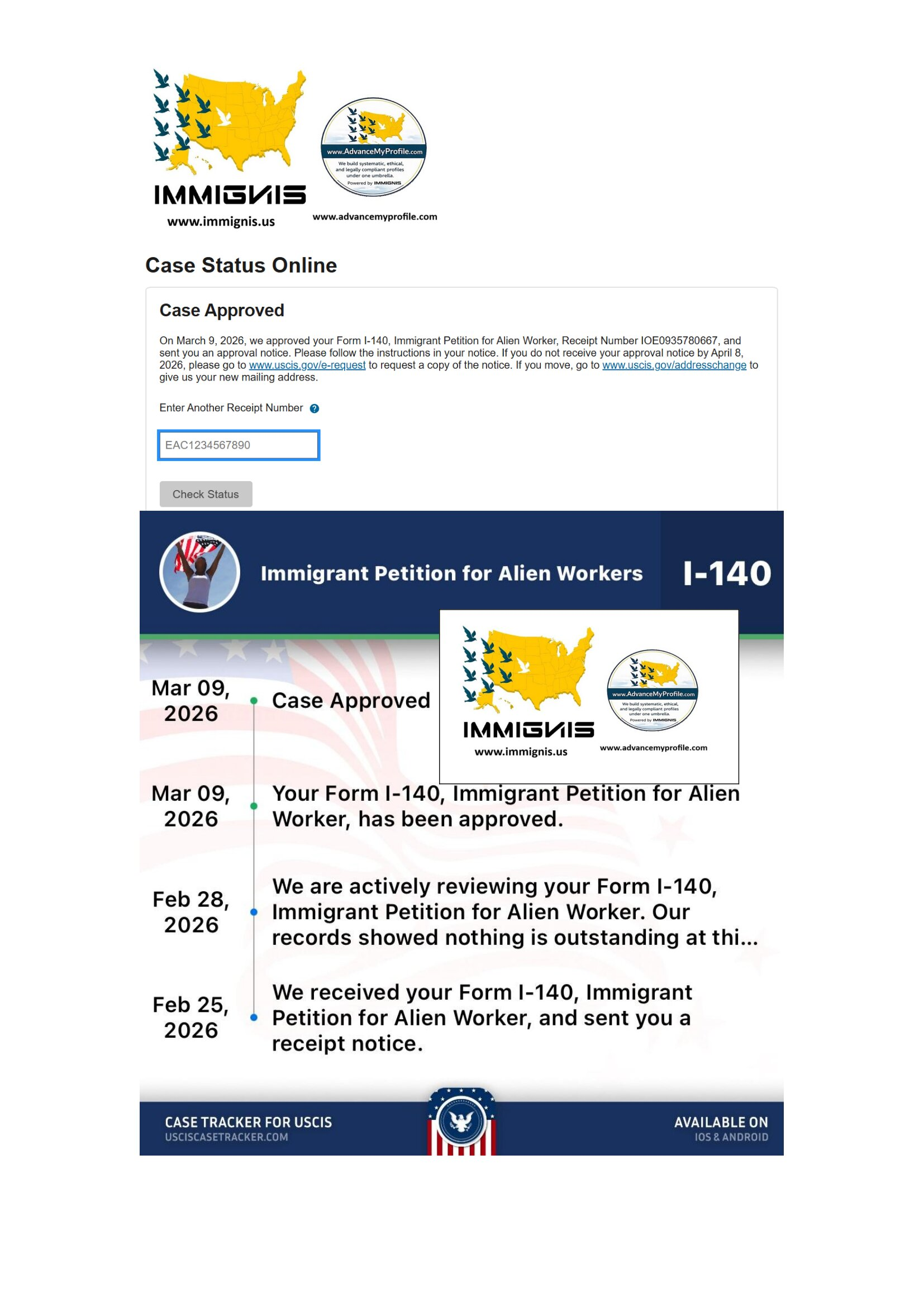
Haitian Community Health Nursing Leader, How a Haitian nursing leader working in community health worker system design secured EB-1A approval by turning under documented public health impact into a petition ready immigration profile built on network outcome documentation, NGO and ministry letters, global health publication, conference platforms, judging roles, and ethical profile building.
Key facts at a glance
| Petition outcome | Form I-140 approved under EB-1A on October 3, 2024. |
| Professional profile | Haitian nursing leader who designed community health worker networks serving areas without physicians. |
| Field niche | Community health worker system design and nurse led community health delivery. |
| Starting weakness | Nursing leadership was under documented, outcome data belonged to programs, and much public credit flowed to physicians, NGOs, or institutions rather than to the system designer. |
| Profile building focus | Network outcome documentation, NGO and ministry attribution letters, global health publication, conference platforms, program evaluation judging roles, and person centered evidence development. |
| EB-1A criteria supported | Original contributions, leading role, published material, scholarly articles, and judging. |
| Central issue | Showing that the petitioner was not only a strong nurse, but a field shaping architect of community health worker systems whose model expanded healthcare access where physicians were unavailable. |
| Approval lesson | A strong nursing EB-1A case can succeed when community health outcomes are attributed clearly, converted into immigration specific profile building, and tied to a precise healthcare niche rather than presented as general service work. |
The approval
On October 3, 2024, USCIS approved the Form I-140 petition of a Haitian community health nursing leader whose work focused on designing community health worker networks for underserved areas with limited physician access.
The approval was important because the petitioner’s strongest achievements did not fit the ordinary image of an EB-1A case. This was not a laboratory-based medical researcher with a long citation profile, and it was not a hospital executive with easily branded awards. It was a nursing professional whose impact lived in community systems, field outcomes, training structures, and access to care.
That created a familiar evidence problem in global health. The better the system works, the more the results seem to belong to the program, the ministry, the NGO, or the broader response effort. The individual designer can disappear behind the success of the network.
Immignis and Advance My Profile helped convert that under-attributed record into a petition-ready EB-1A profile. The profile-building strategy focused on network-outcome documentation, NGO and ministry letters, global-health publication, conference platforms, judging roles, and immigration-specific profile building that clearly connected the petitioner’s work to recognized EB-1A criteria.
The evidence problem in community health worker system design
Community health worker system design is one of the most important and least appreciated fields in public health. In areas without enough physicians, strong systems depend on how workers are recruited, trained, supervised, deployed, measured, and linked to referral pathways. When this is done well, maternal care improves, chronic conditions are monitored, children are identified sooner, and communities receive regular health contact that would otherwise not exist.
Yet this kind of impact often looks invisible on paper. A donor report may mention improved coverage. An NGO may describe a successful field program. A ministry may highlight rollout numbers. But USCIS still needs to know who built the model, what made the model distinctive, and why the field relied on that person’s expertise.
That was the petitioner’s starting weakness. The outcomes were real, but the individual record was thin. Nursing leadership was under-documented. Formal authorship was limited. Public attention often favored physicians or institutions. Without careful profile improvement, a record like this can look like admirable service rather than extraordinary ability.
The petition therefore defined the field precisely as community-health-worker system design and nurse-led community health delivery. It did not present the case as ordinary nursing administration. It presented a specialized field involving health-network architecture, frontline workforce systems, rural delivery design, access expansion, supervision frameworks, and community-level outcome measurement.
That field definition was essential for EB-1A profile building. It helped USCIS understand why network design, workforce deployment, program architecture, and community health outcomes could be meaningful indicators of extraordinary ability in nursing and public health.
Why nursing leadership had to be documented as system design rather than support work
One of the biggest risks in a nursing EB-1A case is under framing the petitioner’s role. If the petition merely says the person worked hard, supervised teams, cared deeply, or supported a public health initiative, the record can be flattened into routine professional service.
This case succeeded because it did the opposite. It showed that the petitioner was designing a system. The petition documented how community health workers were organized, how training structures were built, how referral logic was implemented, how community coverage was improved, and how the network functioned in areas that lacked physician presence.
This was an important immigration-specific profile-building step. USCIS needed more than evidence of commitment. It needed evidence of authorship, design, influence, and measurable effect. That meant clarifying where the petitioner’s ideas began, how they were applied, and why the program outcomes were connected to that design work.
The result was a stronger person centered record. The petitioner no longer appeared as one more dedicated nursing leader in a difficult health environment. The record showed a professional whose system-building methods helped shape how healthcare reached vulnerable communities.
Network outcome documentation made the contribution measurable
Network-outcome documentation became one of the strongest pillars of the case. In community health worker systems, success can be measured through service reach, referral completion, maternal and child follow up, chronic disease monitoring, immunization support, retention of frontline workers, and other practical indicators of whether healthcare access is actually expanding.
The petition organized those results in a way USCIS could understand. It did not simply list broad claims about helping communities. It tied network performance to the petitioner’s architecture: where the model was deployed, what it changed operationally, how it improved delivery, and why the results were not interchangeable with routine program administration.
This evidence supported the original contributions argument because it showed that the petitioner had created or substantially shaped a model others relied upon. The outcome data gave the contribution scale. The design evidence gave it authorship.
For professionals searching for profile building, immigration profile building, EB-1A profile building, EB-2 NIW profile building, nursing profile building, healthcare profile development, or USCIS evidence building, this is a major lesson: outcome data becomes much stronger when it is directly attributed to the person’s system-level role rather than left attached only to the institution.
NGO and ministry letters turned program success into attributed evidence
Letters from NGOs and ministry level stakeholders were critical because they converted institutional success into individualized evidence. In global health, external letters are especially important when multiple organizations participate in one system and public records do not always name the designer clearly.
The strongest letters did not simply praise the petitioner’s dedication. They explained what the petitioner created, how the network functioned, why the model mattered, and what outcomes or operational improvements followed. They also clarified why the petitioner’s leadership was central rather than incidental.
This mattered because nursing leadership is often professionally undervalued in immigration evidence. When ministries, NGOs, or independent public health stakeholders directly confirm that a nurse designed a health-worker network or materially improved a delivery system, the record becomes harder to dismiss as routine clinical work.
As part of ethical profile building and professional profile building for immigration, these letters helped solve the profession specific bias that often makes nursing achievements less visible than physician led narratives.
Global health publication gave the work academic and immigration credibility
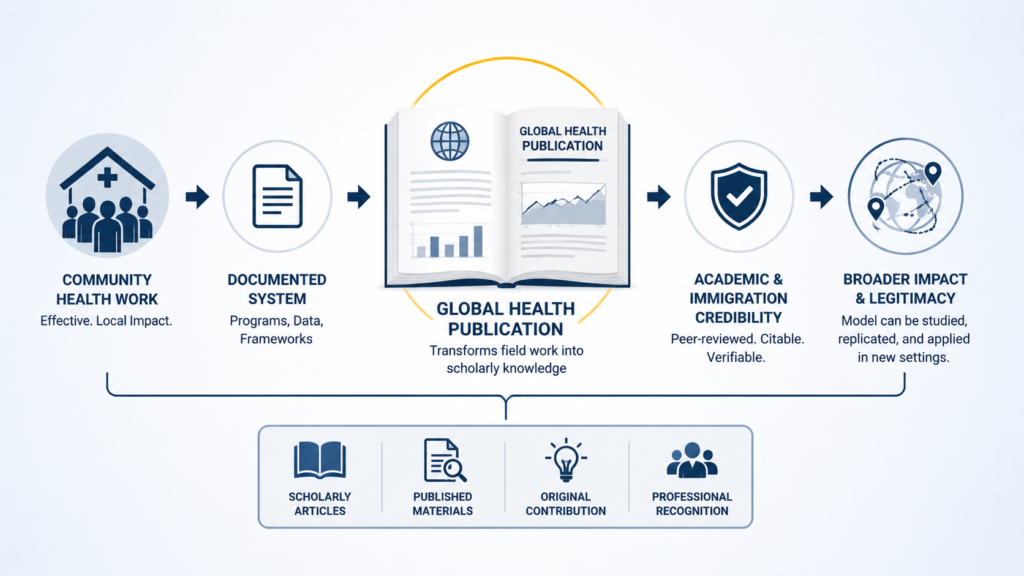
Publication evidence helped give the petitioner’s field work a more formal professional structure. A community health system may be deeply effective, but USCIS still benefits from seeing the work translated into global health language through publications, articles, reports, or formal written frameworks that explain the model and its significance.
The publication record supported the scholarly articles and published material discussions while also helping explain the petitioner’s original contribution. It showed that the system was not merely a local operational effort. It was a model capable of being described, analyzed, and learned from as professional knowledge.
This was particularly useful in a nursing case because it helped move the record beyond the stereotype of unseen implementation. It showed that the petitioner’s work had both practical value and intellectual structure.
As part of publication profile building, nursing profile building, and immigration specific profile building, this evidence gave the healthcare delivery model broader legitimacy without overstating what the publications actually proved.
Conference platforms and judging roles showed recognition beyond one program
Conference invitations and judging roles helped show that the petitioner’s expertise was valued outside the immediate program environment. In a field like community health-worker system design, recognition may appear through invited talks, training platforms, review panels, program evaluation roles, or judging responsibilities connected to health interventions and public health innovation.
Judging was especially helpful because it showed that others trusted the petitioner to evaluate health programs, field approaches, or professional work. In this case, program evaluation judging roles helped demonstrate that the petitioner was not merely running one network but had expertise broad enough to assess quality or design in the work of others.
Conference platforms added visibility. They showed that the petitioner’s methods and experience were useful enough to be shared with broader healthcare and development audiences. That reinforced the idea that the field recognized the petitioner’s voice as important.
For profile improvement, these forms of recognition were valuable because they shifted the case from hidden service delivery to visible field level expertise.
Why this became a strong EB-1A profile instead of a general nursing case
The petition worked because it did not ask USCIS to reward compassion alone. It asked USCIS to evaluate expertise. That distinction matters. Many nursing professionals do extraordinary service, but EB-1A requires evidence that the person stands out at the top of the field.
The record therefore focused on specialized evidence: system design, measurable outcomes, attributed network architecture, external letters, publication, public visibility, and judging. Together, those materials helped show that the petitioner’s work had unusual scope and significance inside a clearly defined niche.
This is what strong immigration specific profile building does. It takes real work that may already be impressive within a profession and reorganizes it into a structure USCIS can evaluate criterion by criterion.
For nurses, public health leaders, community health architects, NGO healthcare professionals, and medical access specialists searching online for profile building, immigration profile building, professional profile improvement, or EB-1A evidence strategy, this case shows that nursing can absolutely support a serious extraordinary-ability petition when the field is framed correctly and the evidence is reconstructed carefully.
Why this case worked
The case worked because every major piece of evidence served a clear purpose. Network outcome documentation showed measurable impact. NGO and ministry letters established external attribution. Publication gave intellectual structure. Conference platforms showed visibility. Judging roles demonstrated professional trust. The field definition explained why these elements mattered specifically in community health worker system design.
The petition also solved a profession specific challenge. It recognized that nursing leadership is often hidden behind institutional or physician centered narratives and directly addressed that problem through person centered evidence development.
Most importantly, the case was honest. It did not exaggerate the record. It translated real public health work into a form USCIS could understand. That is the core of ethical profile building.
Conclusion
The Haitian community health nursing leader’s EB-1A approval shows that a strong extraordinary ability case can be built around nursing, public health, and community care systems even when public recognition is diffuse and the profession is chronically under attributed.
The petition succeeded because it used profile building to document network outcomes, attribution letters, global-health publication, conference visibility, and judging roles in a way that clearly showed field level influence.
The broader lesson is clear: community health innovation does not need to look like conventional academic prestige to support EB-1A. With careful evidence development, nursing-led system design can become a credible, petition-ready immigration profile.
Frequently asked questions
Can a nursing leader qualify for EB-1A?
Yes. A nursing leader may qualify for EB-1A when the record shows extraordinary ability through original contributions, leading roles, scholarly or professional publication, judging, external recognition, and evidence that the person stands out in a defined field niche.
Can community health worker network design support an EB-1A petition?
Yes. If the evidence shows that the petitioner designed, improved, or shaped a community health worker system that produced meaningful outcomes and was recognized by independent stakeholders, it can support a strong EB-1A case.
Do NGO and ministry letters help a nursing EB-1A case?
Yes. Well drafted NGO and ministry letters can be powerful because they attribute program design, explain the petitioner’s role, and confirm why the work mattered in public health delivery.
Can global health publication strengthen an EB-1A profile?
Yes. Publication can help translate field work into formal professional knowledge and strengthen both scholarly articles and original contribution arguments.
Does judging matter in community health or nursing cases?
Yes. Judging, review, or evaluation roles can show that others trust the petitioner’s expertise and invite that person to assess programs, methods, or professional work.
Can Immignis and Advance My Profile help nurses and public health professionals build EB-1A evidence?
Yes. Immignis and Advance My Profile help nurses, public health leaders, community health specialists, and healthcare professionals define a niche, document achievements, improve visibility, and build a petition ready EB-1A or EB-2 NIW profile through ethical profile building and immigration specific evidence development.
Build an EB-1A record around community health leadership, nursing expertise, and public health system design. Many nurses and public health professionals already have meaningful impact, but the evidence is often scattered across program reports, ministry correspondence, publications, conference activity, letters, and outcome data.